
WILLIAM E. CLEARY SR. l CLEARY’S NOTEBOOK NEW
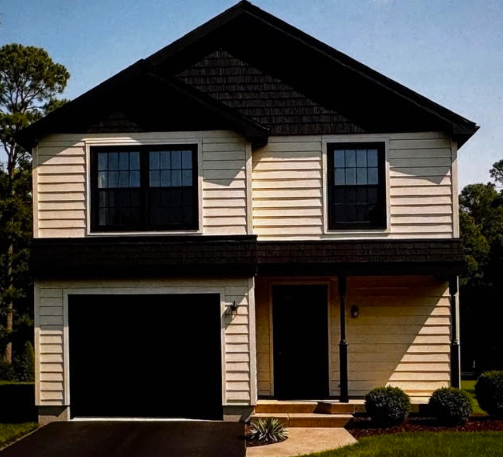
ASKING PRICE FOR STITES AVENUE HOME: $500,000
GLOUCESTER CITY, NJ {CNBNEWS} FEBRUARY 9, 2025.–A new single‑family home is rising in the Riverview Heights section of Gloucester City—on a lot that has been vacant for decades. The property at 16 Stites Avenue sits on a 5,001‑square‑foot lot, and the two‑story home with an attached garage will span 2,986 square feet when completed. The asking price is $500,000.
The Zillow listing promotes the house as a modern build with three bedrooms, two and a half baths, a finished basement, and a deck overlooking the backyard. Buyers are offered the option to customize finishes. Taxes, the listing notes, are “TBD.”
The half‑million‑dollar price tag raises a larger question: Is Gloucester City’s housing market now out of sync with the community’s economic reality?
Read more: Gloucester City’s Housing Market Shows Signs of Strain as Prices Outpace RealityAbout a year ago, Zillow identified Gloucester City as one of the communities “dangerously close to a housing price correction.” At the time, prices were rising faster than local incomes, investor activity was increasing, and distressed properties were piling up. A year later, many of those warning signs remain.
Recent data shows the city’s median home value hovering between $240,000 and $270,000, depending on the source. Prices have risen modestly, but homes are taking longer to sell—an average of 46 days on the market, compared to just 18 days the year before. Price cuts are becoming more common, and public records show hundreds of liens and dozens of pre‑foreclosures over the past year.
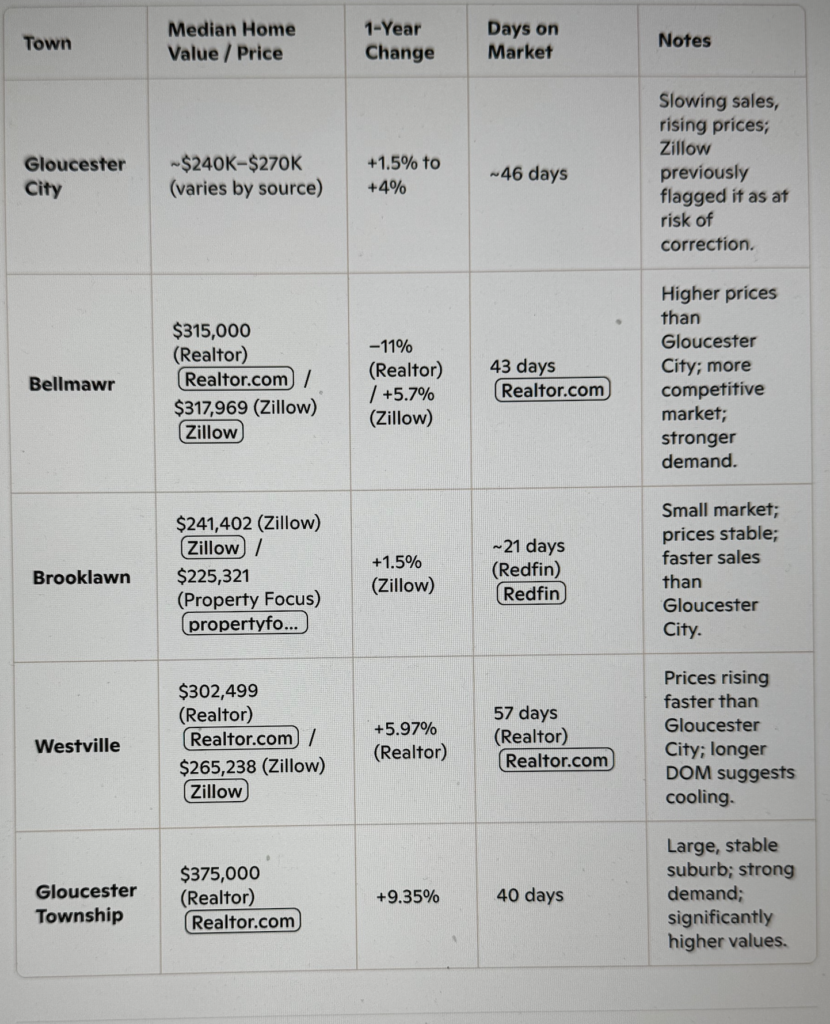
Compared with neighboring towns, Gloucester City remains one of the least expensive markets in the region—yet also one of the most strained. Bellmawr, Westville, and Gloucester Township all have higher home values and stronger demand. Even Brooklawn, the closest comparison, sees homes selling faster and with fewer signs of distress.
So how did Gloucester City end up with rising prices but a weakening foundation?
A major factor is investor pressure. Out‑of‑town buyers, flippers, and cash purchasers have been active in the city for years, pushing prices upward based on profit potential rather than local wages. At the same time, Gloucester City’s housing stock is old—much of it 80 to 100 years old—and expensive to maintain. New construction is rare, and when it does appear, it’s priced according to regional standards, not neighborhood norms.
High property taxes and long‑standing municipal challenges add another layer. Aging infrastructure, limited commercial growth, and persistent code issues have left the city without the stability needed to support sustained price increases.
Correcting the imbalance will require a coordinated effort. Stronger code enforcement, incentives for owner‑occupied rehabilitation, and policies that encourage residents—not investors—to buy homes could help stabilize neighborhoods. A clearer long‑term housing strategy from city leadership, along with a tax structure that reflects the realities of the market, would also move the city in the right direction.
The new home on Stites Avenue is not the cause of Gloucester City’s housing problems. It is a signpost. Prices continue to rise, but the fundamentals beneath them remain uneven. Whether the market corrects itself or continues drifting upward will depend on whether the city confronts the forces shaping its future—or allows them to continue unchecked.
This comparison shows a clear pattern: Gloucester City remains one of the least expensive towns in the region — yet also one of the most economically strained. Neighboring towns with higher prices have stronger demand, newer housing stock, and fewer signs of distress. Even Brooklawn, the closest match, sees homes selling far more quickly.From the Zillow advertisement:
What’s special
Welcome to 16 Stites Avenue, a thoughtfully designed new construction home offering modern comfort, flexible living spaces, and refined finishes throughout. This impressive residence features three spacious bedrooms, two full bathrooms and one half bath, a fully finished basement, and an attached one-car garage, delivering an ideal balance of functionality and contemporary design. Buyers have the opportunity to customize select finishes—please inquire for details.
The main level showcases a bright, open-concept layout that is perfectly suited for both everyday living and entertaining. Abundant natural light fills the living and dining areas and flows seamlessly into the well-appointed kitchen, designed to serve as the true heart of the home. Modern finishes and an efficient floor plan provide both style and practicality. The fully finished basement offers valuable additional living space, ideal for a family room, home office, fitness area, or entertainment space. Upstairs, the private bedroom level features generously sized bedroom
s, including a primary suite with ample closet space and a private en-suite bathroom. Outdoor living is enhanced by a spacious deck overlooking the backyard—perfect for morning coffee or evening relaxation. Additional highlights include quality craftsmanship throughout and a layout designed to complement today’s lifestyle needs.
Situated in one of Gloucester City’s most desirable neighborhoods, the home is conveniently located near parks, shopping, dining, and major commuter routes, including Route 130 and Route 295, with easy access to Philadelphia bridges—placing Center City Philadelphia just 15 minutes away. This is a unique opportunity to personalize and own an exceptional new construction home. Schedule your private showing today. “Taxes are not $1 and are TBD. Taxes and square footage are the responsibility of the buyer to have verified.”
So how did Gloucester City end up with rising prices but a weakening foundation?
A major factor is investor pressure. Out‑of‑town buyers, flippers, and cash purchasers have been active in the city for years, pushing prices upward based on profit potential rather than local wages. At the same time, Gloucester City’s housing stock is old—much of it 80 to 100 years old—and expensive to maintain. New construction is rare, and when it does appear, it’s priced according to regional standards, not neighborhood norms.
High property taxes and long‑standing municipal challenges add another layer. Aging infrastructure, limited commercial growth, and persistent code issues have left the city without the stability needed to support sustained price increases.
Correcting the imbalance will require a coordinated effort. Stronger code enforcement, incentives for owner‑occupied rehabilitation, and policies that encourage residents—not investors—to buy homes could help stabilize neighborhoods. A clearer long‑term housing strategy from city leadership, along with a tax structure that reflects the realities of the market, would also move the city in the right direction.
The new home on Stites Avenue is not the cause of Gloucester City’s housing problems. It is a signpost. Prices continue to rise, but the fundamentals beneath them remain uneven. Whether the market corrects itself or continues drifting upward will depend on whether the city confronts the forces shaping its future—or allows them to continue unchecked.
Source of Graff AI
 -
- -
- -
- -
- -
-