NJ Sierra Club Celebrates Mikie Sherrill Victory

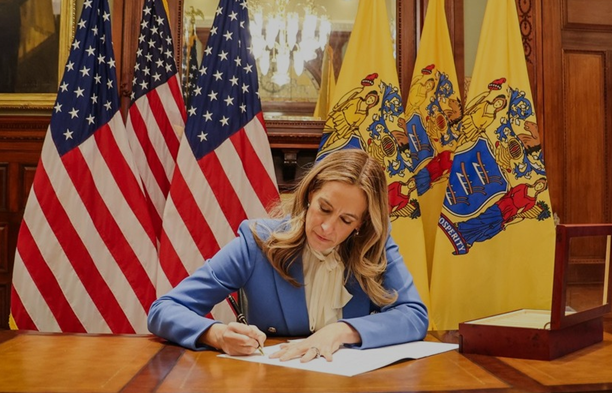
Mikie Sherrill has been declared the next Governor of the state of New Jersey. Sherrill and her Lieutenant Governor-elect, Dale Caldwell, ran on a platform that aligns with the Sierra Club’s mission to protect rights to clean air, clean water, and preserve open space. 

As Congresswoman, she has a strong record on open space protections, smart growth, fighting toxics like PFAS and lead, and protecting wildlife. Additionally, Sherrill’s Affordability Agenda includes bold proposals to invest in clean, cheap power like solar to protect our environment and lower utility costs in New Jersey. She has committed to streamlining approvals to bring clean energy online, and holding PJM, the state’s regional grid operator, accountable for not connecting the backlog of clean, cheap power to the grid.

The NJ Sierra Club endorsed Mikie Sherrill ahead of the Democratic primary election on May 30th, 2025. Since then, the Chapter has mobilized members across the state to fundraise and in key districts, phonebank and canvass in support of the campaign. The Sierra Club has a long history of supporting and working with Mikie Sherrill to advance our environmental, energy and climate goals for NJ and the nation. 

In response, NJ Sierra Club Chapter Director Anjuli Ramos-Busot released the following statement:

“The New Jersey Sierra Club congratulates Governor-elect Mikie Sherrill and Lieutenant Governor-elect Dale Caldwell on their well-earned victory. Knowing that the New Jersey gubernatorial election is a part of the national conversation on the mood or direction of our country, let it be clear that the people chose the opposite of what Trump stands for. 

We are confident that, as Governor, Mikie Sherrill will defend our state from Trump rollbacks and overreach to ensure New Jerseyans, our rights, and our environment are protected.

The Sierra Club celebrates Mikie Sherrill’s commitment to protecting and preserving New Jersey’s environment and making energy affordable, and we look forward to working together in the coming years to advance towards a cleaner and safer future for all.” 

The Economist/YouGov Poll Summary

OverviewThis week’s Economist/YouGov poll covers…●      The increasing share of Americans who are feeling the government shutdown’s effects●      How many Americans want the government to try to reduce wealth inequality●      Whether liberals prefer capitalism or socialism●      The level of support for a possible resumption of nuclear-weapons testing●      Whether Americans think pro athletes often tailor their play to gambling outcomesGovernment shutdown●      A growing share of Americans say they are being personally affected by the government shutdown: 36% say they are being affected a great deal or somewhat, compared to 21% who said so roughly a week after the shutdown began.

Continue reading “The Economist/YouGov Poll Summary”

CIRCULATE NJ STATEMENT ON MIKIE SHERRILL BEING ELECTED NEXT NEW JERSEY GOVERNOR

Circulate NJ Chair David Greek issued the following statement today regarding the election of Congresswoman Mikie Sherrill as the next governor of New Jersey:

“On behalf of Circulate NJ, we congratulate Congresswoman Sherrill on being elected the next governor of New Jersey. As the driving force behind the state’s economy, we look forward to working with the governor-elect. We hope she will continue to keep an open mind regarding the numerous benefits that the transportation, logistics and distribution industry brings to New Jersey. Working together, we can ensure job growth and economic development flourish in the Garden State for years to come.”

New Jersey Assembly Democrats Secure  Supermajority, Flipping At Least 3 Seats

New Jersey Assembly Democrats flipped at least three seats tonight, securing a supermajority as voters resoundingly elected Democrats up and down the ticket. The DLCC identified New Jersey as a priority early in 2025 by investing six figures and spotlighting 12 of the most competitive races that were among the biggest successes of the night.

Tonight’s Assembly wins come as Mikie Sherrill clinched the gubernatorial win, ensuring unified Democratic power can protect New Jersey from MAGA extremism and fight for working families. 

Democratic Legislative Campaign Committee President Heather Williams issued the following statement:

“Tonight, voters delivered a stunning victory by electing a supermajority in the New Jersey Assembly, sending a clear message to MAGA extremists whose policies have substantially driven the cost of living up. The DLCC is proud to stand with the state Democrats in New Jersey who are focused on lowering costs and protecting economic opportunities for their communities. These victories set the stage for the 2026 midterms when Democrats have the opportunity for historic success in state legislatures across the country.” 

The Democratic Legislative Campaign Committee (DLCC) is the campaign arm of Democratic state legislatures and leads the national strategy for building power and winning new majorities. Over the last three decades, we have strategized cycle over cycle to win majorities and lead the effort to bring national attention and investment to our ballot level, winning nearly a dozen new chamber majorities over the last decade. Our work has ensured that nearly half of Americans are represented by at least one Democratic majority in their statehouse. State legislatures are the building blocks of our democracy and have the closest connections to Americans’ day-to-day lives. From protecting fundamental freedoms and voting rights to growing the middle class and advancing opportunity, the DLCC and state legislators are moving the Democratic agenda forward and shaping the future of this country.

MURPHY ADMINISTRATION AWARDS $8 MILLION IN WATER QUALITY GRANTS

 The Murphy Administration has awarded nearly $8 million in Water Quality Restoration grants to local municipalities, nonprofit groups and academic institutions to fund projects that will enhance water quality in surface waters across the state, Environmental Protection Commissioner Shawn M. LaTourette announced today.

OWWI picThe grants provided through the New Jersey Department of Environmental Protection will help reduce the impacts of nonpoint source pollution, address harmful algal blooms, develop watershed-based planning efforts, address emerging contaminants and improve climate resilience.“Enhancing the ecological health of our lakes, rivers, streams and coastal waters has long been a priority of the Murphy Administration,” Commissioner LaTourette said. “The Department of Environmental Protection is pleased to award these grants that will help our partners advance a variety of strategies to improve the health of these waterways and enhance the quality of life in our communities.”With this round of funding, the Murphy Administration has awarded more than $33 million in Water Quality Restoration grants to improve the health of waterways in all corners of the state.Funded through the federal Clean Water Act, these grants support activities such as stormwater management, riparian buffer restoration, and erosion control. In New Jersey, this grant program is administered by the DEP’s Watershed and Land Management Program.“We are grateful to NJDEP for this funding which will advance watershed scale planning to improve water quality and make collaboration between upstream and downstream communities possible,” said Jim Waltman, Executive Director of the Pennington-based Watershed Institute, which is receiving a $205,138 grant to develop plans to improve the health of the Assunpink Creek watershed. “This approach will save municipalities money and prioritize projects that will build resiliency to water pollution and flooding.”“We appreciate the NJDEP’s support of our collaboration with the Rutgers Water Science Center, the Ocean County Soil Conservation District, and Ocean County to renovate several priority, publicly owned stormwater basins in northern Ocean County,” said Stan Hales, Director of the Toms River-based Barnegat Bay Partnership, which is receiving a  $334,132 grant to retrofit stormwater basins in the Toms River and Metedeconk River watersheds. “This effort directly builds upon our development of the Toms River Watershed Protection and Restoration Plan and our partners’ commitments to protect and restore water quality and wildlife habitats of the Barnegat Bay watershed.”2025 Award RecipientsDevelopment of Watershed Based PlansRowan University $356,035
Read more: MURPHY ADMINISTRATION AWARDS $8 MILLION IN WATER QUALITY GRANTS
lakeRowan University in Glassboro will develop a targeted Watershed Based Plan for the lower Great Egg Harbor River watershed that focuses on reducing nonpoint source pollution. The restoration strategy plan will emphasize green infrastructure and low impact development systems to improve performance without major construction, enhancing cost-effectiveness and minimizing disturbances. The project will be guided by a watershed advisory committee.Montgomery Township 
$288,300Montgomery Township will produce a comprehensive Watershed Based Plan for a portion of the Raritan River watershed that will focus on reducing non-point source pollution to improve water quality and minimize flooding. Led by One Water Consulting LLC, the project will generate pollutant load estimates, mapping visualizations, and detailed plans supported by technical and financial analyses.The Watershed Institute 
$205,138The Pennington-based Watershed Institute will create a Watershed Based Plan to improve water quality in the Assunpink Creek watershed. The plan will evaluate causes of this pollution and solutions, while promoting public engagement. Green infrastructure and large-scale ecological restoration projects will be identified and evaluated for cost, feasibility, and pollutant reduction potential.  Lake Owassa Paulinskill Headwaters Conservation Foundation 
$87,100The Culver Creek sub-watershed, part of the Upper Delaware River watershed, has been identified as impaired due to pollutants such as fecal coliform, phosphorus, and arsenic. The Lake Owassa Paulinskill Headwaters Foundation, supported by Clean Waters Consulting LLC and local lake associations, will develop a Watershed Based Plan to calculate pollutant loads and identify priority areas for intervention.Implementation of Watershed Based PlansRockaway Township 
$399,400Rockaway Township plans to construct green infrastructure at its municipal complex to target nonpoint source pollutants in Fox’s Pond and Fox Brook. Elevated levels of fecal coliform have led to frequent closures of the public beach. The project will include conversion of the rock-lined drainage swale to a vegetative swale with a bioretention basin.Lake Hopatcong Commission $366,813The Lake Hopatcong Commission will modify an existing stormwater basin in Lake Hopatcong through installation of structural and vegetative improvements to better remove sediments and nutrients.Barnegat Bay Partnership 
$334,132This project focuses on improving the water quality in the Toms River and Metedeconk River watersheds through the implementation of stormwater basin retrofits at six sites. The retrofits will focus on those identified as priority areas with elevated levels of stormwater pollutants.Liberty Township 
$230,500Mountain Lake, a glacial lake in Liberty Township, has had significant harmful algal bloom outbreaks that have resulted in public swimming beach closures. Liberty Township will implement a series of best management practices to reduce nutrients that contribute to these blooms.Extreme Weather Resiliency PlanLower Raritan Watershed Partnership
$361,200The Lower Raritan Watershed Partnership plans to create an Extreme Weather Resilience Plan focused on remediated and contaminated sites within Middlesex County. Ten priority sites will be selected, five impacted by flooding and five affected by wildfires. The partnership will conduct a comprehensive vulnerability assessment of prioritized sites.Emerging Contaminants PlansJefferson Township 
$350,100 Jefferson Township plans to develop an Emerging Contaminants Plan to address cyanotoxins and harmful algal blooms in Cozy Lake. The cyanotoxin management plan will focus on in-lake monitoring and implementation methods that will target management strategies to mitigate harmful algal blooms.Mount Holly Township
$20,000Mount Holly Township plans to conduct a dredging feasibility study to address nonpoint source pollution impacting Woolman Lake through green infrastructure and sediment management strategies. The feasibility study will assess the viability of dredging to enhance aquatic habitat and overall hydraulic function. It will also evaluate shoreline erosion and sediment deposition resulting from severe precipitation, goose activity, and impervious surface runoff.Green InfrastructureGreen Trust Alliance 
$1,389,793 The Green Trust Alliance will upgrade an outdated detention basin at Pinelands Regional High School in Tuckerton into a multi-functional system to improve both water flow control and water quality to benefit Tuckerton Creek in the Barnegat Bay watershed. The Green Trust Alliance and GreenVest will manage the project, which will also have education components for students and the public.New Jersey Institute of Technology 
$948,108The New Jersey Institute of Technology will implement green infrastructure projects across five selected public properties in Paterson, including parks, schools, and community centers. The projects feature bioretention areas enhanced with green-engineered mulch to improve stormwater pollutant removal.New Jersey Sea Grant Consortium $991,655The New Jersey Sea Grant Consortium will expand the existing living shoreline and oyster reef at the Naval Weapons Station Earle waterfront complex in Colts Neck. As part of this initiative, 600 additional oyster castles will be installed to enhance coastal resilience. These nature-based structures will enhance resilience, reduce shoreline erosion, and restore vital habitats and natural resources that support a diverse range of avian and marine species. Avon-by-the-Sea Borough
$700,000Sylvan Lake, a coastal lake on the border of Avon-by-the-Sea and Bradley Beach, has been impacted by urbanization and disrupted connection to the ocean. This grant will fund work to improve habitat, stabilize the shoreline, enhance water quality, provide public access, and encourage community engagement in support of the borough’s ongoing living shoreline project.Stafford Township
$411,066 Stafford Township will construct two bioswales along Parker Street to improve stormwater management and reduce runoff. The bioswales – constructed ditches or channels designed to slow down the flow rate of stormwater and allow it to soak into the ground – will reduce nutrient loading, manage flood risks, and support local ecological stability.Montclair Township
$326,700The Montclair Resiliency Park Green Infrastructure project is located in the Fourth Ward, a community impacted by legacy pollution and chronic flooding. This project will repurpose remediated land for public green space through construction of a combination of subsurface detention measures, rain gardens, and vegetated bioswales.

Murphy Administration Highlights Resources Available to Residents as Trump Administration Fails to Fund Snap

The Trump Administration’s failure to fund the Supplemental Nutrition Assistance Program (SNAP) as the federal government shutdown continues into November will leave hundreds of thousands of New Jerseyans without the resources necessary to put food on the table. As the shutdown enters its 30th day, Governor Phil Murphy, Senate President Nick Scutari, and Assembly Speaker Craig Coughlin today announced that the State is accelerating the delivery of food and hunger grants to Emergency Food Organizations (EFOs), or food banks, ahead of the expected halt in SNAP benefits, as outlined in the Fiscal Year 2026 Budget. Despite the availability of approximately $6 billion in federal SNAP contingency funds for emergency circumstances, the United States Department of Agriculture (USDA) has announced that it will not fund SNAP benefits starting on November 1, 2025. This unprecedented decision will impact more than 800,000 New Jerseyans across 400,000 households. Almost half of the 800,000 are children, nearly one in three are individuals with a disability, and one in five are over the age of 60. Governor Murphy has called on the federal government to release federal SNAP funds, and New Jersey joined a multi-state lawsuit against the USDA and Secretary Brooke Rollins for unlawfully suspending SNAP funding despite the availability of contingency funding during the ongoing federal government shutdown. “In communities across our state, food banks are on the front lines combating food insecurity and supporting New Jersey families in need. They are an integral part of our food security safety net, and our Administration is proud to deliver funding to support their operations, especially at a time of increased uncertainty,” said Governor Murphy. “The Trump Administration’s decision to abandon the over 800,000 New Jerseyans who rely on critical SNAP benefits during one of the longest federal government shutdowns in our nation’s history is morally reprehensible. In New Jersey, we will continue to coordinate across government and with our partners on the ground as we navigate the fallout from the federal government’s failure to act in the best interest of the American people.” “The impending cutoff of vital food assistance for New Jersey residents is an unconscionable affront to our core values of caring for those in need,” said Senate President Nick Scutari. “The SNAP benefits that will be lost or delayed are a nutritional lifeline that puts food on the table for young families, senior citizens and the disabled. Accelerating the delivery of grants to Emergency Food Organizations in our local communities will help alleviate this food crisis. We are stepping forward to support the organizations and individuals who are working selflessly to prevent our fellow residents from going hungry.”  “I applaud today’s announcement, which will enable our emergency food organizations on the front lines of fighting hunger to access the resources they need to meet this immediate surge in demand,” said Assembly Speaker Craig J. Coughlin. “In moments like this, we all have a responsibility to step up and do our part to ensure no one goes hungry. I urge our leaders in Washington to act swiftly to restore this funding and to end this uncertainty for the hundreds of thousands of families who rely on SNAP to put food on the table.” The following food and hunger grants have been expedited to support food banks as communities across the state brace for the loss of crucial safety net benefits:
OrganizationAmountCommunity Food Bank of New Jersey$22,525,000.00Food Bank of South Jersey$6,375,000.00Fulfill Monmouth & Ocean$6,375,000.00Mercer Street Friends Food Bank$4,675,000.00Norwescap$1,275,000.00Southern Regional Food Distribution Center$1,275,000.00Total$42,500,000
Read more: Murphy Administration Highlights Resources Available to Residents as Trump Administration Fails to Fund Snap
A number of pantries offer fresh produce in addition to stable, non-perishable foods, shopping appointments, and information about additional services. Residents can locate food pantries and community kitchens via NJ 211 here. “Food banks play a vital role in connecting our state’s farms with families in need,” said New Jersey Department of Agriculture Secretary Ed Wengryn. “By accelerating Food and Hunger grant funding, we are ensuring New Jersey’s Emergency Food Organizations have the resources necessary to respond to the needs of their surrounding communities. This will help ensure that the fresh, local food grown by our farmers continues to reach residents who might otherwise go without, especially during this time of uncertainty.” “Food security work is intentionally broader in the 21st Century because the challenges that existing systems and practices place on people, interconnect,” said Office of the Food Security Executive Director Mark Dinglasan. “Still, the reality is the day-to-day work of food banks and food pantries, including the six Food & Hunger grantees and their networks of local agencies, is very much needed in every community and each of our 21 counties. The collaborative way in which our colleagues across the Governor’s office, state agencies and partners in the Legislature have expedited these funding disbursements is a testament to how the state cares for all New Jerseyans’ well-being.” “For the first time in history, the federal government has failed to fund the SNAP program beginning November 1st which leaves more than 800,000 New Jerseyans who rely on SNAP feeling anxious and uncertain of where their next meal will come from,” said Human Services Commissioner Sarah Adelman. “Amid this uncertainty, New Jersey is taking important action today to advance funding to Emergency Food Organizations to provide relief to families who are hungry and going without food. Of those who receive SNAP food assistance, nearly half are children, about 1 in 3 have a disability, and 1 in 5 are over the age of 60. This funding emergency has a real impact on neighbors, friends and loved ones across New Jersey and we thank the community food organizations for their partnership and commitment to help New Jerseyans through this emergency. I urge SNAP recipients to check NJ211 to connect to local food resources and to continue checking njsnap.gov for updates.” “Nobody deserves to go hungry, and it is unacceptable for our federal government to put essential nutrition programs in such a precarious position. SNAP and WIC are lifelines to our most vulnerable neighbors – babies and children, seniors and hard-working families – and we cannot let them down,” said Acting New Jersey Health Commissioner Jeff Brown. “New Jersey did not create this crisis, but we will do everything we can to help ensure New Jerseyans don’t miss meals.” “The Trump Administration’s suspension of SNAP isn’t just reckless and cruel, it is illegal,” said New Jersey Attorney General Matthew J. Platkin. “I applaud Governor Murphy for taking immediate action to accelerate grants to food banks across New Jersey as more and more residents will be forced to turn to them due to President Trump’s unlawful actions. At the same time, we are suing the Trump Administration to release SNAP contingency funds so that New Jersey families who depend on them have food at the table, and we will keep fighting until these critical benefits resume.”  While new funds will not be made available on November 1, 2025, SNAP recipients will be able to access any funds in their account that have carried over from October 2025 or previous months. SNAP recipients are encouraged to check their balances online here. Additionally, in accordance with legislation signed by Governor Murphy in 2023 to raise the state’s minimum SNAP benefit, the approximately 32,000 households that routinely receive a State supplemental benefit to bring their monthly SNAP benefit to New Jersey’s $95 minimum can expect to receive the same next month. The amount per household is highly variable based on household size and circumstances. All children in families receiving benefits from NJ SNAP are automatically eligible to receive free school meals and are encouraged to take advantage of this resource. Families do not need to fill out an application. They simply need to go to the school cafeteria for lunch and/or breakfast as usual. Students who do not currently receive free school meals should contact their school district to complete an application, which can be accessed here. For households that are dual-enrolled in both SNAP and the Women, Infants, and Children (WIC) program, the New Jersey Department of Health projects that, based on normal spending, WIC benefits and services will continue without interruption through the end of November 2025. In addition to contributing to adverse health outcomes for New Jersey SNAP recipients, the federal government’s failure to fund this program will also have a significant economic impact on the state. The New Jersey Department of Human Services notes that SNAP is a powerful economic multiplier, supporting more than 5,000 stores, grocers, and farmers markets. In Fiscal Year 2023, SNAP participants redeemed $2.5 billion in benefits at New Jersey retailers, accounting for 9.4 percent of statewide spending on food for consumption at home.
The Governor’s Office will continue to meet regularly with government agencies to monitor the impact of the federal government shutdown on food security, and the Murphy Administration will provide updated information and resources as they become available.

Vote By Mail & Returning Your Ballot

There is still time to sign up to Vote By Mail! The deadline for the VBM application is Tuesday, October 28th. Vote by Mail allows a voter to vote in any election without going to the polls, avoiding long lines and the hassle of traveling. Returning your VBM ballot is very simple, just return the application by mail at any one of the various dropbox locations throughout Camden County.

For more information, Click Here. To track your ballot, Click Here.

South Jersey Families Can’t Afford Higher Healthcare Costs

Since October 1, the federal government has been shut down, and Speaker Mike Johnson hasn’t called Congress back into session since. That means critical services are disrupted and public servants are working without pay. 

Now, families across South Jersey are beginning to receive notices of soaring healthcare premiums. This is because cost-saving healthcare tax credits will expire in December. In our congressional district, 24,000 people will see their healthcare costs rise if Congress does not act now.

Last week, I asked people in our district if they’ve received notices that their premiums are going up. Nearly half said yes. Of those: 

  • 63% of families said their monthly costs are increasing by more than $100 per month 
  • 25% of families are seeing increases of more than $500 per month 
  • And some are seeing increases of more than $1,000 per month 

That’s outrageous. Families shouldn’t have to choose between paying for healthcare and putting food on the table. If Republicans don’t come back to Washington and get to work, working families pay the price. 

I’m ready to work with anyone, Republican or Democrat, to reopen the government and lower healthcare costs. 

Even during this shutdown, my office is open and ready to help you. Please visit the government shutdown resources webpage on my website for more information. 

Sen. “Chucky” Schumer October 2025 Porker of the Month

By Citizens Against Government Waste

                       
(Washington, D.C.) 
– Today, Citizens Against Government Waste (CAGW) named Senate Minority Leader Chuck Schumer (D-N.Y.) its October 2025 Porker of the Month for terrorizing taxpayers with massive wasteful spending just before Halloween.

On October 1, 2025, “Chucky” Schumer caused the government shutdown by trying to conjure $1.5 trillion in hocus-pocus spending programs.  He previously voted to keep the government open 13 times, but this time he wanted to slam it closed.  Eight days into the shutdown, “Chucky” Schumer smacked Americans across the face by saying, “every day gets better for us.”  Not only is he taunting taxpayers by claiming all is well for him and fellow Democrats, but he is also making the government even scarier by trying to raise dead programs from the wasteful spending graveyard.  Sen. Schumer wants to make temporary insurance premium subsidies for families making up to $500,000 last forever.  That would cost a shocking $410 billion over 10 years, more than the Departments of Interior and Commerce combined.

CAGW President Tom Schatz said, “‘Chucky’ Schumer should be ashamed of his ghastly antics.  He not only caused the government shutdown, but also remains the reason that it is still shutdown.  ‘Chucky’ is playing a nasty trick on Americans by saying all is well and getting better by the day.  He should stop ghosting taxpayers, agree to open the government, and then sit down to discuss why he thinks super insurance premium subsidies for wealthy taxpayers should continue and profligate spending that was eliminated should be revived.   For shutting the government down and trying to increase the gruesome national debt with $1.5 trillion in wasteful spending, Sen. “Chucky” Schumer was an easy choice for October 2025 Porker of the Month.”

Citizens Against Government Waste is a nonpartisan, nonprofit organization dedicated to eliminating waste, fraud, abuse, and mismanagement in government.  For more than two decades, Porker of the Month is a dubious honor given to lawmakers and government officials who have shown a blatant disregard for the taxpayers.

COMMISSIONER LATOURETTE INVITES FEEDBACK 

The New Jersey Department of Environmental Protection invites the public and the regulated community to provide feedback on its newly launched NJDEP DocMiner online tool, which provides greater access to public records and complements digitized records found through DEP’s existing DataMiner online database.

“The launch of the NJDEP DocMiner tool is an important component of our overall work to modernize information tools, improve transparency and allow our many stakeholders to access information more quickly and reliably,” said Environmental Protection Commissioner Shawn M. LaTourette. “We invite the public, regulated community and stakeholders to provide insights as we continue to add documents to our database and look for ways to make this product as user-friendly as possible.”

NJDEP DocMiner organizes DEP’s available electronic documents and automates the records request process through an online, self-service tool that features search capabilities to quickly locate environmental public records by regulated entity (both present and past names), specific DEP identification numbers, or by address. Users will be able to view publicly available documents such as site remediation records and air, water and land use permit records.

The tool complements DEP’s DataMiner online application and, in some cases, may help the public avoid filing Open Public Records Act (OPRA) requests, especially in cases where information is needed prior to digitization of records within the NJDEP DataMiner platform. NJDEP DataMiner is a robust tool that has been available for years to provide access to information on facilities and sites regulated by DEP.

The public is encouraged to start using the NJDEP DocMiner tool and provide feedback on ease of use, accuracy of results, and the content provided by the tool at https://dep.nj.gov/docminer/provide-feedback/The NJDEP DocMiner site also includes training videos and FAQs.

NJDEP DocMiner’s electronic repository is growing daily through a continuous effort to scan older records and process newly submitted records. However, it may not contain all the records that DEP maintains for sites or facilities with a long remedial, permitting, compliance, or enforcement history. Additionally, DEP program areas conduct initial reviews for potentially sensitive information.

The various file types (pdf, Excel, Word, email) a search produces can be displayed within the tool itself. The application also contains extensive export capabilities, as well as the ability for users to easily share links to entire document collection sets or specific individual documents.

Several DEP mapping tools are integrated into the tool, allowing users to search for items of interest and easily toggle between mapping information, such as regulated areas, and the documents stored within NJDEP DocMiner. In addition, NJDEP DataMiner is integrated into the tool, allowing users to switch between environmental data reports and the associated environmental public records stored within NJDEP DocMiner.