Assemblywoman Andrea Katz will hold a press conference to discuss her legislative package aimed at addressing the youth mental health crisis by strengthening online protections for children. The package includes a bill to enact a New Jersey Kids Code Act (A4015), which would require online service providers to implement measures to protect minors’ online privacy; legislation that would require mental health warning labels on certain social media platforms (A4013); and a measure that would establish a social media research center (A4014). These bills will be heard in the Assembly Science, Innovation, and Technology Committee immediately following the press conference.
When: Thursday, February 19, 2026 at 1:30 p.m.
Where: Room L-109, New Jersey State House, 125 West State Street, Trenton, NJ
Invited Guests:
Assembly Speaker Craig J. Coughlin
Assemblyman Christopher Tully, Chair of the Assembly Science, Innovation and Technology Committee
Assemblywoman Andrea Katz
Erin Popolo – Parent advocate, whose daughter Emily died by suicide in 2021 after intense cyberbullying on Snapchat and Instagram.
Julie Scelfo – Founder and Executive Director of Mothers Against Media Addiction (MAMA).
Laura Miranda-Browne – Co-founder of Roots To Results, a women-owned business in New Jersey, mother of three children, school board member, and member of Mothers Against Media Addiction (MAMA).
Legislation sponsored by Assemblywomen Rosy Bagolie, Shanique Speight, and Carmen Morales would allow continuation of health benefits coverage for young adults with physical or intellectual disabilities who are chiefly dependent on a parent or guardian for support and maintenance. The bill, A2550, cleared the Assembly Financial Institutions and Insurance Committee last week.
Under current New Jersey law, coverage may continue for a dependent adult child after age 26 while the parent remains with the same employer; however, if the parent changes employers, the new employer is not required to offer continued coverage for that dependent adult child over age 26. Bill A2550 would require health insurers and group health plans that provide dependent coverage to continue to make that coverage available.
“Turning 26 should not mean losing access to critical care for individuals who cannot live or work independently,” said Assemblywoman Bagolie (D-Essex, Passaic). “This bill is about protecting residents. It would close a dangerous gap in our law and would give families the stability and peace-of-mind they deserve.”
Currently, many adults with disabilities rely on NJ FamilyCare, the State’s Medicaid program, for health coverage. Yet not all physicians and specialists who accept private insurance accept Medicaid, leaving many individuals without access to care.
Recent federal Medicaid funding reductions enacted under the federal 2025 Budget Reconciliation Act have placed additional financial strain on states, putting hundreds of thousands of New Jersey residents at risk of losing coverage.
“Families with individuals with disabilities are already navigating complex medical and financial realities,” said Assemblywoman Speight (D-Essex, Hudson). “With uncertainty surrounding federal Medicaid funding, we must ensure there is a reliable safety net in place so individuals with disabilities are not left without care.”
“This legislation is about protecting access to care and preserving dignity,” said Assemblywoman Morales (D-Essex). “New Jersey has long been committed to supporting residents with disabilities, and this bill would reinforce that commitment by ensuring coverage does not disappear because of a job change or shifting federal policies.”
Gloucester CITY, NJ (CNBNews)(February 19, 2026)–In June 2025, authorities informed residents and officials across 19 New Jersey municipalities about a potential collapse in the real estate sector that could soon affect their communities.
An article published by Newsweek emphasizes that while New Jersey’s housing market appears to be robust on the surface, a comprehensive analysis reveals concerning trends. Over the past 15 years, the Zillow Home Value Index has signaled critical warning indicators in these 19 towns, reminiscent of prior market downturns: significant overvaluation, noticeable volatility, and a troubling loss of upward momentum. Certain communities, such as Woodlynne and Gloucester City, have experienced such extreme price inflation that a market correction appears not only probable but nearly unavoidable. This phenomenon may be driven by exaggerated media coverage, speculative investment behaviors, or unrestrained momentum that no longer reflects genuine economic conditions.
Gloucester City exemplifies this trend, having experienced an extraordinary 206.6% increase in home prices. This surge has elevated property values to an astonishing 89.5% beyond what the market can sustainably support, particularly considering the relatively moderate current prices. The city’s history of three significant housing crashes, including a severe 15.7% decline in 2012, further underscores its vulnerability and the potential for another downturn. The combination of excessive growth fueled by speculation and historical market trends is raising alarm among residents and officials, indicating that the stability of these markets may soon be jeopardized.
GLOUCESTER CITY
Home Stratosphere | Zillow Home Value Index
Crash Risk Percentage: 90%
Historical crashes (8%+ declines): 3
Most severe historic crash: -15.7% (2012)
Total price appreciation since 2000: 206.6%
Overextension above long-term average: 89.5%
Annual price volatility: 8.8%
Projected 2025 price: $245,454
Gloucester City’s Location and Overvaluation Concerns
Situated along the scenic Delaware River directly opposite Philadelphia, Gloucester City benefits from a strategic location offering residents convenient access to major employment centers. This prime position makes it an appealing residence for those seeking employment opportunities. Despite its attractive proximity to Philadelphia, Gloucester City provides a more affordable housing market relative to other high-risk urban areas. Nevertheless, the current median home price of $245,454 is alarmingly 89.5% higher than its sustainable long-term average.
Since 2000, property values in Gloucester City have surged by an extraordinary 206.6%. The housing market has experienced considerable volatility, with three significant crashes since 2000, the most severe occurring in 2012 with a 15.7% decline amid broader regional economic challenges. Residents face typical urban issues, such as aging infrastructure and a lack of strong local economic development efforts.
With an annual price volatility rate of 8.8%, the housing market demonstrates ongoing instability. The history of multiple major downturns reveals underlying structural vulnerabilities within the community. Although current prices may seem reasonable compared to more high-end coastal markets, the 89.5% overvaluation indicates that even this working-class area has seen property values rise far beyond sustainable levels. This situation poses a significant risk of market correction, placing homeowners and prospective buyers in a precarious position.
This analysis was initially published in the article “Crash Coming? These 19 New Jersey Towns Are on Thin Ice,” available on Home Stratosphere.
Gloucester City – Delaware River Location Can’t Justify Overvaluation
Situated along the Delaware River directly across from Philadelphia, Gloucester City benefits from proximity to major employment centers while maintaining relatively affordable housing compared to other high-risk markets. However, the city’s median home price of $245,454 still sits 89.5% above its long-term sustainable average, following 206.6% appreciation since 2000. Gloucester City has experienced three major crashes since 2000, with the worst decline of 15.7% in 2012 coinciding with broader regional economic stress.
Gloucester City’s riverfront location and Philadelphia access provide some economic advantages, but the city faces typical urban challenges including aging infrastructure and limited local economic development. The 8.8% annual price volatility indicates ongoing market instability, while the pattern of three major crashes suggests underlying structural vulnerabilities. Despite current prices appearing modest compared to luxury coastal markets, the extreme 89.5% overvaluation indicates that even this working-class community has pushed valuations well beyond sustainable levels, creating significant downside risk.
Philadelphia Police announced Tuesday that an arrest has been made in the fatal shooting of a 19-year-old that occurred last summer in the city’s Germantown neighborhood.
Tayvone Bibbs was taken into custody on Feb. 17 by the Fugitive Task Force in connection with the July 3, 2025 murder of Michael Allen. Bibbs was extradited from a correctional facility in Montgomery County to Philadelphia to face formal charges.
The incident began in the early morning hours of July 3, 2025. At approximately 5:31 a.m., Philadelphia police officers responded to a “person with a gun” call on the 200 block of East Rittenhouse Street. Upon arrival, police discovered Allen on the highway suffering from a gunshot wound to the face.
Emergency medical personnel arrived shortly thereafter and pronounced Allen dead at the scene at 5:47 a.m.
Investigators have not yet released a motive for the shooting.
Bibbs’ capture marks a significant turn in the seven-month investigation led by the Homicide Unit.
A booking photograph of the suspect is not currently available.
Woodbury, NJ 9FEBRUARY 13, 20260– Randall D. Bilger, 61, of West Deptford, was arrested and charged with first-degree attempted murder and third-degree unlawful possession of a weapon following a stabbing that left one adult injured, Gloucester County Prosecutor Andrew B. Johns announced.
West Deptford responded Friday morning after a witness called 911 to report Bilger was bleeding and holding a knife. The witness had gone to the residence to check on the victim, an adult female. They told officers that after finding the front door locked, they went to the back door, where Bilger answered, holding a knife and covered in blood, and said “It’s not a good time.”
When police arrived, Bilger came to the front door but ignored orders to exit the house.
Officer then entered the home, arrested Bilger, and found the victim suffering from multiple stab wounds.
The victim reported that Bilger had stabbed them in the shoulder hours earlier and again in the abdomen shortly before the witness knocked on the door. The victim was transported to a hospital for treatment.
The maximum terms of incarceration are 20 years for the attempted murder charge and 5 years for the weapons charge.
Prosecutor Johns also thanked the West Deptford Police Department and the Gloucester County Prosecutor’s Office Major Crimes Unit for their assistance in the investigation.
The charges contained in the complaint are merely accusations, and the defendant is presumed innocent unless and until proven guilty.
For many dedicated professionals in the social care sector, there comes a point where the standard nine-to-five grind (which, let’s be fair, is rarely actually just nine-to-five) starts to lose its shine. The passion for helping vulnerable young people is still very much there, of course, but the desire for a bit more autonomy often starts to creep in. It raises a tricky question: how does one stay involved in making a difference while reclaiming a bit of personal time?
Well, moving into independent assessment work is often the answer for those who have already put in the hard yards and gained significant experience. It offers a way to keep using those valuable skills but on a self-employed basis, which naturally allows for a much better balance between professional duties and life outside of work.
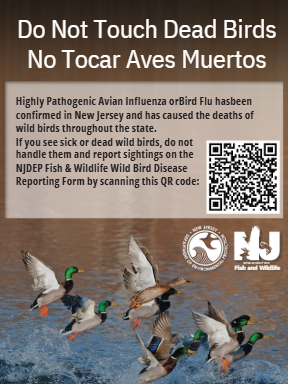
(Gloucester Township, NJ) – The Camden County Department of Health and Human Services is currently monitoring the spread of bird flu throughout New Jersey. Currently, no birds in Camden County have tested positive for bird flu and the risk to the public remains low.
Between February 14 and February 16, 2026, more than 1,100 dead or sick wild birds were reported to the New Jersey Department of Environmental Protection (NJDEP). Most reports involved Canadian geese, with a smaller number involving other species. Within this timeframe, Gloucester Township reported approximately 10–20 dead geese.
At this time, NJDEP is unlikely to conduct additional avian flu testing in areas where the virus has already been detected. In March 2025, levels of avian influenza were detected in our local wastewater.
CHEER– A STAR IS BORN Julia Sienna Santiago performed on American Idle on Monday, February 16, and won the coveted GOLDEN TICKET. The song she sang was the National Anthem. A tribute to her appeared on Facebook. The Facebook post read, “Freehold Township showing BIG pride. Congratulations to Julia Sienna Santiago – Freehold Township resident, Howell High School FPAC graduate, Sea Girt Police Special Officer, and now an American Idol Gold Ticket Winner. From singing our National Anthem at Freehold Township Day to the Idol stage – we can’t wait to see what’s next!”
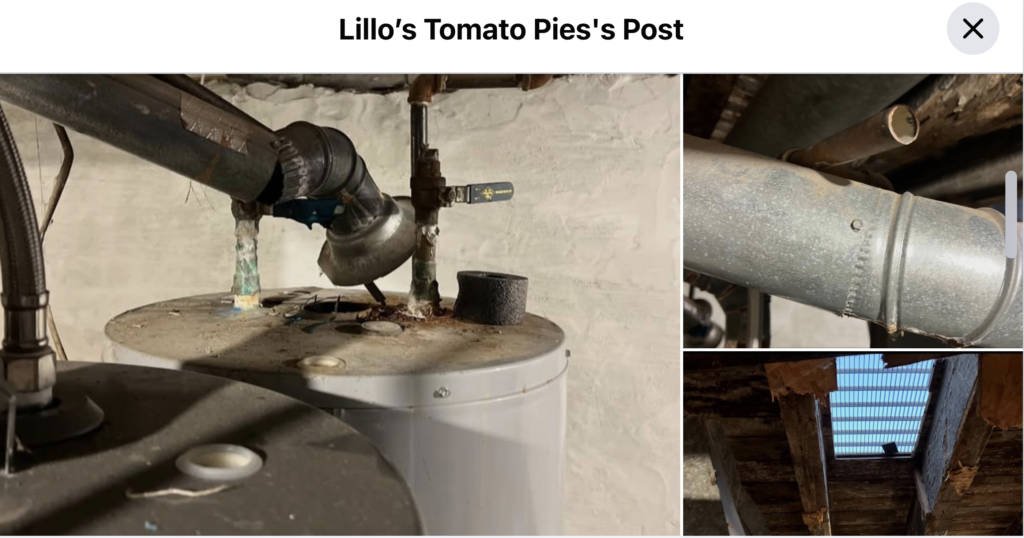
JEER-The night before Lillo’s Tomato Pies, 159-57 South Burlington, Gloucester City was to be inspected by the Gloucester Housing Department, someone broke in and stole the copper pipes. As a result they had to postpone their opening until February.
CHEER-To the return of American Legion Post 150. Mount Ephraim welcomed back its local American Legion post, restoring an important community hub for veterans and civic life.
CHEER — To the Westville DPW for early storm prep. Before the storm hit, Westville’s Public Works Department publicly announced its readiness plans and emergency contacts, demonstrating a level of communication and preparation that neighboring towns could learn from.
JEER — To the slow cleanup in Westville after the storm, Westville issued multiple updates reminding residents about sidewalk clearing and storm safety — a sign that many property owners still weren’t doing their part after the snowfall. Westville issued multiple updates reminding residents to clear sidewalks and practice storm safety — a sign that many property owners still weren’t doing their part after the snowfall.
CHEER -A BIG SHOUTOUT for warmer temperatures and rain that arrived this week in the State of New Jersey. Since the January 25 snowstorm, that storm have affected residents of Gloucester City and other communities in New Jersey and Pennsylvania. The National Weather Service seven-day forecast calls for a high temperature of 48 today, cloudy with a chance of rain. Partly cloudy skies on Saturday, with a high of 50. The low for Sunday will be 29 and Monday the low will be 30. Cloudy skies for both days with a chance of rain and snow. Source National Weather.
CHEER – Last Wednesday, the House approved the SAVE America Act. The bill now moves to the Senate, where it faces opposition from Democrats. It aims to make significant changes to voting laws in the U.S., including requiring voters to show proof of citizenship to register, ending mail-only registrations, and for the first time, mandating photo ID in every state. It also urges states to take steps to remove noncitizens from voter rolls. “It’s just common sense. Americans need an ID to drive, to open a bank account, to buy cold medicine, to file for government assistance,” Speaker Mike Johnson, R-La., told reporters. “So why would voting be any different than that?” Democrats argue the legislation will disenfranchise Americans, noting that voting by noncitizens is already illegal. Current law requires voters to attest to their citizenship under oath, with criminal penalties for violators. The bill mandate that all votes be counted and tallied on Election Day.
CHEER-New Jersey American Water is thrilled to announce the launch of the 2026 American Water Charitable Foundation Water and Environment Grant Program. The Foundation invites community partners to apply for grants that promote clean water, conservation, environmental education, climate variability, and water-based recreation projects. Applications will be accepted through March 6, 2026. READ MORE
CHEER –Police officers searching high and low for a missing toddler in Louisville, Kentucky, last month received an unlikely assist from a four-legged hero. While a drone and police helicopter searched overhead for signs of the 3-year-old boy, officers with the Louisville Metro Police Department’s Seventh Division canvassed the neighborhood. According to The Blaze, a dog appeared out of nowhere and joined the search. Thanks to that shaggy dog, the child was found locked in the front seat of a nearby In the footage, it’s clear that the dog was similarly excited over the result, wagging its tail excitedly and darting its nose from officer to officer. “Lassie found him!” says one of the officers. Thompson suggested that in his two years patrolling the neighborhood, he had never seen the hero dog before or since. “I don’t know where the dog came from,” he said. “But it was a blessing from God that day.”The LMPD stated, “Outstanding work by our officers, and a four-legged friend who reminded us that heroes come in all forms.”car. SEE VIDEO
JEER-Presidents usually separate from any businesses before taking office to avoid conflicts of interest. Donald Trump, however, appears in a television commercial promoting the Trump Watch, which costs $100,000. There are cheaper models. Technically, the president is allowed to maintain his businesses as long as he doesn’t use his public office to promote them. Trump no longer directly runs the Trump Organization, but he still profits from it. His presidency is still directly tied to the business, as it sells hundreds of “Trump,” “MAGA,” and “45-47” items. If you peruse Trump’s watch website, you’ll find a video of Trump endorsing the products while standing in front of American flags.The Market Realist reported that Mr. Trump has earned over $10 billion from merchandise sales in 2025 alone. We think selling his Trump merchandise while in office demeans the office of the presidency. READ MORE
CHEER-We still believe that Trump is the best person to be leading our country when compared to the Democratic presidential candidate Kamala Harris and her running mate, Gov. Tim Walz. Minnesota is now facing one of the largest documented government service fraud scandals in United States history. Under Gov. Tim Walz’s evidently unwatchful eye, federal prosecutors estimate that approximately $1 billion in taxpayer funds has been siphoned from multiple state- and federally funded social-service programs over the last five years. We suggest that investigators will eventually determine Walz’s guilt in the billion-dollar fraud.
ABOUT THE AUTHOR: William E. Cleary Sr. is a veteran South Jersey journalist and editor with more than five decades of experience covering local government, crime, and community life. He is the founder and editor of CNBNews. And, the former editor and publisher of The Gloucester City News and the Camden County Record, two weekly print newspapers. His memoir, “A Cop, A Reporter, and a Priest Walk Into a Bar,” shares stories from a lifetime spent chasing the truth, holding officials accountable, and giving a voice to the community.Look for his book on Amazon in paperback and Kindle editions. Your support helps preserve independent local journalism and the history of Gloucester City and the surrounding region. eBook $9.99; Paperback $16.99BUY HERE
“In trying to find the best fit for a regional justice complex we are respecting Mayor Maria Lawrence and the local elected body’s formal request that it not go at the state facility located in the southern end of Winslow Township. We are paying deference to the integrity of the municipality and its local elected officials in their decision. Moving forward, we will work to find a new location where a majority of the local governing body agrees that this facility and additional development would be a benefit to their town. That said, we do believe in the concept of a new regional justice complex that focuses on the needs of the occupants, so regionally and as a community, we can cut down on recidivism and center our attention on rehabilitative practices that make our society safer.