
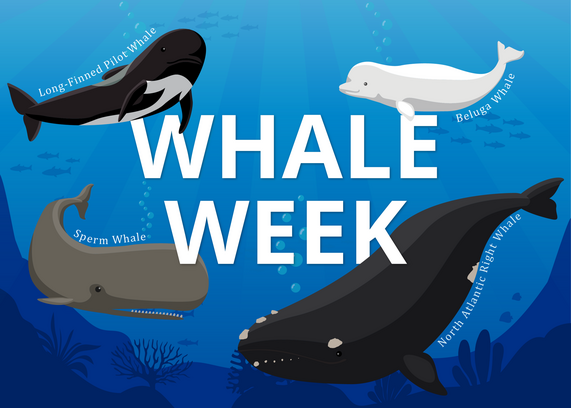
We celebrated Whale Week from February 9–13. If you missed it, be sure to check out some of our great whale content!
Whale Week: Celebrating the Wonder of Whales
Whales are among the largest and oldest animals on Earth. They can be found in every ocean and range in size from the small dwarf sperm whale to the massive blue whale, the largest animal on the planet. Explore NOAA Fisheries’ whale science and conservation efforts through the features and videos below.
Celebrate Whale Week with Us: A Message from the Director of Protected Resources
Director of NOAA Fisheries’ Office of Protected Resources, Kim Damon-Randall, shares a message inviting everyone to learn about the types of technology we use to study whales, how to watch whales responsibly, and how you can help whales.
Follow the Whales: How Tagging Supports Whale Research and Rescue
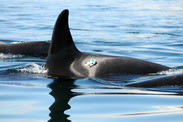
Scientists at NOAA Fisheries attach electronic tags to individual whales to safely and remotely collect powerful data. Marine animal telemetry allows the scientists to monitor the movement and behavior of a tagged whale and learn how whales use their ocean habitats.
Messaging Mariners in Real Time to Reduce North Atlantic Right Whale Vessel Strikes
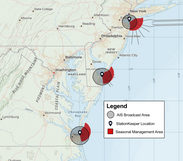
AIS network whale alerts
A new real-time messaging network uses a well-established maritime navigation safety technology—the Automatic Identification System—to reduce the risk of vessel strikes involving North Atlantic right whales.

International Survey Counts Bowhead and Beluga Whales in the Beaufort Sea
In 2025, NOAA and the Alaska North Slope Borough successfully completed a survey to count bowhead and beluga whales in the U.S. and Canadian Beaufort Seas and Amundsen Gulf. This international, multi-agency, multi-species project will directly contribute to continued food security of Iñupiat and Inuvialuit communities in villages of the Alaskan and Canadian Arctic.

Three-Dimensional Acoustic Tracking Sheds Light on Beaked Whale Dive Behavior and Acoustic Detection
A new study sheds light on why some beaked whale species are more detectable than others using passive acoustic monitoring. Researchers examined how differences in species-specific diving and echolocation behaviors affect the ability to detect beaked whales using underwater listening devices.