
American Lung Association to Release NJ Air Pollution Report

On Earth Day, Wednesday, April 22, the American Lung Association in New Jersey will release the 27th annual “State of the Air” report, which tracks exposure to unhealthy ozone and particle pollution. The report serves as a “report card,” ranking air quality in metro areas and grading counties across the state. Additionally, the report ranks the most polluted and cleanest cities across the country.

Continue reading “American Lung Association to Release NJ Air Pollution Report”

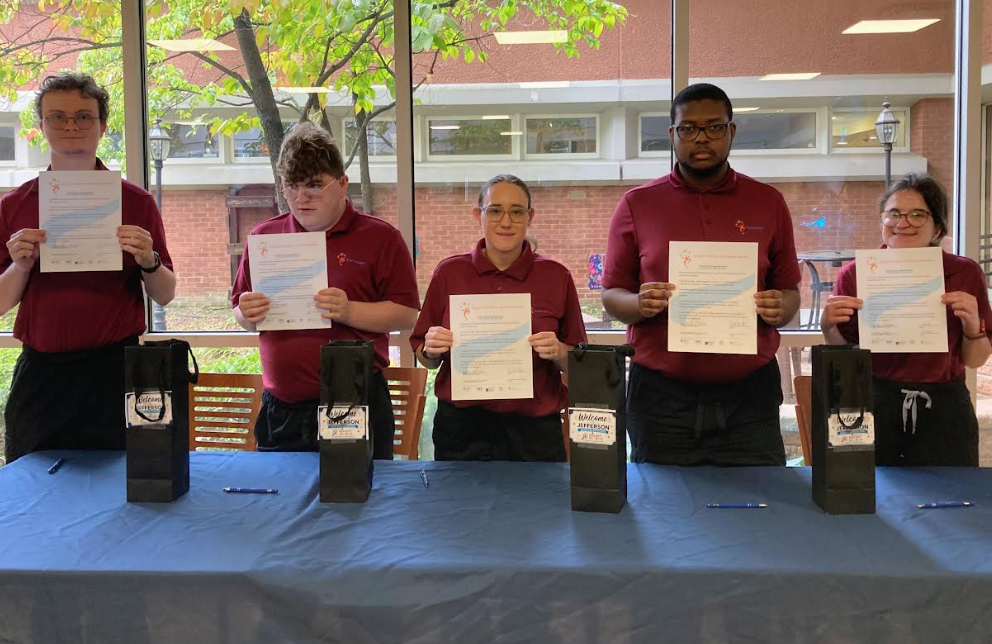
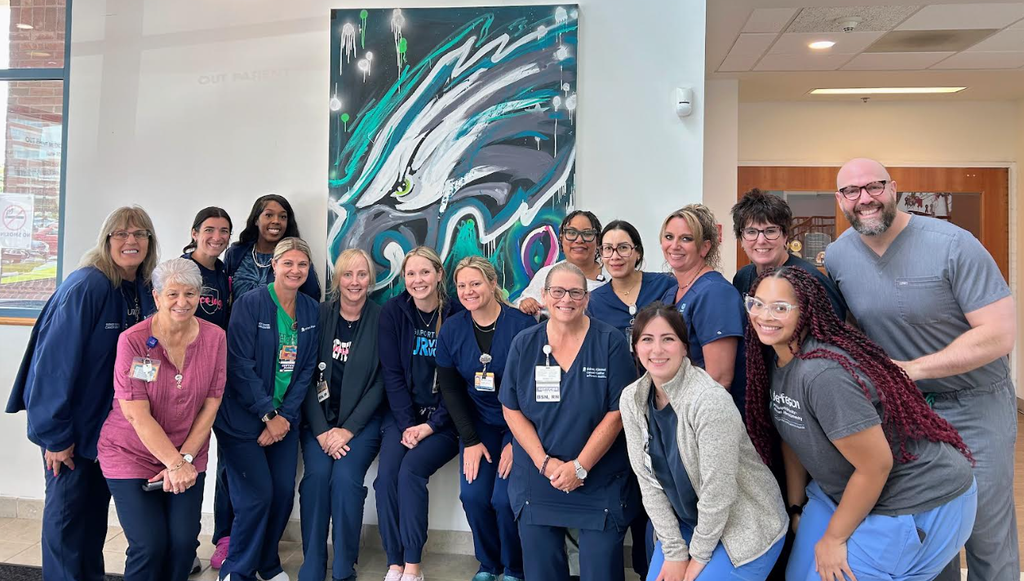
Jefferson Health Recognizes South Jersey Team Members

Jefferson Health has announced its latest New Jersey recipients of the DAISY Award, an international recognition program that honors nurses for their extraordinary clinical skill and compassionate care, and recipients of the Being Extraordinary Everyday (BEE) Award, which recognizes non-nursing staff who work alongside nurses to likewise enhance the patient experience. Recipients are selected by Jefferson’s Clinical Recognition Committee in New Jersey to celebrate team members who go “above and beyond” in delivering compassionate, patient-centered care.

Continue reading “Jefferson Health Recognizes South Jersey Team Members”

Health Alert for Frozen, Ready-To-Eat Chicken Nuggets

The U.S. Department of Agriculture’s Food Safety and Inspection Service (FSIS) is retracting the public health alert issued on April 1, 2026, for Walmart Great Value Fully Cooked Dino Shaped Chicken Breast Nuggets with “Best If Used By” date “Feb 10 2027” produced by Dorada Foods after confirming that the product does not pose a public health concern.

The public health alert was originally issued based on routine surveillance sampling conducted by the New York State Department of Public Health that indicated elevated trace levels of lead. Because this product is commonly consumed by children, FSIS issued the alert to inform consumers of a potential risk.

Continue reading “Health Alert for Frozen, Ready-To-Eat Chicken Nuggets”

Make-A-Wish Grants 13-Year-Old Leukemia Survivor’s Dream for a Day

On National Doctors Day, Make-A-Wish New Jersey and Hackensack Meridian Health celebrate 13-year old Alexander Alvarez from Carteret, New Jersey, who took on the title of doctor for the day as Make-A-Wish New Jersey and Hackensack Meridian Health partnered to grant his wish to become a trauma surgeon. 

For a child who has bravely battled leukemia, the last place you might expect them to want to be is back in a hospital. Yet, for Alex, his one true wish was to trade his patient gown for surgeon’s scrubs. Alex got hands-on experience and was immediately immersed as ‘Dr. Alex’ for the day.

Continue reading “Make-A-Wish Grants 13-Year-Old Leukemia Survivor’s Dream for a Day”

Hackensack Meridian’s Female Robotic Surgeons Lead Surgical Innovation

This Women’s History Month, Hackensack Meridian Health is proud to recognize its exceptional team of 46 female robotic surgeons building a more inclusive and innovative future for surgery.

While robotic-assisted surgery is a rapidly advancing field, it often presents significant barriers to entry for women seeking training and mentorship. A recent study found, women robotic surgeons only perform around 10% of robotic surgeries.  Hackensack Meridian Health (HMH) stands as a clear exception, with its robust and diverse team of 46 female robotic surgeons reflecting a deep-seated commitment to fostering an empowering and equitable environment.

Continue reading “Hackensack Meridian’s Female Robotic Surgeons Lead Surgical Innovation”

CDC: ANOTHER STRAIN OF COVID DISCOVERED IN NEW JERSEY


A new variant of COVID has been discovered in New Jersey, according to the CDC

The SARS-CoV-2 variant BA.3.2 was first identified in South Africa on November 22, 2024. BA.3.2 has approximately 70–75 substitutions and deletions in the gene sequence of the spike protein relative to JN.1 and its descendant, LP.8.1, the antigens used in the 2025–26 COVID-19 vaccines. CDC is using a multimodal SARS-CoV-2 genomic surveillance approach to monitor the emergence and spread of BA.3.2 and other SARS-CoV-2 variants internationally and within the United States. The first U.S. BA.3.2 detection occurred on June 27, 2025, through CDC’s Traveler-Based Genomic Surveillance program in a participant traveling to the United States from the Netherlands. The first U.S. detection of BA.3.2 in a clinical specimen collected from a patient was reported on January 5, 2026. As of February 11, 2026, BA.3.2 had been detected in voluntarily self-collected nasal swabs from four U.S. travelers, clinical samples from five patients, three airplane wastewater samples, and 132 wastewater surveillance samples from 25 states. BA.3.2 has been reported by at least 23 countries. SARS-CoV-2 continues to cause substantial morbidity and mortality worldwide. BA.3.2 mutations in the spike protein have the potential to reduce protection from a previous infection or vaccination. Continued genomic surveillance is needed to track SARS-CoV-2 evolution and determine its potential effect on public health.

Continue reading “CDC: ANOTHER STRAIN OF COVID DISCOVERED IN NEW JERSEY”

13 Virtua Surgery Centers Earn High-Performing U.S. News 2026 Ranking

 U.S. News & World Report recently released its third annual list of “Best Ambulatory Surgery Centers (ASCs) 2026.” This year, 13 of Virtua’s 42 Ambulatory Surgery Centers achieved High Performing status in at least one specialty—an increase of seven from last year. Performance strengths were distributed across Orthopedics & Spine, Ophthalmology, Colonoscopy & Endoscopy, and Urology, reflecting system‑wide improvement and depth across service lines. These ratings serve as a vital resource for the millions of Americans opting for same-day surgical care in these specialties.

Continue reading “13 Virtua Surgery Centers Earn High-Performing U.S. News 2026 Ranking”

A New Way to Close the Pediatric Mental Health Gap

by Michigan Medicine – University of Michigan

Newswise — For years, pediatricians have faced a growing dilemma. Families increasingly turn to primary care for help with mental health concerns, yet many pediatricians feel underprepared, and child psychiatrists remain in short supply.

More than a decade ago, University of Michigan Health tried a different approach: bringing child psychiatry directly into the pediatric medical home and embedding it into pediatric resident training.

The result was the Pediatric Psychiatry Colocalized Consult Clinic, or P2C3, a model designed to improve access to care while training future pediatricians to manage common mental health conditions.

Newly reported outcomes from the clinic, published in the journal Psychiatric Services, show the approach worked. The program proved durable, scalable and beneficial for both patients and pediatric physicians.

Continue reading “A New Way to Close the Pediatric Mental Health Gap”

Meet Johns Hopkins Children’s Center’s First Facility Dogs

Credit: The Johns Hopkins University/Will Kirk

 by Johns Hopkins Medicine 

Newswise — What: Johns Hopkins Children’s Center is like a dog with two tails! The children’s hospital now has its first full-time facility dogs. The two dogs, Rosalina and Yoda, are part of the Child Life Department’s Paws for Healing Facility Dog Program funded by a $150,000 grant from the Dunkin’ Joy in Childhood Foundation. The pair are expertly trained canines who work directly with pediatric patients during their clinic or hospital care. The dogs were carefully matched by the professionals at Canine Companions, who have bred, raised and trained service and facility dogs since 1975.

Before arriving at the Children’s Center, Rosalina, now almost 2 years old, and Yoda, who recently turned 2, underwent almost two years of training to be able to interact with patients on specific, individualized goals. Their handlers, Carrie Potter, senior child life specialist, and Molly Trippe-Gallagher, child life specialist III, also received specialized training.

Continue reading “Meet Johns Hopkins Children’s Center’s First Facility Dogs”

Taxpayer-Funded Science Pays Dividends

Dr. Dennis Liotta
In my nearly 50 years as a chemist at Emory University, I’ve seen the life-changing impact that federally funded university research can have firsthand. I spent the 1980s and 1990s helping develop the first treatments for HIV, which turned the disease from a death sentence into a manageable illness. Today, drugs like these are estimated to save over a million lives each year.

That’s why I was so alarmed to hear Commerce Secretary Howard Lutnick state recently that U.S. taxpayers get “zero” return on their investment in university research — and that the government should start seizing licensing revenues on universities’ patents it helps fund to secure a better deal for the public.

Continue reading “Taxpayer-Funded Science Pays Dividends”