
Real-Time Action from the Comfort of Your Home with Live Dealer Casino Games

Over the past decade, the online gaming industry has made significant strides, but few of these developments have been able to equal the thrill of live dealer casino games and casinos. With real-time contact, expert dealers, and high-definition video streaming, players can now experience actual casinos from the comfort of their own homes.  Live dealer Chơi casino tại AALIVE platforms connect online and physical casinos by fusing state-of-the-art technology with genuine human interaction.  Players’ interactions with casino entertainment have been altered by this fusion of convenience and realism, which has revolutionized the global online gaming market. 

The Development of Gaming with Live Dealers

In the early 2000s, live dealer gambling was created to fill this gap by enabling players to communicate with actual dealers through live video broadcasting. The ability to mimic the casino experience online with extraordinary realism was made feasible by technological advancements in broadband internet, camera quality, and streaming speed. Live dealer games are already a common feature of online casinos, drawing in millions of players who want to experience the thrill of live gambling without ever leaving their homes.

The Operation of Live Dealer Casino Games

Specialized studios or, occasionally, real casino floors broadcast the games. Professional dealers use actual cards, wheels, and tables to oversee the games, just like they would in a real casino. Every element, including the dealer’s actions and the roulette wheel’s spin, is captured by high-definition cameras and streamed to players in real time. Through an internet interface, players place wagers, and real actions—rather than random number generators—determine the outcomes. During gameplay, players can converse with the dealer or other players thanks to sophisticated software that guarantees seamless interaction. 

The Human Aspect of Play in Real Time

Players compete against algorithms in typical digital casino games, which can seem impersonal. Live dealer services, which employ real dealers to welcome players, go over game rules, and answer questions via live chat, bring back the social element of gaming. By simulating the ambiance of a real casino, this interaction makes the encounter feel cozier and thrilling. Because players can watch every shuffle, deal, or spin happen in front of them, the presence of a human dealer also increases trust and fosters a sense of fair play.

Well-liked Live Dealer Games

A range of games is available at live dealer casinos to accommodate players of all skill levels and interests. Classic games featuring tables and stakes to suit different players, including baccarat, roulette, and blackjack, are the most played. Live poker has also gained popularity because versions like Casino Hold’em and Three Card Poker provide an exciting blend of skill and chance. Game-show-style live casino games, which blend traditional gambling with television-style presenting, have created a new level of excitement in recent years. By bringing originality and individuality to the typical casino experience, these cutting-edge games appeal to a larger audience.

Comfort Without Sacrifice

Without having to go to a physical site, players may access real-time casino action at any time and from any location. Because the games are optimized for both desktop and mobile devices, users may play them at home or on the go. The experience is nonetheless immersive despite this flexibility, featuring all of the sounds, sights, and business etiquette of an actual casino. The availability of live gaming has made it accessible to players, creating a vibrant and diverse gaming community where players from different countries can assemble at the same virtual table.

Behind-the-scenes technology

While optical character recognition (OCR) software transforms the dealer’s physical motions into digital data that the system can process rapidly, high-definition video streaming guarantees clear views. Even users with poorer connections can enjoy coordinated and fluid gameplay thanks to low-latency networks. To make the experience even more captivating, certain Chơi casino tại AALIVE platforms now use theatrical effects and different camera viewpoints. The quickness and quality of live dealer games are improving as 5G and higher internet speeds become accessible, providing players worldwide with greater immersion.

Safety and Equity

For live dealer casinos to succeed, fairness and trust are crucial. Reputable operators safeguard user information and financial transactions with cutting-edge encryption technologies. There are fewer questions regarding randomness or manipulation because the games are run by actual dealers with tangible equipment, making the results obvious and provable. Gaming authorities license and regulate the majority of platforms, guaranteeing adherence to global norms. Frequent testing and audits provide an additional degree of legitimacy. And reassure players that they are taking part in a safe and equitable environment.

The Social Aspect of Gaming at Live Casinos

Playing live dealer games is about more than just placing bets; it’s about building relationships. Players can interact with dealers and other players at the table by using the integrated chat feature. This social component fosters friendly rivalry and shared excitement by simulating the communal element of land-based casinos. These conversations foster a sense of community among gamers, whether they are about tactics or celebrating a win.


NJ Gaming Officials Tussle Over Crypto Cash, Eyeing Volatility Fix

Person Holding Bitcoin – Free Stock Image

Cryptocurrencies are being adopted into the daily lives of many individuals and becoming a prominent payment form, which is causing New Jersey a huge headache. More specifically, more individuals want to use their cryptocurrencies when it comes to leisure activities like gambling. This applies to sports betting, casinos, and iGaming platforms, which can see the NJ state taking a huge step. However, officials are hesitant for a number of reasons, many surrounding major safety and financial challenges.

For one, the DGE (Division of Gaming Enforcement) is concerned about crypto volatility and how it would navigate this. If a punter were placing a $100 bet in Bitcoin at an online casino, and the value of the BTC suddenly dropped or soared, how would this be handled? It could result in a nightmare situation regarding fairness for both the player and the casino. A solution to this would be to look at how newer or out-of-state crypto gambling sites account for these potential market surges. 

New Fast Withdrawal Casino is a good example of a platform that offers fast withdrawal methods, huge bonuses, and enhanced privacy. Crypto plays a large role in these platform archetypes, with volatility usually being solved through the use of fiat currencies. Upon players depositing funds in the crypto of their choice, the casino immediately converts the funds to fiat currencies or stable coins while holding it. As such, if a player gets a win, the owed amount gets converted back to cryptocurrency and paid out, completely evading the impact of market surges.

Beyond this, further pressure is being placed on NJ to take action as residents are using their digital assets to gamble elsewhere. Specifically, they are making use of offshore sites that do not follow state regulations, which means two things: the state is losing money, and players’ safety is at risk. This moves millions of dollars outside of the regulated NJ economy, costing the state a significant sum in tax revenue that could be used to better public amenities and fund programs. Players are also stripped of vital consumer protection oversight, putting them at risk of being taken advantage of by these offshore platforms.

The only solution to this issue is to bring these players back within the state’s safety net, which in turn, will also benefit the state financially. As with most states considering such a significant and vital step in their gambling regulations, it can take years to have such a bill signed into law. This further highlights how important it is for NJ officials to come to a decision and get the process for this integration started. It could also mean more operators will move their businesses into the Garden State, which could lead to an even bigger tax revenue stream. 

NJ state ultimately has more to win than to lose in this situation. For instance, if more operators set up shop, it would make it that much easier to control the flow of local crypto betting among punters. These casino operators would also need to adhere to state-specific licensing requirements, and all suspicious parties can be filtered out. The only set-back at this point is the lack of regulatory oversight for crypto itself. Although efforts are being made to provide a robust framework that will offer clear-cut rules and advice regarding cryptocurrency, this is something that might only be signed off in 2026. Overall, this is an issue many other states also need to start paying attention to as more and more punters opt for crypto gambling platforms. NJ officials have no time for hesitancy as this issue continues to grow across the country. 

Some Players Prefer Virtual Platforms to Brick-And-Mortar Poker Rooms and Here’s Why

People Playing Poker

People have loved playing poker for many years. Winning isn’t just about luck; you also need skill, careful thinking, and attention to other players. These days, you can play poker online or at a real table in a casino. Some love logging in from their home and playing whenever they want. Others enjoy the energy and the atmosphere of a live game, from feeling the chips in their hands to hearing the cards shuffle. The option someone picks usually depends on their lifestyle, habits, and what kind of fun they’re looking for.

Online poker is easy to play anytime. You can log in almost anytime and choose from lots of games on your computer or phone. Several poker sites that accept bitcoin are popular because they let players deposit and withdraw money quickly and safely, while keeping personal info private. These platforms have a wide range of games, like Texas Hold’em, Omaha, and Stud, each with its own rules and payout percentages or RTPs. Cash games and tournaments also come with different stakes, giving players many ways to play. Meanwhile, bonuses, promotions, and loyalty rewards also make it easier to try new games and spend more time playing. For people who like fast action and variety, online poker is easy and fun.

Speed makes a difference for these players. A virtual dealer can deal sixty to seventy hands every hour; it’s much faster than the thirty or forty hands you usually get at a live table. Some players even play more than one table at a time, which gives extra practice and helps them learn quickly. The pace allows people to think fast and make quick decisions. The slower pace of live games appeals to many players because it gives them time to watch others, plan their bets, and enjoy the atmosphere.

On the other hand, for locals, playing poker often means taking a trip to Atlantic City, where big casinos offer busy poker rooms filled with tables, games, and fun events. The atmosphere in these rooms is something that some online spaces can’t match. The ability to read players’ gestures, glances, and tone of voice all add to the energy. Dealers and staff make the game lively, and local tournaments or poker nights let people connect with the community while enjoying poker.

Money also plays a role in choosing where to play. Online poker usually has lower minimum bets, which makes it easier for beginners or anyone who wants to control spending. Special offers let players try more games without spending too much. Playing poker at the table usually costs more because of higher stakes and extra expenses such as travel, table fees, or tips. Holding real chips and seeing your winnings in front of you creates excitement that is hard to get online.

Online play is private and simple, and in the future, gaming will be even easier to play from home or anywhere you like. Poker in a live setting has sights, sounds, and energy you can’t get on a screen. The shuffle of cards, the clink of chips, and the thrill of a big pot make live games exciting. Special events at Atlantic City casinos or poker nights in nearby towns can make a night out even more fun.

How much experience someone has often affects where they like to play. Beginners usually start online because it feels easier and less intimidating. They can practice and try strategies before going to a live table. Experienced players enjoy both, using online tables for quick sessions and live rooms to read other players in person. Many try both, showing that online and casino poker can work well together instead of competing.

Ultimately, it’s all about what you like. Some players like the speed, convenience, and variety online. Others love talking to people, watching opponents, and holding real chips. Both choices offer something special, and the best pick depends on what makes the game most fun for you. Some days you might enjoy the comfort of home, while other times you might want the buzz and excitement of a real poker room.

AI Runs on Power But Power Isn’t Moving Fast Enough

By Christian Bonilla

Artificial intelligence is booming — and America’s power grid is struggling to keep up. 

At the World Economic Forum, President Trump recently warned that “We need double the energy we currently have in the United States for AI to be as big as we want to have it.” Elon Musk has echoed similar concerns, predicting that AI data centers could overwhelm the electricity supply next year. The Department of Energy predicts that AI-driven electricity demand could increase sixfold by 2030.

They’re right about the scale of AI’s electricity needs. But they’re wrong about the diagnosis. 

America doesn’t suffer from a lack of energy resources. We have vast oil and gas reserves, plus growing solar and wind energy capacity. The real problem is getting the electricity that’s already, or soon could be, generated from these energy sources to the data centers where it’s needed.

Solving this coordination challenge will require a new approach to energy infrastructure — one with an eye toward future needs.

This distinction between coordination and total capacity matters. If the problem were simply about generating more electricity overall, the solution would be straightforward: build more power plants and transmission lines to bring power to all the new data centers. But that would — and will — take years, if not decades. New transmission lines alone often take years to complete.

Instead, we need to build new data centers next to existing energy deposits — such as natural gas fields in places like West Texas, Oklahoma, North Dakota, and elsewhere — so that power-hungry data centers can build on-site generating plants and obtain the electricity they need, without having to connect to the broader grid. Using standardized data center designs and prefabricated components could further accelerate construction timelines and get data centers up and running years faster than previous generations of data centers built in traditional hubs like Northern Virginia or Silicon Valley.

Data center developers already recognize the advantages of this coordinated approach. A recent KPMG survey revealed that 77% of data center stakeholders consider it key to build alongside energy generation.

But in practice, data center developers often struggle to understand and vet energy producers. And in turn, those producers often misunderstand the needs of data center operators. 

This is a challenge even for the largest AI developers. The Stargate project, a $500 billion AI data center investment backed by OpenAI and SoftBank, chose Abilene, Texas, as its flagship site after fielding interest from sixteen different states — largely for Abilene’s energy availability, alongside other land and regulatory advantages. Despite the initial fanfare, practical challenges quickly tempered aspirations, and the initiative has mostly stalled. As a result, Stargate has quietly scaled back its 2025 ambitions to building a single data center — in Ohio.

To lead in the AI age, America will need more than chips and capital. It needs clearer rules, faster transactions between energy producers and AI developers, and a system that rewards coordination just as much as production.

If we solve this coordination challenge, America can lead the AI revolution and improve everything from health care to education to national security. But if we fail, we’ll be left with plenty of power — just not where it matters.

Christian Bonilla is the Co-Founder and Co-CEO of DMARK Energy Solutions. 

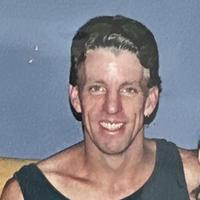
Christopher Fulton James, 58, of Gloucester City

Peacefully on October 15, 2025. Age 58. Of Gloucester City. “Stix” & “Jamesy”. Predeceased by his parents, William F. James and Rosemary James (nee Keoghan). Beloved father of Shannon (Joseph) Aboushanab, Angela James and Elizabeth James. Cherished grandfather of Samir and Ramy Aboushanab. Beloved brother of Therese (Mike) Smollock, late William James (surviving Virginia), late Michael James (late Jo-Ann), late Kathy James, Patrick James, late Steven James, Maria (Tom) Kerchersky, David James, and Marybeth (Scott) Jeffries. Survived by many loving nieces, nephews and cousins. 

Chris was born in Camden, NJ and was a lifelong and proud resident of Gloucester City, NJ. He graduated in 1985 from Camden County Vocational & Technical Schools where he proceeded to prove his hard work ethic through working for the City of Gloucester as a Laborer for several years, and for InTest under the Mechanical Assembly department for over 15 years. He was a former member of the Gloucester City String Band and the Broomall String Band. Chris was a diehard fan of the Buffalo Bills, enjoyed spending his time outside, with friends, and drumming away in the garage with a smile and a wave.

Relatives and friends are invited to his visitation on Monday morning, October 27, 2025 from 10 to 11:30 AM at the McCANN-HEALEY FUNERAL HOME, 851 Monmouth St., Gloucester City, where his funeral service will be celebrated at 11:30 AM. Interment will be private.

Condolences and Memories may be shared at www.mccannhealey.com under the obituary of Christopher F. James. Funeral Arrangements and Inquiries may be made through: McCann-Healey Funeral Home, Gloucester City. Ph: 856-456-1142


To plant Memorial Trees in memory of Christopher Fulton James, please click here to visit our sympathy store.

From Neighbourhood to Profile: What Online Dating Means for Small-Town Communities

In small towns, connection has always been a matter of proximity. People met at church events, community picnics, or through mutual friends. Everyone knew everyone — sometimes a little too well. But in recent years, that landscape has quietly shifted. Online dating has arrived in places once defined by face-to-face familiarity, and it’s changing the rules of how people meet.

For many locals, platforms such as quickflirt.com have become a surprising gateway to meet new people beyond the same few social circles. What used to feel like limited options now feels like a digital open door — a place where curiosity replaces small-town routine. The coffee shop may still be the center of gossip, but the first “hello” now often begins behind a screen.

Breaking the Small-Town Stereotypes

In communities where privacy is prized and reputation still matters, the idea of online dating once seemed foreign. Many worried about judgment or misunderstanding. But those fears have softened as more residents realize that technology isn’t replacing personal values — it’s expanding possibilities.

Local daters have discovered that connecting online doesn’t mean giving up authenticity. Instead, it allows people to express who they are with more honesty. Small towns have always valued real conversations, and that’s what many online connections now mirror — conversations that start with shared interests, not just shared geography.

The shift is subtle but significant: digital platforms are becoming the new meeting grounds for people who might never have crossed paths otherwise.

Privacy and Trust in a Familiar Environment

Of course, dating in a close community comes with its own challenges. When everyone knows everyone, discretion matters. That’s why smaller platforms and modern apps now put privacy and control at the forefront. Users can manage who sees their profiles and what information they share — an essential step in places where anonymity is rare.

People have learned to set healthy boundaries online, treating digital dating as an extension of their personal life, not a replacement for it. And as more residents experience positive outcomes, the stigma around online dating continues to fade. For many, it’s now just another way of saying “hello” — with a bit more choice and a lot less pressure.

When Technology Meets Tradition

Technology is often viewed as something that erodes community ties, but in towns like Gloucester City, it’s doing the opposite. Online dating doesn’t replace real-life meetings; it enhances them. Many couples who first matched through apps now enjoy local festivals, volunteer together, or grab coffee at the same spots they used to frequent before they met online.

The digital world isn’t drawing people away from their roots — it’s weaving into them. Just as social media reconnected old classmates, dating apps are reconnecting neighbors in a modern way. It’s the same human story, just with a few more taps on the screen.

The Local Effect: From Profiles to Real People

The most remarkable change isn’t technological — it’s social. People who once thought there was “no one new left to meet” are now realizing how diverse their own community truly is. From single parents to retirees, from newcomers to lifelong residents, everyone’s part of the same digital ecosystem.

The small-town dating scene, once quiet and predictable, has found new rhythm. And with that change comes a sense of hope — that connection is still possible, whether it begins with a wave across the street or a message on an app.

Conclusion: Connection Has No Zip Code

In the end, online dating isn’t about leaving small-town values behind; it’s about giving them room to grow. Respect, sincerity, and community spirit remain at the heart of every relationship — they’ve simply found a new channel of expression.

For residents of Gloucester City and towns like it, technology is no longer something distant or disruptive. It’s a bridge — one that connects familiar hearts through unfamiliar means. Whether through a smile at the local diner or a message on quickflirt.com, connection still begins the same way: with curiosity, kindness, and the hope of finding something real.

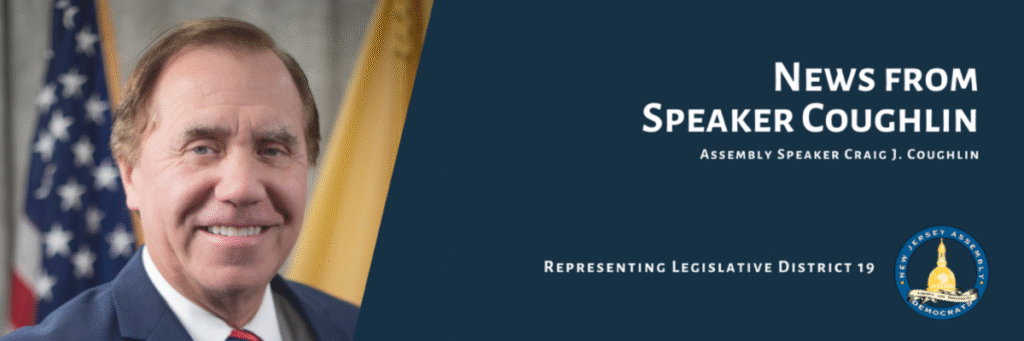
Speaker Craig J. Coughlin Statement on New Jersey Property Tax Relief Benefits


“As Assembly Speaker, I’ve made it a priority to make New Jersey more affordable, and that includes delivering on property tax relief for millions of residents. This week, seniors who filed for property tax relief using the new PAS-1 application are receiving a letter from the New Jersey Department of the Treasury, detailing which property tax relief benefits they qualify for and how much money they will receive from our property tax relief programs – Senior Freeze, ANCHOR, and Stay NJ, which is new this year. “I am so pleased that Stay NJ is now a reality, and I was proud to sponsor the legislation creating the program. Through Stay NJ, seniors will receive a break on their property taxes, enabling them to stay in their homes, close to family and friends. Our property tax relief programs, helping both homeowners and renters, are returning more than $4.3 billion in savings back into the pockets of families and seniors across our state.”

Hooray! My Last Cancer Treatment Is Over


Note: This article was originally published on January 20, 2023. Because it was lost when Typepad, the host of our blog, shut down, it is being republished. 

 (photo credit Adnan Akram)

William E. Cleary Sr. | CNBNews

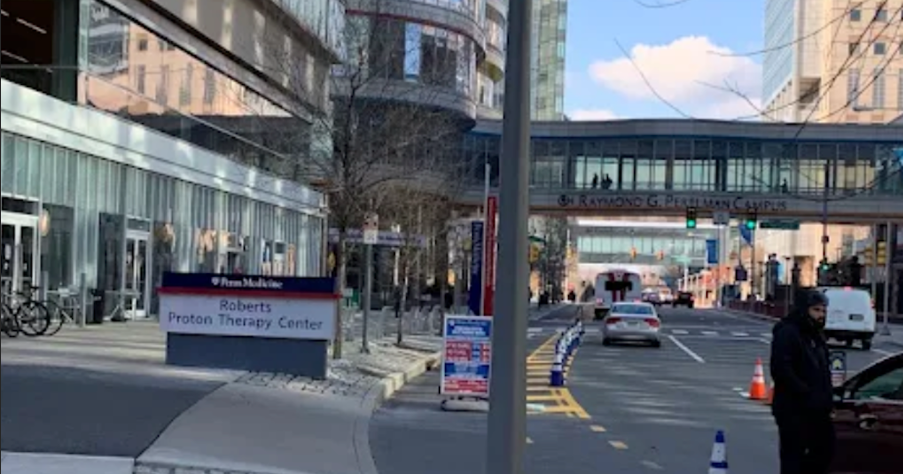
PHILADELPHIA, PA (January 20, 2023)(CNBNews)—On Wednesday, January 18, 2023, I headed to the Roberts Proton Therapy Center at 3600 Civic Blvd., Philadelphia, for my last prostate cancer treatment. With me were my wife, Connie; my daughter, Connie Lynn Woods; and my granddaughter, Brianna Woods. My entire family wanted to be there, but the hospital limits the number of support people you can bring with you.

 Part of the celebration for people who complete this journey is ringing a ceremonial large bell that hangs in the corner of the waiting room on the bottom floor of that building. I was apprehensive, but what could go wrong? I watched five-year-olds ring that bell during my time at the Center, and they had no problems. Of course, being a Cleary, you always prepare to expect the unexpected, and so I was cautious. After being zapped by the Big Zapper, I got dressed and headed towards that corner for my big moment. My family gathered, and the patients and their family members in the room were looking toward the corner where I was standing. As I grabbed the rope to ring the bell, nothing happened. All eyes were on me. I swung the rope again, but still no sound. I looked towards Kathy, the receptionist, and she was yelling, “Swing it forward, not sideways.” Laughter and applause from the patients and staff broke the tension in the room as I rang the bell loudly and clearly several times. 

Read more: Hooray! My Last Cancer Treatment Is Over

How happy I am to have completed those 33 treatments. Several times, I wanted to quit because of the side effects I was experiencing. Plus, there were nights when I couldn’t sleep as I realized that I was facing a possible life-ending illness. And, I was still thinking about those hormone pills that make male breasts grow. Will I need a bra? And if so, what size?

Although the treatments are over, some of the radiation’s side effects, such as chills, tiredness, headaches, diarrhea, and nausea, have continued. The doctors said those symptoms may continue for some time or they may stop all of a sudden.  

In May 2022, the results of my routine PSA blood test increased by three points from 4 to 7.1. The PSA test is a blood test used primarily to screen for prostate cancer. The test measures the amount of prostate-specific antigen (PSA) in your blood. PSA is a protein produced by both cancerous and noncancerous tissue in the prostate, a small gland that sits below the bladder in males. 

In June, another PSA test was taken, which led to an MRI of the prostate in July and a prostate biopsy at the end of August. Both the MRI and the biopsy results confirmed that the tumor was cancerous. It was aggressive but localized to my prostate; in other words, it wasn’t metastatic. That was the good news; the bad news was that my cancer had a Gleason score of 8 and a Grade of 4.

My Proton therapy treatment began on December 6, 2022.  Proton therapy, also known as proton beam therapy, is a type of radiation therapy that uses high-energy protons (positively charged atoms) to damage the DNA in cancer cells. This type of cancer treatment is non-invasive, painless, and precise.

There are side effects from the radiation. Besides those mentioned, I also had chills, mouth and throat ulcers, and a rash on the trunk of my body. The GI problems were the worst. Some weeks it lasted for five days in a row.

Making this journey easier at Penn were some of the nicest doctors, nurses, proton therapy technicians, support staff, valet parking attendants, and cashiers I have ever met in my lifetime.   

According to information on the center’s website, the Roberts Proton Therapy Center features five treatment rooms and a dedicated research room for proton therapy. It also has an additional five rooms for conventional (photon) radiation therapy. As the largest center in the world for both proton and traditional radiation, they treat more than 100 patients with proton therapy daily. It consists of 75,000 square feet. 

Besides prostate cancer, proton therapy is used for Lung cancer, GI tumors, Breast cancer, Brain tumors, and Sarcomas. 

The same type of Proton treatment will be opening soon at the Penn-Virtua Hospital in Marlton, NJ. 

I had the privilege of meeting some fascinating people, who were also patients, during this period. There was a 73-year-old Russian naturalized citizen. Before his retirement, he was a teacher, and later, he ran a successful business in Delaware. The city of Wilmington claimed eminent domain to build public projects, and he was forced to close his business. Later, his wife fell ill, and he spent his retirement years caring for her. Most recently, his invalid brother moved into his house. Despite his cancer, he continues to take care of both his wife and brother.

There was a 25-year-old construction worker who was the sole provider for his 9-year-old daughter and his mother. He was diagnosed at another hospital with a brain tumor. When they operated on that tumor, the surgeons damaged the right side of his body. As a result, he could barely open his right eye, and he couldn’t move his right arm. The other hospital missed his cancer, and he was at Penn getting chemo treatments. Despite his health problems, the former karate student and his mother believed strongly in Almighty God and also believed in taking one day at a time. He hopes one day to return to construction work, a job he truly loves. His mother showed me pictures of him before his illness. The photo showed a strong, handsome man with a broad smile, holding his daughter, who was perhaps 3 years old at the time. 

There was a man in his 50s who was treated for cancer at another Philadelphia hospital in 2017. They told him that his cancer was cured. However, he kept telling his doctor that he didn’t feel well, and he was spending most of his day in bed because of the blasé feelings he was experiencing. After several years, he wasn’t feeling any better. He came to Penn for a second opinion, and they discovered he had bone cancer along with lung cancer. 

There was a 50-year-old woman who was diagnosed with breast cancer. We were both waiting for a CAT scan, and we were the only two people in the room. We both looked up from our phones, and I smiled, saying hello. When I asked her what she was being treated for, she said breast cancer.  She shared her concerns about her young children, as she was their sole provider. Her mother recently moved in with her to take care of her and the kids. “She is elderly, I am afraid she is taking on too much,” the young woman said. “I don’t know what will happen to my kids if cancer kills me.”  I didn’t know what to say. Her situation was much more serious than mine. I listened and tried to offer her words of comfort. 

This was my second experience with cancer. My first was in 2012-2013. At that time, the diagnosis was kidney cancer. However, after cutting me open, a biopsy of the tumor was performed, and it was determined that it was benign. 

For now, I am thrilled to be done with the radiation. I asked the doctor how I would know if the tumor is gone. “Let us worry about that; you go about living your life. Have a cheesesteak if you want. We will monitor your PSA test every three months, and that will tell us if we were successful.”

The American Cancer Society says …For most men with prostate cancer, treatment can remove or destroy the cancer. Completing treatment can be both stressful and exciting. You may be relieved to finish treatment, but find it hard not to worry about cancer growing or coming back. This is very common if you’ve had cancer.  https://www.cancer.org/cancer/prostate-cancer/after-treatment/follow-up.html

As you age in life, you can’t help but think every so often about death and how you are going to die. Based on my two experiences with cancer up until now, I don’t believe that disease will be my downfall. Nope, I picture myself tripping over a stone as I walk down the railroad tracks with my dog Peyton, hitting my head, and lying unconscious as a train rolls over my body. Perhaps that is a little extreme, but it has to be something that will earn me a big headline in all the newspapers and television stations. I could go skydiving, and the parachute doesn’t open. Or, I could live to be 100 years old and die in my rocking chair. 

Looking back over my life, I should have been gone long ago. This leads me to believe that I still haven’t fulfilled the reason why God put me on this earth 78 years ago. For now, I am going to savor this moment and continue to live my life to the fullest.  

Qué será, será. Whatever will be, will be

Elizabeth M. Benson, 88, of Voorhees

On October 21, 2025, at the age of 88. Of Voorhees. (nee Wolf) Formerly of NE Philadelphia. Predeceased by her husband, Harry Benson; her parents, Joseph F. Wolf and Elizabeth Wolf (nee Hughes); and her sister Pat Kerstetter (late Donald). Survived by her brother, Joseph F. “Jay” Wolf and his wife, Barbara; nieces and nephews, Jay Wolf (Marie) Tracy Stefan (Michael), Donald Kerstetter and Christine Gallo (Ed); great nieces and nephews, Courtney Stefan (Rickey Santosusso), Heidi Wolf, Jay Jay Wolf, Greta Wolf and Greer Wolf.

Elizabeth was a graduate of Gloucester Catholic High School. Before retirement, she worked many years for CIGNA in Philadelphia.

Relatives and friends are invited to her viewing on Friday morning, October 24th from 9 to 10 AM at the McCANN-HEALEY FUNERAL HOME, 851 Monmouth St., Gloucester City, where her funeral service will be celebrated at 10 AM. Interment will follow in New Cathedral Cemetery, Philadelphia, PA. 

Condolences and Memories may be shared at www.mccannhealey.com under the obituary of Elizabeth M. Benson. Funeral Arrangements and Inquiries may be made through: McCann-Healey Funeral Home, Gloucester City. Ph: 856-456-1142.

To plant Memorial Trees in memory of Elizabeth M. Benson, please click here to visit our sympathy store.

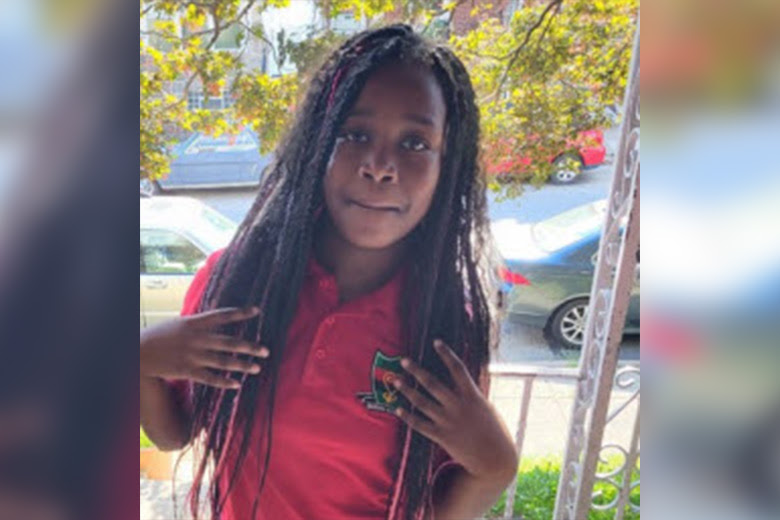
Missing Juvenile Korinthia Winston from the 15th District

The Philadelphia Police Department seeks the public’s assistance in locating missing juvenile Korinthia Winston. Korinthia was last seen September 24, 2020, at 8:30am, on the 43xx block of Devereaux Street. Korinthia frequents the area of the 6100 block of Edmund Street.

Korinthia is 12 years-of-age, 5’8″, 126 lbs., brown braided hair, brown eyes and was last seen wearing black pants and a red shir.

Anyone with information on the whereabouts of Korinthia Winston is asked to please contact the Northeast Detective Division at 215-686-3153.

For additional information and updates, visit https://www.phillypolice.com/news-blotter/missing-juvenile-korinthia-winston-from-the-15th-district/.