
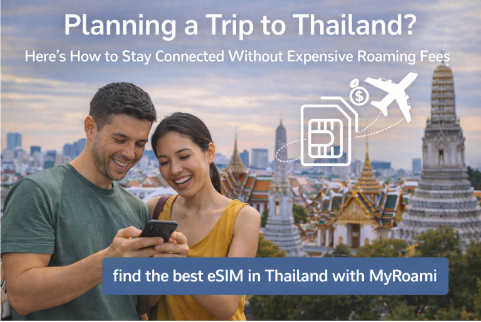
Thailand continues to rank among the most popular international destinations for American travelers. From the vibrant streets of Bangkok to the beaches of Phuket and the cultural landmarks of Chiang Mai, the country offers a mix of affordability, adventure, and rich history that appeals to vacationers, retirees, students, and digital nomads alike.
While most travelers focus on flights, accommodations, and sightseeing plans, one important detail is often overlooked: how to stay connected once you arrive.
Reliable mobile data is essential for navigating unfamiliar cities, booking transportation, accessing travel apps, communicating with family, and managing reservations. Yet many Americans still rely on traditional international roaming plans — often without realizing how costly they can be.
The Hidden Costs of Roaming Abroad
International roaming through U.S. carriers can quickly become expensive. While some providers offer global data packages, these plans frequently include limited data allowances at high prices. Once those limits are exceeded, additional charges may apply.
Even when roaming packages are available, coverage quality and speeds can vary. Travelers may experience slower connections or unexpected network switches depending on their location in Thailand. In rural areas or on islands, service may be inconsistent.
For families or extended stays, roaming fees can add up fast — turning what seemed like a convenient option into an unnecessary expense.
Common Internet Options in Thailand
Travelers generally consider several connectivity options upon arrival:
Public WiFi:
Hotels, cafés, and airports offer free WiFi, but connections may be unreliable or unsecured. Public networks are not always ideal for banking, work tasks, or sensitive communication.
Local SIM cards:
Thailand’s airports have kiosks selling tourist SIM cards. While this option can be affordable, it requires time at the airport, passport registration, and sometimes navigating language differences.
Roaming through U.S. carriers:
Convenient but often expensive, especially for longer stays.
In recent years, however, a fourth option has become increasingly popular: the eSIM.
Why eSIM Technology Is Changing the Way Americans Travel
An eSIM (embedded SIM) is a digital version of the traditional SIM card. Instead of inserting a physical card, travelers download a mobile data profile directly to their smartphone before departure. Most modern iPhones, Google Pixels, and Samsung Galaxy devices now support eSIM technology.
The main advantage? Travelers can activate their mobile data plan before leaving the United States and land in Thailand already connected.
There is no need to visit airport kiosks, remove existing SIM cards, or worry about unexpected roaming charges. Everything is handled digitally, often in just a few minutes.
Many travelers now use comparison platforms to evaluate options in advance. Services that help users find the best eSIM in Thailand with Myroami allow travelers to review available plans, compare data allowances, and check coverage before their trip begins.
Who Benefits Most From Using an eSIM in Thailand?
eSIM technology is especially useful for:
- Vacationers exploring multiple cities or islands.
- Retirees spending extended time abroad during winter months.
- Digital nomads working remotely from Southeast Asia.
- Study-abroad students attending programs in Thailand.
- Families traveling together, who want predictable connectivity costs.
Because eSIMs allow users to keep their primary U.S. number active while adding a separate data plan, they provide flexibility that traditional SIM swaps do not.
Travel Smart: Prepare Before You Fly
Technology has made international travel easier than ever, but preparation remains key. Activating a mobile data solution before departure can reduce stress upon arrival and help travelers avoid long lines at airport kiosks.
Before choosing an eSIM, travelers should:
- Confirm their device supports eSIM functionality.
- Compare available plans and data limits.
- Consider the length of their stay.
- Activate the plan shortly before departure to ensure immediate connectivity.
Taking these simple steps can make the first hours in Thailand smoother and more enjoyable.
A Small Step That Prevents Big Headaches
Travel should be about exploring new cultures, trying new foods, and enjoying new experiences — not worrying about mobile data charges or weak connections. With Thailand continuing to attract Americans seeking both adventure and affordability, planning for reliable connectivity has become an essential part of trip preparation.
By reviewing options ahead of time and selecting a solution that fits their needs, travelers can avoid costly roaming fees and stay connected from the moment they land.
In today’s world, smart travel isn’t just about packing efficiently — it’s about preparing digitally. And for those heading to Thailand, that preparation can make all the difference between a stressful arrival and a seamless start to the journey.