
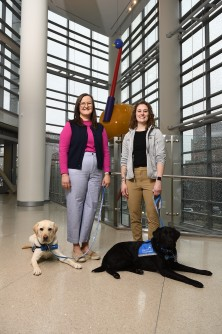
Newswise — What: Johns Hopkins Children’s Center is like a dog with two tails! The children’s hospital now has its first full-time facility dogs. The two dogs, Rosalina and Yoda, are part of the Child Life Department’s Paws for Healing Facility Dog Program funded by a $150,000 grant from the Dunkin’ Joy in Childhood Foundation. The pair are expertly trained canines who work directly with pediatric patients during their clinic or hospital care. The dogs were carefully matched by the professionals at Canine Companions, who have bred, raised and trained service and facility dogs since 1975.
Before arriving at the Children’s Center, Rosalina, now almost 2 years old, and Yoda, who recently turned 2, underwent almost two years of training to be able to interact with patients on specific, individualized goals. Their handlers, Carrie Potter, senior child life specialist, and Molly Trippe-Gallagher, child life specialist III, also received specialized training.
At the Children’s Center, Rosalina and Yoda have many responsibilities, including serving as motivators for patients to achieve their goals, comforting patients during procedures and providing friendly distractions throughout patients’ hospitalizations. They have learned more than 45 tasks that allow them to interact with and calm patients and staff appropriately. They perform service dog commands including picking up items, opening doors and providing calming pressure across the patient’s lap or body.
The Children’s Center’s facility dogs differ from therapy dogs, which are pets accompanied by volunteers to visit patients to bring comfort and joy. However, therapy dogs do not receive the same intensity of training and do not assist with patient goals. Rosalina and Yoda must receive special certification through a national standardized practical test, and return for follow-up assessments on a periodic basis.
Rosalina and Yoda work 40 hours each week alongside Potter and Trippe-Gallagher. Potter and Yoda work in the Blalock-Taussig-Thomas Heart Center. Trippe-Gallagher and Rosalina focus their time in the outpatient clinic and other areas of the hospital. Together, they deliver child life services to patients in an effort to help them achieve clinical goals.
For more than 50 years, Canine Companions has placed more than 8,400 assistance dogs with program graduates, including military veterans, children with disabilities and handlers at hospitals. The estimated cost of highly trained Canine Companions facility dogs like Rosalina and Yoda, and all follow-up care and needs, is $50,000. However, each facility dog is provided at no cost thanks to Canine Companions and their generous donors and volunteers.
For more information on the Hopkins Paws for Healing Facility Dog Program, please visit the Children’s Center’s website.
Source: Newswise