
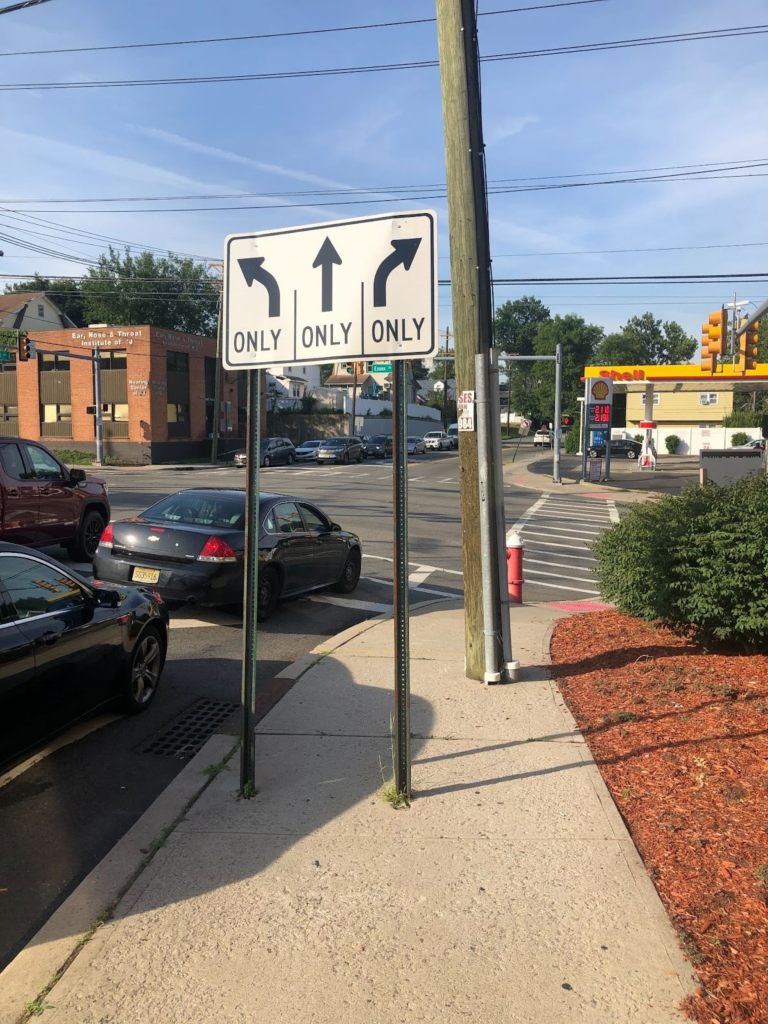
For many, a simple walk down the street is something taken for granted. But for people with mobility, vision and other functional challenges, a cracked sidewalk, a missing curb ramp, a tree root, or a misplaced sign or utility pole like in this photo, can be a major barrier, turning a short trip or stroll with friends into an impossible journey. A dedicated team from Hackensack Meridian Health (HMH) and community partners believes that true healthcare doesn’t stop at the hospital exit, it extends to the very streets where patients live their lives.
In a unique and growing collaboration, members of Hackensack Meridian Neuroscience Institute’s MS Center and Department of Neurology, have joined forces with students from Hackensack Meridian School of Medicine, local schools, girl scouts, and the Northeastern County Community Council of the National MS Society to tackle this everyday obstacle. Their mission is to help people live better lives not just by treating the body, but by helping to reshape the world outside.
This forward-thinking initiative is spearheaded by a passionate group including Florian Thomas, M.D., Ph.D., chair of Neuroscience Institute & Department of Neurology at Hackensack University Medical Center (HUMC) and Founding Chair and Professor of Neurology and Associate Dean for Faculty Advancement at Hackensack Meridian School of Medicine and Lisa Stolarz, M.A., a Patient Experience Advisor at HUMC and community council leader for the National MS Society. They recognized that for many, including people with MS, seniors, or even parents with strollers, sidewalk accessibility has a profound impact on quality of life, independence, and the ability to work and socialize.
“I have long been sensitized to noticing sidewalk obstructions,” says Dr. Thomas. “These may make sidewalk use by people with functional needs & disabilities dangerous or impossible.”
To turn observation into action, the team partnered with scientists & students at University of Washington’s “Project Sidewalk,” a clever tool that uses Google Street View to map and categorize sidewalk problems from a computer. This virtual approach allows volunteers to efficiently survey miles of streets without facing bad weather or physical limitations.
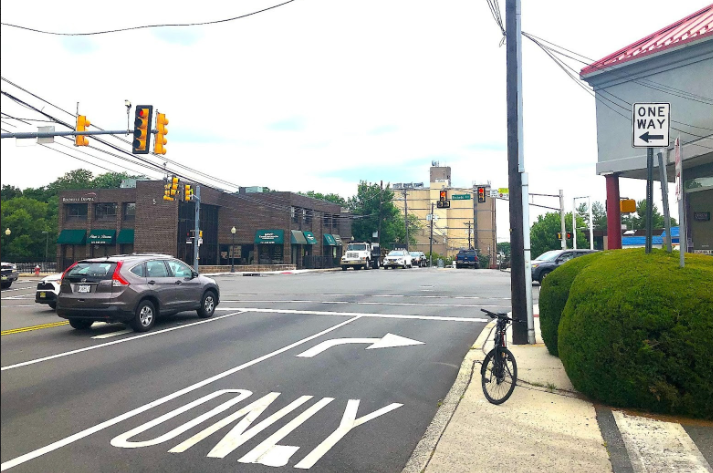
What started in Oradell has now expanded, with the teams having successfully mapped the towns of Teaneck and Maywood, and they are now beginning to chart the city of Paterson. The project has brought together an inspiring coalition of volunteers, who have learned to see their own communities in a new light.
The findings from their work are eye-opening. In Maywood, for instance, the team examined nearly 28 miles of streets and found:
- Missing Infrastructure: Almost one-third of the streets had no sidewalks at all.
- Hazardous Surfaces: Existing sidewalks were often cracked (40%), dangerously slanted (29%), or overgrown with vegetation (19%).
- Obstacles: Common obstructions included utility poles (30%) and parked cars (24%), forcing people into the street.
“With the software developed by our collaborators, we now have the tools to document & quantitate such obstructions,” adds Lisa Stolarz. “That is instrumental to effecting change at the level of elected & appointed municipal government officials.”
This isn’t just about collecting data; it’s about driving real-world change. By presenting these detailed findings to town leaders, the HMH-led collaboration provides actionable evidence to guide infrastructure improvements. The work, which has already resulted in several abstracts presented at the annual meeting of the Academy of Spinal Cord Injury Professionals where Dr. Thomas leads the Health Sustainability Committee, and a full scientific paper, serves as a model for how healthcare systems can champion societal responsibility.
This initiative powerfully demonstrates a modern, holistic approach to health. It acknowledges that a person’s environment is as crucial to their well-being as medical treatment. By empowering local communities and providing the data to fix fundamental problems, the teams at Hackensack Meridian Health are not just treating conditions, they are building a more inclusive, accessible, and healthier New Jersey for everyone.
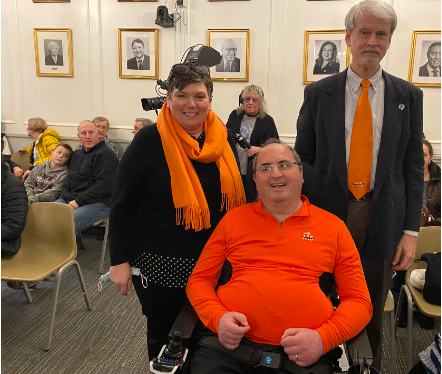
Lisa Stolarz, M.A., Michael Starr, MS patient,
& Florian Thomas, M.D., Ph.D. presenting at the Oradell City Council wearing orange, the official MS color