
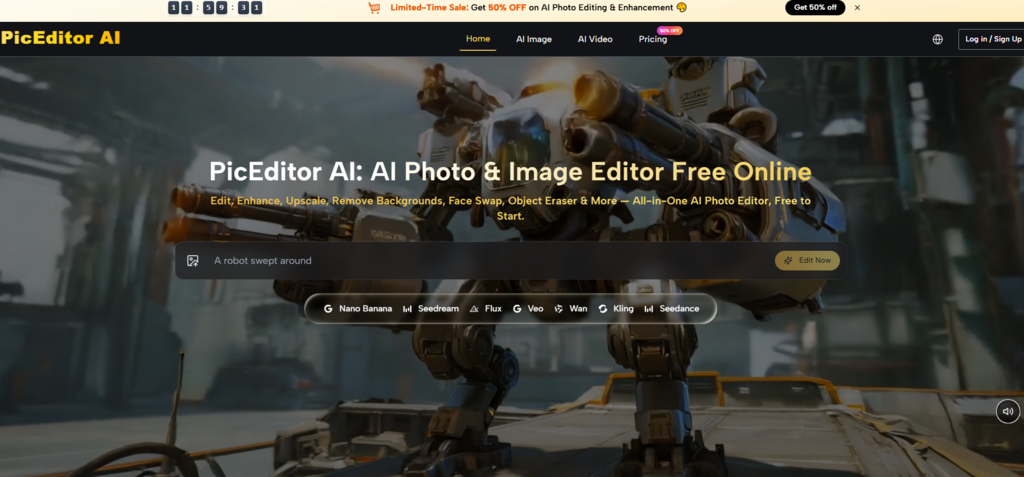
The AI image editing space has a quiet problem that most promotional content avoids. Almost every platform talks about its model as if one engine can handle every editing job equally well. In practice, that is rarely true. A model that produces stunning style transfers may struggle with removing a simple background line. An engine that removes objects flawlessly may distort facial features when asked to adjust lighting. I have seen this pattern repeat across dozens of tests, which is why the structure of PicEditor AI caught my attention differently. Instead of betting everything on a single model, the platform integrates multiple engines and lets the user choose which one fits the task. That approach does not claim perfection, but from a practical user perspective, it solves a real frustration. And that is exactly where AI Photo Editor starts to feel less like a demo and more like a workspace designed for actual variety.
Different Editing Jobs Pull in Different Technical Directions
Not every edit asks for the same thing. Some jobs need photorealistic detail preservation. Some need raw speed for rapid iteration. Some require pixel-level precision on complex regions. Some need to turn a still image into motion. A single model optimized for one of these directions will inevitably be weaker in others, not because it is bad, but because optimization requires trade-offs.
Realism, Speed, Precision, and Motion Cannot Live in One Engine
The platform integrates several engines that the site publicly references. Each one serves a different creative goal. In my observation, having access to multiple engines changes how you approach an edit. You stop hoping the universal model understands what you want. You start matching the tool to the job.
Nano Banana and Nano Banana 2 handle the hyper-realistic side. In my testing, these engines performed best on edits where fine texture and detail mattered most, such as portrait finishing, product close-ups, and high-fidelity refinements. Nano Banana 2 pushes output to 4K resolution and supports batch processing, which makes it useful for final exports and projects that need consistent quality across multiple images.
Seedream is built for a different rhythm. When I wanted to test multiple visual directions quickly without waiting through longer generation times, Seedream delivered noticeably faster turnarounds. The trade-off is that the output detail is not as sharp as the realism-focused engines, but for early-stage exploration, social drafts, and any scenario where speed matters more than 4K fidelity, Seedream became my default.
Flux is the precision engine. It appeared strongest on context-aware edits where one element changes without the rest of the picture shifting. In my testing, Flux was particularly effective on fiddly object removals where the fill needed to match intricate background patterns, and on text-in-image editing, a task that most AI models handle poorly.
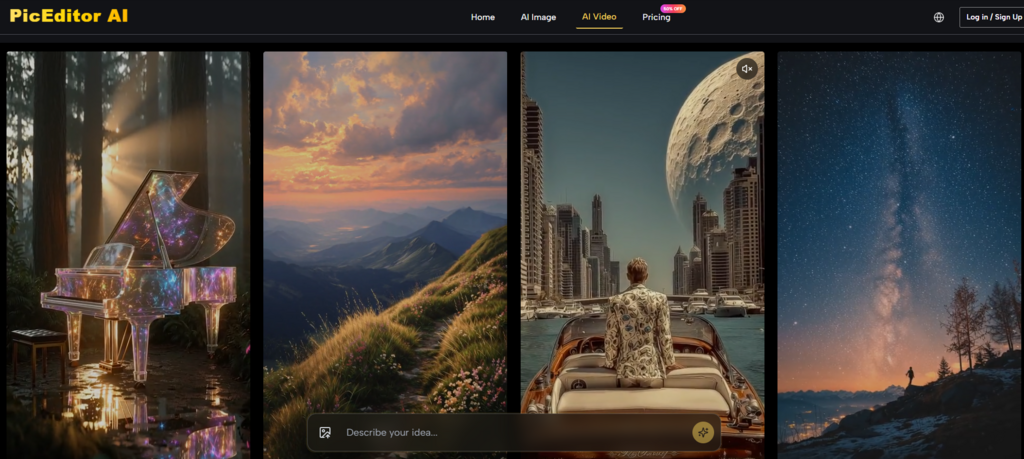
Veo 3 handles the motion side, turning still photos into animated clips with natural movement. That capability sits outside traditional image editing, but within the same interface, which matters for users who produce both static and moving content.
The platform I keep returning to is AI Image Editor, and the reason is not any single engine’s performance. It is the ability to route the right job to the right engine without leaving the environment. That kind of flexibility is rare in free browser-based editors.
A Practical Comparison of What Each Engine Offers
The differences between engines become clearer when you put them side by side for similar tasks. Based on my observations across multiple test images, here is how the engines compare.
| Engine | Primary Strength | Best Use Case | Trade-Off |
| Nano Banana / Nano Banana 2 | Photorealistic detail, 4K output, batch support | Final exports, product shots, portrait finishing | Slower generation, higher resource demand |
| Seedream | Fast iteration, quick turnaround | Concept testing, social drafts, exploration | Lower detail at maximum speed |
| Flux | Context-aware precision, text-in-image editing | Complex object removal, fiddly regions | May require clearer prompts |
| Veo 3 | Natural motion from still images | Social video assets, animated teasers | Different output format than stills |
How the Multi-Engine Workflow Actually Operates
The platform’s workflow follows a logical sequence that keeps the user in control of engine selection.
Step One: Upload the Image That Needs Editing
Start With Your Source Material, Not a Blank Prompt
Unlike text-to-image generators that begin with a blank field, this editor starts with an existing image. That orientation matters because real editing nearly always begins with something the user already has: a product shot, a portrait, a screenshot, or a campaign visual.
Step Two: Select the Type of Edit You Want
Choose From a Clear Menu of Editing Directions
The interface presents editing categories such as enhancement, background removal, object erasing, style transfer, face swap, generative editing, upscaling, and photo-to-video animation. Each category maps to a specific visual outcome.
Step Three: Choose Which Engine Should Handle the Job
Model Selection Becomes Part of the Creative Decision
Instead of hiding engine choice behind technical settings, the platform makes it accessible. If the task rewards detail, you choose Nano Banana 2. If speed matters more, you choose Seedream. If precision is critical, you choose Flux. If motion is the goal, you move toward Veo 3.
Step Four: Describe the Desired Change and Generate
Language Guides the Engine, but the Engine Does the Heavy Lifting
The platform asks you to describe what you want changed using natural language. The selected engine interprets the instruction and applies it to the relevant part of the image. In my experience, clear prompts produce better results, and vague prompts may need refinement.
What the Platform Does Not Do and Where It Still Needs Patience
No multi-engine platform is perfect, and this one is no exception. Complex scenes with overlapping subjects, fine details like hair strands, small text that needs to remain legible, and reflective surfaces may require multiple attempts. Prompt quality matters. Source image resolution matters. The first output is not always the final one, and some edits that look clean at a glance reveal seams when zoomed in.
The platform reduces editing friction, but it does not remove the need for human judgment. In my testing, the most successful edits with PicEditor.ai came from a combination of clear instructions, appropriate engine selection, and a willingness to iterate when the first result was not quite right. Users who expect a single click to solve every problem will likely feel frustrated. Users who treat engine selection as part of the creative process will get significantly better results.
Who Benefits Most From Having Multiple Engines in One Place
For e-commerce sellers who process large batches of product images, the batch-friendly Nano Banana 2 workflow saves significant time while maintaining consistent output quality. For social media creators who iterate quickly through visual concepts, Seedream enables rapid testing without waiting through long generation times. For designers and marketers who need both speed and final polish, having access to multiple engines within the same interface means they can move from exploration to export without switching tools.
For anyone whose editing needs vary from project to project, a single-engine platform will inevitably fall short on some tasks. The platform is not a replacement for manual retouching on highly complex images, but for the vast middle ground of everyday editing, the ability to match the engine to the job is a genuine advantage that few free browser-based editors offer. The future of AI image editing may not belong to the platform with the single most impressive model. It may belong to the platform that gives users the right model for the job in front of them.