Former Gloucester Mayor Gorman Fighting A Legal Battle With The City That Elected Him; Battle is Over City Police Department Records
William E. Cleary Sr. | Cleary’s Notebook News
(The following article published December 2006)—
Reporter’s Note: Since 2004, former Gloucester City Mayor Robert Gorman has been embroiled in a court battle with the City of Gloucester and its Police Department over information he believes should be released under the Open Public Records Act (OPRA). During my research, I discovered a recent decision on these proceedings dated December 14, 2006. A link to that decision appears at the bottom of this article. I must warn you—it is quite lengthy.
According to the legal document, while Mr. Gorman was still Mayor of Gloucester City, unflattering material about him was posted on NJ.com. The document states that Mr. Gorman believed some of these posts were made by Gloucester City Police Officers, possibly while on duty at police headquarters. Apparently, during his time as Mayor, Mr. Gorman asked the Police Department to investigate these allegations. The document also states that “Mr. Gorman believed that the Gloucester City Police Department was trying to harm and/or harass him and now wants to review the results and status of the various internal investigations he requested while he was still mayor of Gloucester City.”
WASHINGTON DC (Cleary’s Notebook News)(February 27, 2026)–Last month, Cabinet members of the Trump Administration posted an inspirational tribute to their friend on YouTube. Kirk was shot and killed on September 10, 2025. According to a Wikipedia article, Kirk was an American right-wing political activist. He was assassinated at Utah Valley University in Orem, Utah. He was scheduled to speak at an outdoor campus debate organized by Turning Point USA, the conservative youth organization he co-founded and led. Kirk, age 31, was a close supporter of U.S. President Donald Trump and a highly influential figure in the MAGA movement.
The Diocese of Camden has agreed to pay $180 million to more than 300 survivors of clerical sexual abuse, marking one of the largest such settlements in New Jersey history and representing a significant expansion of compensation for victims who have waited years for justice. The agreement, announced Tuesday in a letter from Bishop Joseph A. Williams to diocesan clergy and faithful, more than doubles the $87.5 million settlement the diocese reached in 2022. The victim support fund will be financed through contributions from the diocese, its parishes, and insurance carriers following a protracted legal dispute. The settlement represents a breakthrough after years of contentious negotiations between the diocese, claimants’ attorneys, and insurance companies that had resisted earlier payment demands. The agreement must still receive approval from the bankruptcy court, as the Camden diocese has operated under Chapter 11 bankruptcy protection since 2020.
In his letter dated February 17, Bishop Williams acknowledged the profound significance of the moment for those who suffered abuse at the hands of clergy members. The bishop offered a direct apology to victims, calling their suffering the result of “grave sin and a devastating betrayal of the trust you placed in the Church that you loved.”
Years of Legal Battles
According to a statement from Lowenstein Sandler, the law firm representing plaintiffs in the case, the new agreement supplements rather than replaces the earlier settlement, bringing total compensation to victims to more than a quarter-billion dollars.
For the more than 300 survivors involved in this case, the settlement offers financial recognition of their suffering, though many advocates note that no amount of money can truly compensate for the trauma of childhood sexual abuse and its lifelong consequences.
Context and Implications
The agreement also reflects the ongoing financial and moral reckoning facing the Catholic Church as it continues to confront the legacy of clergy sexual abuse scandals that have spanned decades.
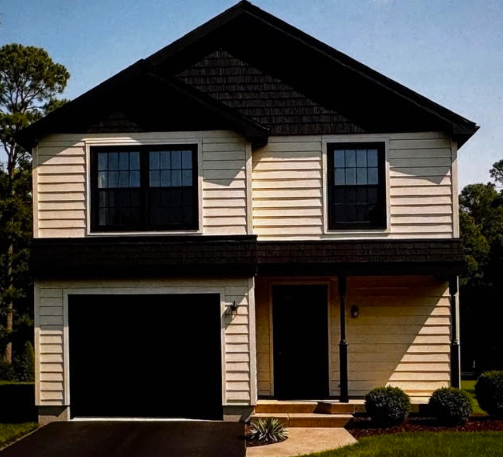
GLOUCESTER CITY, NJ {CNBNEWS} FEBRUARY 9, 2025.–A new single‑family home is rising in the Riverview Heights section of Gloucester City—on a lot that has been vacant for decades. The property at 16 Stites Avenue sits on a 5,001‑square‑foot lot, and the two‑story home with an attached garage will span 2,986 square feet when completed. The asking price is $500,000.
The Zillow listing promotes the house as a modern build with three bedrooms, two and a half baths, a finished basement, and a deck overlooking the backyard. Buyers are offered the option to customize finishes. Taxes, the listing notes, are “TBD.”
The half‑million‑dollar price tag raises a larger question: Is Gloucester City’s housing market now out of sync with the community’s economic reality?
About a year ago, Zillow identified Gloucester City as one of the communities “dangerously close to a housing price correction.” At the time, prices were rising faster than local incomes, investor activity was increasing, and distressed properties were piling up. A year later, many of those warning signs remain.
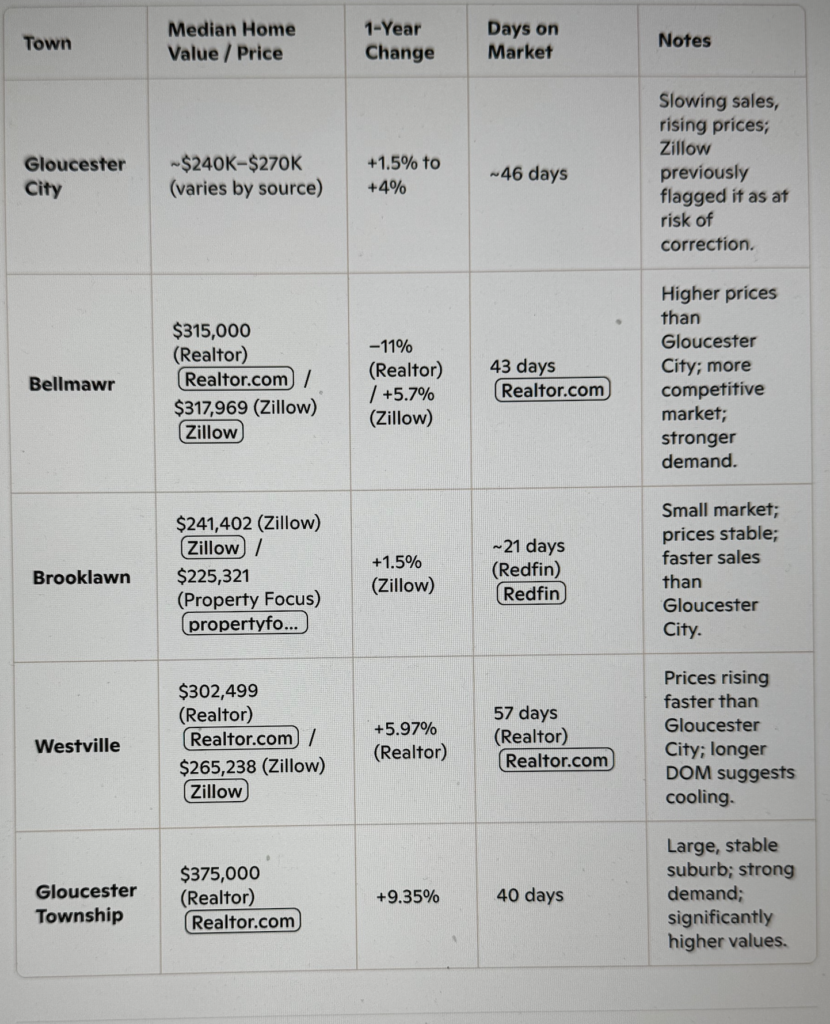
Recent data shows the city’s median home value hovering between $240,000 and $270,000, depending on the source. Prices have risen modestly, but homes are taking longer to sell—an average of 46 days on the market, compared to just 18 days the year before. Price cuts are becoming more common, and public records show hundreds of liens and dozens of pre‑foreclosures over the past year.
Compared with neighboring towns, Gloucester City remains one of the least expensive markets in the region—yet also one of the most strained. Bellmawr, Westville, and Gloucester Township all have higher home values and stronger demand. Even Brooklawn, the closest comparison, sees homes selling faster and with fewer signs of distress.
So how did Gloucester City end up with rising prices but a weakening foundation?
A major factor is investor pressure. Out‑of‑town buyers, flippers, and cash purchasers have been active in the city for years, pushing prices upward based on profit potential rather than local wages. At the same time, Gloucester City’s housing stock is old—much of it 80 to 100 years old—and expensive to maintain. New construction is rare, and when it does appear, it’s priced according to regional standards, not neighborhood norms.
High property taxes and long‑standing municipal challenges add another layer. Aging infrastructure, limited commercial growth, and persistent code issues have left the city without the stability needed to support sustained price increases.
Correcting the imbalance will require a coordinated effort. Stronger code enforcement, incentives for owner‑occupied rehabilitation, and policies that encourage residents—not investors—to buy homes could help stabilize neighborhoods. A clearer long‑term housing strategy from city leadership, along with a tax structure that reflects the realities of the market, would also move the city in the right direction.
The new home on Stites Avenue is not the cause of Gloucester City’s housing problems. It is a signpost. Prices continue to rise, but the fundamentals beneath them remain uneven. Whether the market corrects itself or continues drifting upward will depend on whether the city confronts the forces shaping its future—or allows them to continue unchecked.
From the Zillow advertisement:
What’s special
Welcome to 16 Stites Avenue, a thoughtfully designed new construction home offering modern comfort, flexible living spaces, and refined finishes throughout. This impressive residence features three spacious bedrooms, two full bathrooms and one half bath, a fully finished basement, and an attached one-car garage, delivering an ideal balance of functionality and contemporary design. Buyers have the opportunity to customize select finishes—please inquire for details.
The main level showcases a bright, open-concept layout that is perfectly suited for both everyday living and entertaining. Abundant natural light fills the living and dining areas and flows seamlessly into the well-appointed kitchen, designed to serve as the true heart of the home. Modern finishes and an efficient floor plan provide both style and practicality. The fully finished basement offers valuable additional living space, ideal for a family room, home office, fitness area, or entertainment space. Upstairs, the private bedroom level features generously sized bedroom
s, including a primary suite with ample closet space and a private en-suite bathroom. Outdoor living is enhanced by a spacious deck overlooking the backyard—perfect for morning coffee or evening relaxation. Additional highlights include quality craftsmanship throughout and a layout designed to complement today’s lifestyle needs.
Situated in one of Gloucester City’s most desirable neighborhoods, the home is conveniently located near parks, shopping, dining, and major commuter routes, including Route 130 and Route 295, with easy access to Philadelphia bridges—placing Center City Philadelphia just 15 minutes away. This is a unique opportunity to personalize and own an exceptional new construction home. Schedule your private showing today. “Taxes are not $1 and are TBD. Taxes and square footage are the responsibility of the buyer to have verified.”
This comparison shows a clear pattern: Gloucester City remains one of the least expensive towns in the region — yet also one of the most economically strained. Neighboring towns with higher prices have stronger demand, newer housing stock, and fewer signs of distress. Even Brooklawn, the closest match, sees homes selling far more quickly.
So how did Gloucester City end up with rising prices but a weakening foundation?
A major factor is investor pressure. Out‑of‑town buyers, flippers, and cash purchasers have been active in the city for years, pushing prices upward based on profit potential rather than local wages. At the same time, Gloucester City’s housing stock is old—much of it 80 to 100 years old—and expensive to maintain. New construction is rare, and when it does appear, it’s priced according to regional standards, not neighborhood norms.
High property taxes and long‑standing municipal challenges add another layer. Aging infrastructure, limited commercial growth, and persistent code issues have left the city without the stability needed to support sustained price increases.
Correcting the imbalance will require a coordinated effort. Stronger code enforcement, incentives for owner‑occupied rehabilitation, and policies that encourage residents—not investors—to buy homes could help stabilize neighborhoods. A clearer long‑term housing strategy from city leadership, along with a tax structure that reflects the realities of the market, would also move the city in the right direction.
The new home on Stites Avenue is not the cause of Gloucester City’s housing problems. It is a signpost. Prices continue to rise, but the fundamentals beneath them remain uneven. Whether the market corrects itself or continues drifting upward will depend on whether the city confronts the forces shaping its future—or allows them to continue unchecked.
President Donald Trump is wasting no time completing the ambitious goals left unfinished after his first term.
Soon, he’ll have a rare opportunity to complete another critical piece of unfinished business: ending the exploitation of U.S. businesses by our two largest trading partners, Canada and Mexico.
In the coming months, the United States will undertake a scheduled review of the United States-Mexico-Canada Agreement, or USMCA — the landmark trade deal reached during President Trump’s first term. During that review, the administration will have the chance to restore crucial intellectual property protections that Democrats insisted be dropped after the deal was first negotiated.
I was involved in the negotiation of the USMCA as President Trump’s deputy U.S. trade representative. The president’s goal was to replace the disastrous North American Free Trade Agreement with a modern pact that would protect American workers, innovators, and businesses. A central part of that was strengthening intellectual property protections.
Yet before the deal could take effect, Democrats in Congress stripped out several key protections. For example, we had secured commitments from Mexico and Canada to provide 10 years of regulatory data protection for certain new medicines. Regulatory data protection provides temporary protection for the confidential information that drug developers share with authorities to prove a medicine is safe and effective before it can be sold. House Democrats led efforts to remove this provision, claiming that stronger protections would raise drug prices.
That’s nonsense. The United States already provides 12 years of regulatory data protection, so the change wouldn’t have altered the U.S. market. Removing it has only allowed Canadian and Mexican firms to more easily copy U.S.-made drugs.
Democrats weakened other key IP protections negotiated as part of USMCA, opening the door for Canada and Mexico to undercut U.S. innovators.
Mexico’s failures are especially troubling. In the U.S. trade representative’s most recent Special 301 Report — an annual report spotlighting foreign IP violations — Mexico was placed on the Priority Watch List for “long-standing and significant” concerns, including rampant counterfeiting and piracy.
And Canada has its own shortcomings. It is on the Special 301 Watch List and continues to impose drug price controls that undervalue American-made medicines and exacerbate foreign free-riding on U.S. innovation.
By fixing prices below market value, Canada — like many wealthy nations — forces companies to absorb losses abroad, making it harder to fund new research and pushing a greater share of costs onto American patients. President Trump is actively working to resolve this imbalance as part of lowering drug prices for U.S. patients — and fixing the USMCA is an important place to start.
The needed reforms are straightforward. Create enforceable, verifiable standards mandating respect for IP. Restore the 10-year regulatory data protection standard originally negotiated as part of the USMCA in 2018. Require Canada to abandon price controls and devote a higher, fairer level of spending to new drug development. And enforce full compliance with existing requirements.
The Trump administration now has the opportunity to finish the job it started in the first term on IP protection under the USMCA. For the sake of American workers and innovators, it must not let this opportunity go to waste.
Ambassador Jeffrey Gerrish served as the deputy U.S. trade representative for Asia, Europe, the Middle East and industrial competitiveness from 2018 to 2020. This piece originally appeared in Newsweek.
GLOUCESTER CITY, NJ (CNBNEWS)(JANUARY 13, 2026)—Sixteen years ago, in 2010, we wrote a story about the number of rental properties, which included an interview with Housing Officer Joe Stecklair. Prior to the interview with Stecklair, we submitted an OPRA asking how many rental properties there are in Gloucester City. Who are the biggest landlords? How much money does the city receive from rental properties, and other questions. Ten days later, CNBNews received a 46-page list containing the names of landlords and the addresses of rental properties, along with other information.
We updated those numbers in 2022.
To write an current story on housing situation, we submitted an OPRA on December 9, 2025, to Vanessa Little, the City’s Custodian of Records, asking for the same information we requested in 2010 and 2022 . On January 5, 2026, nearly a month after submitting our request, we received an answer. Instead of the 46 pages of information we received in 2010, we received two pages with numbers scribbled on both pages. We also received 83 pages containing addresses of homes located in the City. There was no explanation why the Custodian of Records emailed those addresses to us.
Gloucester City occupancy rates
According to data released by https://www.point2homes.com/in September 2025, there are 4,117 occupied housing units. However, the recent pencil information from the Custodian of Records states there are 3,639 or 478 fewer.
The same website, point2homes.com reveal that there are 4,117 occupied housing units in Gloucester City, 56.9% are owner-occupied, while 43.1% are occupied by tenants. Meanwhile, 9.3% of all homes or 443 properties on the local market sit vacant. Gloucester City is home to 11,465 residents, according to the most recent Census data. Gender-wise, 50.6% of Gloucester City locals are male, and 49.4% are female.
In 2015 The Obama administration passed a law pertaining to illegal immigrant minors. They have to be read their rights (a minor immigrant understands his rights?) The law goes on to detail their rights as food, clothing, and shelter and a ton of other rights the average citizen doesn’t have. Last year, 2021, The Biden Administration updated the law. Read the next sentence very carefully! The update specified that the government had to supply illegal immigrant children with “baby formula and milk.” The Washington Post wrote the article with a “see, there’s no problem – we’re just following the law.”
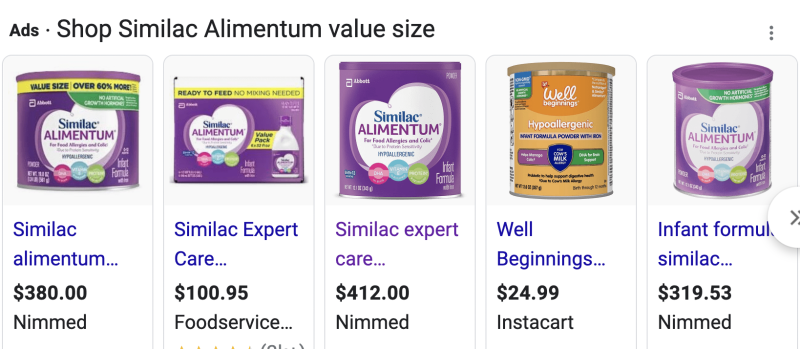
ILLEGAL IMMIGRANTS RECEIVE GOLD STAR BENEFITS-Families in the United States are struggling to find formula for their babies. And, when they do find it the prices are astronomical.
________________________________
GLOUCESTER CITY, NJ (May 15, 2022)–Just about everyone knows that there is a baby formula shortage. Many of you are experiencing it. What is happening? This is America and every day we look more like a third-world country rather than the richest and most powerful nation in the world.
So, what is the story behind the story with the formula shortage? Let’s start with a few facts. The United States makes 98% of the formula we use. This is a good thing; it keeps jobs in America and we have much more control over the quality and distribution of the product. The majority of formula is used by WIC (Women, Infants, and Children) recipients. The federal government has a contract with Abbott Company to supply the formula for WIC and SNAP (formerly food stamps) administrated through the states. The states give a “discount” to Abbott et al. up to 85% This is very profitable for Abbott and the federal and state governments don’t really care because it is “We, the People” who pay for it.
Each year between and four babies are reported with infections from a bacteria called cronobacter sakazakii. Never before has a plant been closed. The closest I was able to find for the number of babies who became ill this year was four. Two babies recovered and two died. So, at some point the government closed the plant for inspection. This was the right thing to do. However, I could only come to an inspection date between January 31, 2022 and March 18, 2022. What was the time span between the disclosure of the problem, the decision to close the Michigan plant, the inspection and conclusion? We don’t know.
At the point it was determined to close the plant there should have also been a plan for an alternate source of formula. There are other U.S. based companies; but there is no evidence that this was done. We have to be more careful than usual because these are our babies, not IPhones or clothes, etc. In the past it was found that the Chinese were putting melamine into their formula. We grey hairs remember unbreakable dinnerware called Melmac which was taken off the market because it caused…yes, cancer. Where we get the replacement formula is essential but did anyone look right here in America?
According to the Washington Examiner, May 13, 2022 the inspection is complete, the results are in but the Food and Drug Administration won’t specify the exact criteria for full approval to re-open Abbott’s Michigan plant. The inspection found some of the bacteria but none in the processing area. Samples of the formula were completely free of the bacteria. Everything sounds good.
Bacteria, like humans and all other living things, has its own DNA. Scientists were able to determine that the bacterial DNA in the babies did not come from the closed plant. So why hasn’t the FDA provided a date or even criteria for a full opening?
This is where you have to take off your scientist’s hat and put on your lawyer’s hat. On May 12, 2022 the Washington Post issued a headline about the “faux outrage” over this supposed problem. The term “faux outrage” is outrageous in itself but the article went on to say there is no real formula shortage. “They” were just following the law. Fortunately, The Post printed excerpts from the law. In my opinion, for what that’s worth, it all has to do with politics and money. Here’s what happened:
In 2015 The Obama administration passed a law pertaining to illegal immigrant minors. They have to be read their rights (a minor immigrant understands his rights?) The law goes on to detail their rights as food, clothing, and shelter and a ton of other rights the average citizen doesn’t have. Last year, 2021, The Biden Administration updated the law. Read the next sentence very carefully! The update specified that the government had to supply illegal immigrant children with “baby formula and milk.” The Washington Post wrote the article with a “see, there’s no problem – we’re just following the law.”
President Biden can solve the problem with the stroke of a pen. I am usually against Executive Orders. I feel Presidents use them to make law that would normally not get through Congress. In this case I am exasperated that President hasn’t already signed an executive order to alter the “formula or milk for illegal babies” to “Give the illegals formula or milk after all the citizen and legal resident babies have been fed.”
GLOUCESTER CITY, NJ (December 18, 2025)(CNBNews)--Holt Logistics and Cresmont Limited Partnership have filed another civil action against the City of Gloucester City and the Gloucester City Planning Board. The Holt and Cresmont lawsuit is an attempt to stop the construction of two large multi-use buildings at the former US Coast Guard property on King Street. The Coast Guard abandoned the property in 1986, and moved into a new base on the Philadelphia side of the river.
According to a rumor, Holt is against the development because the buildings would block his office view of the river.




 with Stecklair, we submitted an OPRA asking how many rental properties there are in Gloucester City. Who are the biggest landlords? How much money does the city receive from rental properties, and other questions. Ten days later, CNBNews received a 46-page list containing the names of landlords and the addresses of rental properties, along with other information.