Experts from the nation’s No.1-ranked cancer center weigh in on dense breasts, personalized treatment, prevention, aggressive disease, and life after breast cancer.
Newswise — Breast Cancer Awareness Month brings plenty of reminders about mammograms. But for many women, the questions go well beyond when to get screened.
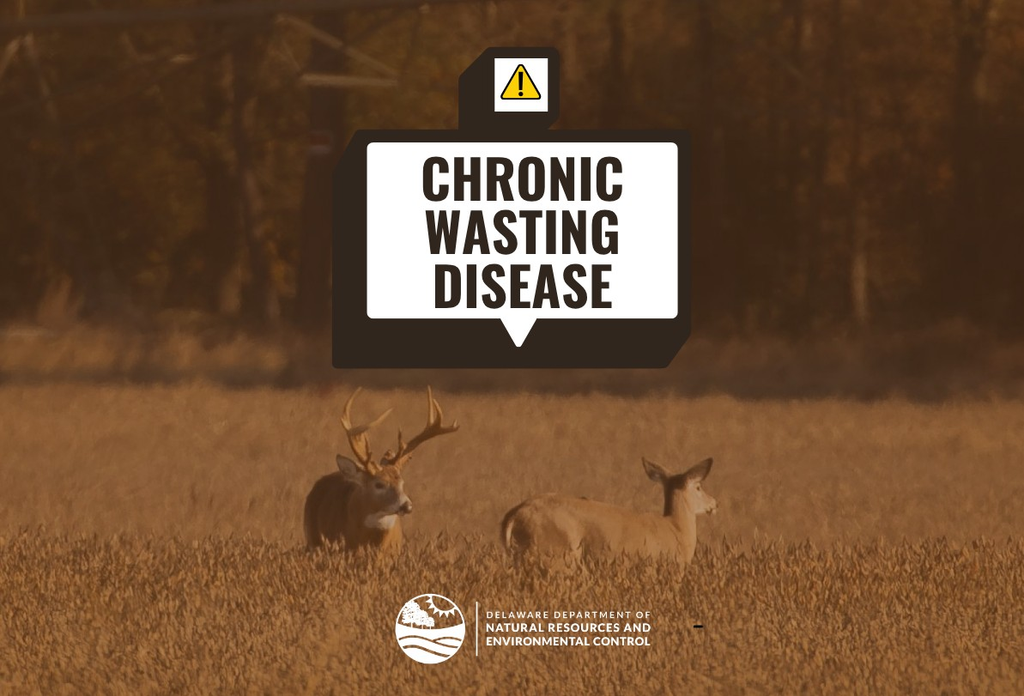
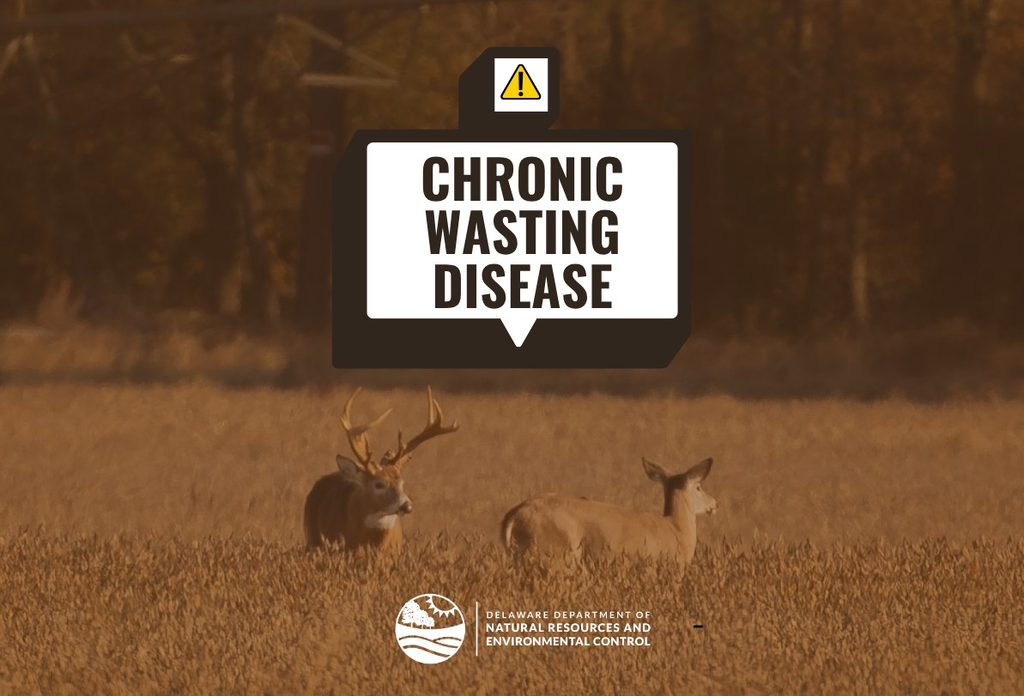
DNREC Community Meeting Wednesday, Sept. 16 to Provide Update on State’s CWD Response and Explain Temporary Emergency Deer Hunting Regulations
Delaware has confirmed a third case of chronic wasting disease (CWD) in a white-tailed deer in central Sussex County. The new detection expands the state’s Chronic Wasting Disease Management Zone (CMZ) to include Wildlife Management Zone 11, along with zones 14 and 16. The Delaware Department of Natural Resources and Environmental Control is applying temporary regulations in the additional affected area to help limit the spread of the disease.
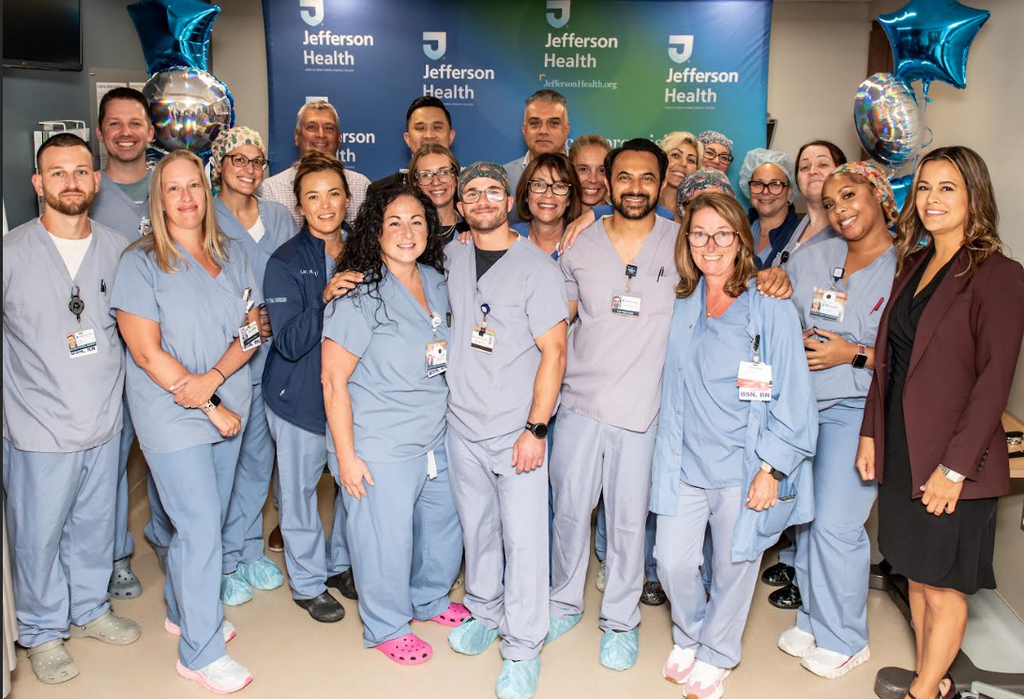
On September 11, 2026, Jefferson Cherry Hill Hospital and Jefferson Moss Rehab Institute for Brain Health (which treats veterans, national guard and first-responders with Traumatic Brain Injury) hosted members of the Cherry Hill Fire Department, Cherry Hill Police Department, and members of the Air Force Junior Reserve Officer Training Corps (AFJROTC) from Cherry Hill High School West for a 9/11 Memorial Stair Climb.
Participants climbed 1067 steps, which is the amount of first responders that were killed on 9/11, as well as the ones that have since passed away from 9/11 related illness.
As South Jersey’s only Level I Trauma Center, Cooperpartnerswith EMS agencies and air medical programs to bring whole blood directly to critically injured patients before they reach the hospital
(CAMDEN, NJ) — Cooper University Health Care has reached a major milestone in trauma care, administering its 1,000th whole blood transfusion to a critically injured patient. As South Jersey’s only Level I Trauma Center, Cooper leads the region in advancing trauma care by expanding access to whole blood beyond the hospital in the field through partnerships with emergency medical services throughout the area.
Newswise — For two years, anyone has been able to walk into a vape shop or convenience store in Michigan and other states, hand over cash or a credit card, and walk out with as much of a substance called 7-OH and other related products as they can afford. Or they can click online and get it shipped to them.
They may have turned to 7-OH and other synthetic opioids at first to get relief from pain, anxiety or stress, or as an alternative to illegal drugs.
After all, 7-OH and synthetic opioid products have been touted as “natural” relatives of plant-derived kratom products that have been around for years.
But for many, including those who “graduated” from kratom to the more potent 7-OH and synthetic opioids often touted as kratom-related, their initial relief turned into an addiction they now can’t kick.
That’s because kratom, 7-OH and the related synthetic opioids act on the brain’s opioid receptors.
Jefferson Washington Township Hospital recently opened a new, hybrid interventional radiology suite, creating more opportunities for patients with conditions that require complex procedures (cardiac catheterization, neurosurgical, vascular intervention) to receive high-quality, specialized care close to home. The suite is Jefferson Washington Township Hospital’s third to be approved by the New Jersey Department of Health, and its creation further strengthens Jefferson’s Bruce & Robbi Toll Heart and Vascular Institute and Vickie & Jack Farber Institute for Neuroscience.
For decades, a diagnosis of metastatic pancreatic cancer left patients and physicians facing the same harsh reality: limited options, difficult treatments and too little time. Now, a pill tested in a global clinical trial may begin to change that.
The oral targeted therapy helped patients live nearly twice as long as those who received standard chemotherapy, marking a major advance for one of cancer’s most difficult diseases. Sylvester Comprehensive Cancer Center, part of the University of Miami Miller School of Medicine, participated in the global study and was the only South Florida site to offer the trial.
The U.S. Food and Drug Administration has approved Rasonque, the brand name for daraxonrasib, a first-in-class targeted therapy for adults with metastatic pancreatic adenocarcinoma. The approval was based on the phase 3 RASolute 302 trial, which enrolled 500 patients across 59 sites in six countries.
Patients who took the pill lived a median of 13.2 months, nearly twice as long as those who received standard chemotherapy.
A Milestone Years in the Making
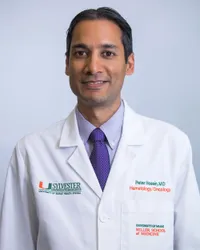
“This is a monumental shift in the treatment of pancreas cancer,” said Peter Hosein, M.D., co-leader of Sylvester’s Gastrointestinal Cancer Site Disease Group. “It’s a historic day for pancreatic cancer.”
The approval was wider than investigators expected. The trial required KRAS mutation testing, but the FDA approved the therapy for eligible patients regardless of KRAS mutation status.
“For a drug to be approved that has the potential to benefit a broad range of patients with metastatic pancreatic cancer, this is unprecedented,” Dr. Hosein said.
“This approval is a landmark for patients, but it is also an important scientific milestone because it demonstrates that RAS, one of the most important drivers of pancreatic cancer, can be successfully targeted. At the Sylvester Pancreatic Cancer Research Institute, our goal is to build on advances like this by bringing together clinical trials, patient-derived biospecimens and laboratory investigation to understand why some tumors respond, why resistance develops and how we can make these responses deeper and more durable,” said Nipun Merchant, M.D., founding director of the Sylvester Pancreatic Cancer Research Institute (SPCRI) and the Alan Livingstone Professor in the DeWitt Daughtry Family Department of Surgery.
A Patient Experience
For Julian Itzkowitz of Port St. Lucie, Fla., the impact is personal. In 2022, the 80-year-old had severe back pain. An MRI revealed a pancreatic tumor. He underwent a Whipple procedure that September, but soon after, the cancer had spread to his lungs. Chemotherapy made him too sick to continue.
Three months ago, he began taking daraxonrasib through Sylvester’s Expanded Access Program while FDA review was underway.
“My appetite is good. I feel good about myself, and I can travel without any problems,” he said.
His mother died of pancreatic cancer 20 years ago, when patients had far fewer options.
“I hope I can stay on this drug for a long time,” he said. A recent scan showed his tumors had shrunk since starting treatment.
“Despite having some side effects, their quality of life was better because their cancer was better controlled,” Dr. Hosein said of patients on the drug during the clinical trial. “And the thing that has the biggest impact on quality of life is cancer control.”
More Than a New Treatment
For Dr. Hosein, the approval offers patients something less easily captured in clinical data: hope.
“A lot of times when people come in with a new diagnosis of pancreas cancer, they are depressed and their whole world is turned upside down,” he said. “Knowing that there’s something like this, which is such a big breakthrough, which is also not chemotherapy, is a big deal.”
Sylvester’s role grew from its participation in multicenter clinical trials and pancreatic cancer research programs. The cancer center became the first Florida site to open an Expanded Access Program for daraxonrasib, allowing eligible patients to receive the therapy before approval. More than 80 patients enrolled in approximately three months.
Dr. Hosein has also helped design RASolute 304, a new study testing whether daraxonrasib can prevent pancreatic cancer from returning after surgery.
The Next Scientific Question: Resistance
A biospecimen initiative is collecting blood and tumor samples to study why some tumors evade RAS inhibition. RAS is a family of proteins that drives the growth of most pancreatic cancers and has long been one of the most difficult targets in cancer biology.
That effort is closely integrated with laboratory research at the SPCRI aimed at defining the mechanisms that allow pancreatic cancers to escape RAS inhibition. Dr. Merchant, Jashodeep Datta, M.D., the DiMare Family Endowed Chair in Immunotherapy and co-leader of the Gastrointestinal Cancer Site Disease Group, and Nagaraj Nagathihalli, Ph.D., associate professor in the DeWitt Daughtry Family Department of Surgery and assistant director of basic science research at the SPCRI, are working collaboratively to understand how tumor-intrinsic changes and interactions within the tumor microenvironment contribute to treatment resistance and to identify strategies to prevent or overcome it.
“FDA approval is an extraordinary milestone, but it is also the beginning of the next set of scientific questions,” Dr. Datta said. “The challenge now is understanding why some tumors eventually evade RAS inhibition and how we can develop new strategies to prevent or overcome that resistance. Through ongoing collaborations with Revolution Medicines and other industry partners, we are laser-focused on understanding and targeting factors in the tumor microenvironment that provoke and sustain resistance to RAS inhibition in pancreatic cancer.”
What Comes Next
Sylvester is enrolling patients in the RASolute 304 study, a phase 3 trial testing whether daraxonrasib can reduce recurrence after pancreatic cancer surgery.
Researchers also opened a study for newly diagnosed patients with metastatic pancreatic cancer that combines chemotherapy with a KRAS-targeted therapy.
“With other ongoing trials, it is conceivable that in the future, we will recommend this pill for someone with newly diagnosed pancreatic cancer rather than chemotherapy infusions, which have been the standard for decades,” Dr. Hosein said.
It also shows how today’s breakthrough can seed tomorrow’s research. Research underway across SPCRI is already focused on the next phase: understanding why tumors adapt, identifying mechanisms of resistance and developing strategies to overcome them, and building on the progress now reaching patients.
For patients like Itzkowitz, that future is no longer an abstract scientific goal. It is already beginning to take shape.
Assemblywoman Shanique Speight’s bill providing increased protections for patients seeking reproductive health care services was signed into law by Governor Mikie Sherrill today. Bill A2218 also protects the medical professionals who provide that care.
The legislation shows New Jersey’s commitment to health care access and comes at a time when other states are taking legal action against both individuals and providers seeking and administering reproductive health care services.
A prestigious national organization has accredited Virtua Health’s Complete Weight Management Program as a Comprehensive Center with Obesity Medicine Qualifications. This designation, by the Metabolic and Bariatric Surgery Accreditation and Quality Improvement Program (MBSAQIP), recognizes the program’s comprehensive approach to weight management. Virtua’s Complete Weight Management Program is the first in the Philadelphia region to receive this recognition.
While the program had previously been accredited for its surgical treatments, the new accreditation endorses Virtua’s entire weight management program. The accreditation recognizes the program’s ability to seamlessly incorporate weight-loss medications, surgical and non-surgical procedures, and comprehensive support services to provide outstanding care.







 -
- -
- -
- -
- -
-