
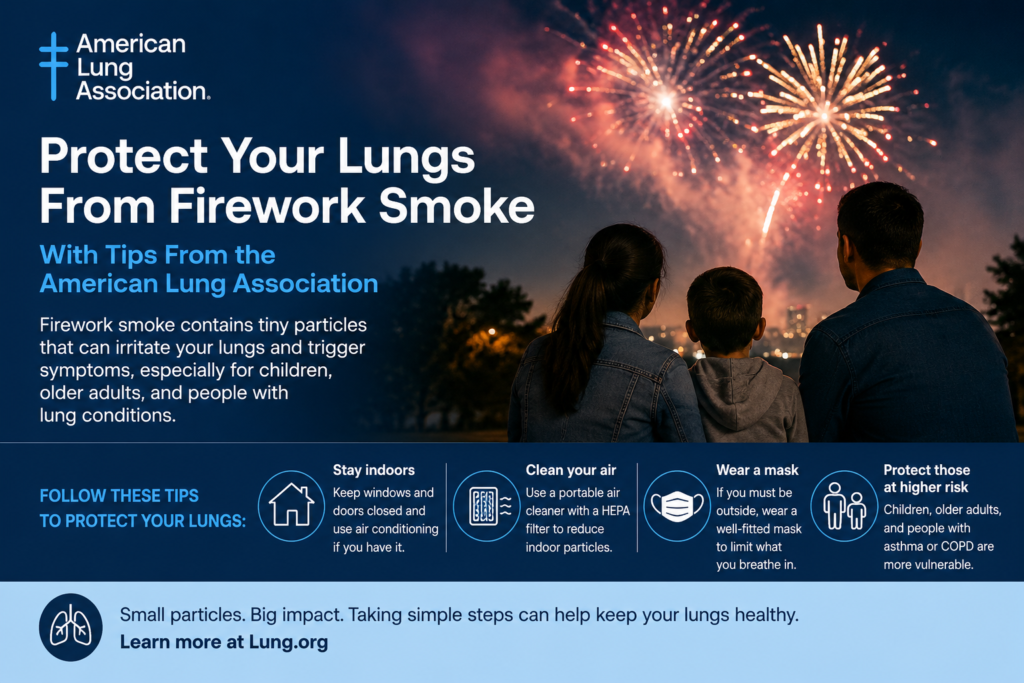
Fireworks are a summertime staple and an iconic element of Independence Day celebrations. However, many people don’t realize that the resulting smoke is hazardous. The American Lung Association is educating the public on the risks associated with firework smoke and sharing tips to enjoy these spectacular displays more safely.
When fireworks explode, they release irritating gases and harmful metals, including carbon monoxide, aluminum and cadmium, into the air. Firework smoke also contains tiny particles, known as particulate matter (PM), which can irritate the lungs, trigger asthma attacks and cause other respiratory symptoms. It’s also important to note that particulate matter levels tend to be elevated not only during the fireworks, but for hours or even days afterward. The amount of pollution depends on how big the fireworks are, how long they last, and the weather conditions at the time. Breathing in firework smoke is unhealthy for everyone, but children, older adults, those who are pregnant and individuals with lung or heart disease are especially vulnerable.
To help residents protect their health and stay safe, the American Lung Association has released the following guidance:
- Stay Upwind: Try to stay upwind from firework displays to help minimize your exposure to harmful particles. This applies to personal fireworks too, especially because the smoke stays closer to the ground.
- Stay Indoors: If it is smoky outside, stay indoors with the windows closed and if you have air conditioning, use it on recirculate. This helps keep indoor air clean and reduces your exposure to outdoor pollution.
- Monitor Air Quality: Keep an eye on local air quality reports, especially during holidays when fireworks are common. A 2015 study found that air pollution levels increased by an average of 42% on the Fourth of July. Websites and apps such as AirNow.gov provide real-time air quality information to help you make informed decisions about outdoor activities.
- Follow Your Action Plan: If you have asthma or COPD, follow your action plan if you experience symptoms. This may include using your inhaler or seeking medical attention if necessary.
- Keep an eye on symptoms. If you are experiencing wheezing, shortness of breath, difficulty taking a full breath, chest heaviness, lightheadedness, dizziness, a persistent cough or experience difficult or painful breathing, contact your healthcare provider.
- Ask for help. The American Lung Association’s free Lung HelpLine at 1-800-LUNGUSA is staffed by nurses and respiratory therapists who can answer any lung health questions, including how to protect you and your family from firework smoke.
More information about firework smoke and lung health can be found at Lung.org.