
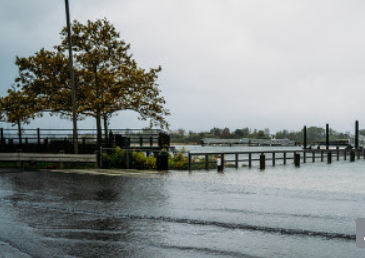
DEP Photo
The New Jersey Department of Environmental Protection today launched a multiyear effort to identify climate vulnerabilities and develop strategies to protect Liberty State Park from climate impacts, including more severe storm surge, stormwater-driven flooding, and extreme heat.
“Through the Liberty State Park Resilience Project, we will be developing a comprehensive strategy to ensure the long-term protection of the crown jewel of New Jersey’s state park system from the worsening impacts of storms and flooding,” said Department of Environmental Protection Commissioner Ed Potosnak. “We will work closely with the community and all of our stakeholders to put forth a strong resilience plan that will serve residents and visitors for many years to come.”
The Liberty State Park Resilience Project, part of the broader Liberty State Park Revitalization Program, was unveiled today, Oct. 17, 2026, during an open house and outlines strategies to make the park more resilient to climate impacts.
This initial phase will identify areas of the park that are most vulnerable and develop strategies to address those challenges. The project focuses on five key areas of the park, with the goal of protecting natural resources, improving ecosystem health and ensuring that Liberty State Park remains accessible to visitors.
Proposed strategies include construction of intertidal habitats, wetlands conservation and restoration, shoreline stabilization, raised boardwalks, raised roads and walkways, construction of bioretention basins and vegetated swales to capture stormwater, and plantings of trees and native plants to better absorb stormwater and provide shade.
The five focus areas are the Morris Pesin Drive Corridor and South Jetties, Caven Point, Richard J. Sullivan Natural Area, North Cove and Morris Canal Park.
The DEP plans to conduct site surveys over the winter, followed by design development and regulatory coordination in spring 2027, with the goal of developing a shovel-ready design by fall 2029.
The project is funded by the National Oceanic and Atmospheric Administration and is part of the DEP’s Building a Climate Ready NJ initiative.
“As Liberty State Park celebrates its 50th year, developing a comprehensive climate resilience strategy is an important step in advancing the long-term vision established in the August 2025 Liberty State Park Master Plan,” said John Cecil, Assistant Commissioner for State Parks, Forests & Historic Sites. “Public input has been central to the Liberty State Park Revitalization Program from the beginning and open houses provide an opportunity to hear directly from park visitors whose knowledge and ideas will help identify and select strategies to strengthen the park’s resilience to a changing climate.”
The Liberty State Park Resilience Project will complement ongoing restoration of the more than 230-acre interior portion of the park through the creation and enhancement of freshwater wetlands, tidal wetlands, a tidal channel and upland maritime habitats. Once complete, the interior will include an integrated system of passive recreation opportunities, including trails, paths, wildlife observation structures and dedicated spaces for active recreation features.
Saturday’s open house was held inside the Central Railroad of New Jersey Terminal, where attendees visited stations featuring information about five park focus areas affected by climate impacts. Those who were unable to attend the open house can view the materials and provide feedback online. Comments will be accepted through 11:59 p.m. Saturday, Oct. 31.
Frequent flooding during high-tide events and significant storms highlights the need to strengthen Liberty State Park’s resilience. Superstorm Sandy in late October 2012 caused extensive damage to the historic Central Railroad of New Jersey Terminal and submerged large portions of the park damaging walkways and infrastructure. As recently as last month, storm surge from the late September nor’easter flooded low-lying portions of the park, including parking lots and roads, and damaged the Hudson River Waterfront Walkway.
“The recent nor’easter was a reminder that Liberty State Park is already experiencing the effects of climate change, but those impacts are not limited to climate change-fueled major storms,” said Maggie McCann, DEP’s Administrator for Urban State Parks & Initiatives. “The park experiences sunny-day flooding on roads during high tides, and visitors and staff face extreme heat. Our open house provided an opportunity to better understand how climate impacts are affecting the park and its visitors and to identify strategies to help protect the park and keep it accessible for generations to come.”
Additionally, extreme heat is an increasing concern across New Jersey. During the July Fourth weekend celebrations marking the nation’s 250th anniversary, heat index values at Liberty State Park exceeded 100 degrees, and several visitors required treatment for heat-related illnesses. These increasingly frequent severe storms and extreme condition events underscore the need to ensure the park remains protected and accessible.
Saturday’s open house provided updates on other aspects of the ongoing park revitalization.
- Terminal Plaza Improvements: Improvements to the Terminal Plaza located at the end of Audrey Zapp Drive are nearing completion and the plaza is expected to open to park visitors later this fall. The redesigned plaza creates a welcoming experience for visitors with improved accessibility, additional seating, performance space and a clearly defined pathway to the Central Railroad of New Jersey Terminal. The project also improves water quality in the Hudson River Estuary by capturing and treating stormwater in raingardens before it reaches the river.
- Historic Train Shed Rehabilitation: Restoration of the Historic Train Shed has been advancing and will occur in phases over time. The initial phase is focused on the east side of the shed, which connects to the Central Railroad of New Jersey Terminal Building. This work will create flexible gathering and event space with seating and opportunities for future interpretive programming. The concourse connecting the Central Railroad of New Jersey Terminal and the Historic Train Shed is also undergoing a significant restoration which includes extensive work to the steel structure, repairs to the roof, concrete floor and historic skylights, along with repointing of brickwork. The large rolling gates that separate the concourse from the Historic Train Shed will be restored and returned to operation once restoration of the train shed is complete.
- Electric Vehicle Chargers: Twenty-three electric vehicle charging spaces are being constructed in Lot 4 at the intersection of Morris Pesin Drive and Freedom Way. The lot will include Level 2 and Level 3 DC fast chargers, with 11 Level 2 spaces and 12 Level 3 spaces, including one space of each type designated for ADA-accessible parking. The Level 2 chargers are well suited for visitors planning to spend several hours at the park, providing a slower charge over a longer period. The Level 3 DC fast chargers can provide significantly more charge in a shorter amount of time, offering an option for visitors making shorter visits to the park.
- Liberty State Park opened in 1976 as New Jersey’s bicentennial “gift to the nation.” The park has undergone continuous development and revitalization, transforming a former rail yard and dumping ground into cherished public parkland.
- Most recently, as New Jersey’s most visited state park and a green oasis in the most densely populated county in the nation’s most densely populated state, Liberty State Park has been the focus of a concerted effort to guide its future with extensive public input.
- Public meetings began in 2020 to discuss the cleanup of the park’s interior, followed by five open houses that contributed to the development of the Liberty State Park Master Plan, released in August 2025. The events gave the public opportunities to view plans up close, meet members of the revitalization program team, ask questions and most importantly provide valuable insight regarding what Liberty State Parks’ future should look like. The master plan establishes a long-term vision for the park over the next 10 years and beyond.
 -
 -
 -
 -
 -