New Jersey American Water is investing approximately $2.5 million to upgrade critical water infrastructure in Cherry Hill, replacing nearly a mile of aging water main to help ensure continued reliability, water quality, and fire protection for local customers. The project will replace an older cement water main with a new 16-inch ductile iron main along Kresson Road between Springdale Road and Cropwell Road.
This investment is part of the company’s ongoing, multi-year commitment to strengthen water infrastructure in more than 100 communities across New Jersey, supporting reliable service and consistent water quality over time. By making planned investments in infrastructure, New Jersey American Water helps reduce the likelihood of service interruptions, improves water flows for homes and businesses, and supports dependable fire protection for the community. These improvements are designed to deliver long-term value by reinforcing the system customers rely on every day.
Construction is already underway and is expected to be completed by June 2026. Crews will typically work Monday through Friday from 8 a.m. to 4 p.m., with the possibility of evening and weekend work if needed to maintain the project schedule. Access to homes and businesses will be maintained throughout construction, and crews will work directly with customers to accommodate driveway access as needed.
Gloucester City has always been a place where local routines matter, from river walks to neighborhood conversations. Yet, digital habits increasingly sit alongside those traditions: if you spend any time online, you may have noticed more talk about fast-paced games that feel very different from older casino formats. One title that keeps surfacing is Aviator, a crash-style game that has gained visibility through mobile platforms, streaming clips and word-of-mouth curiosity.
That rising interest in Aviator mirrors a much larger shift across New Jersey: in 2025, online casino revenue in the state reached nearly $2.91 billion, surpassing Atlantic City’s land-based gaming revenue for the first time and reflecting how digital formats are becoming a primary form of entertainment for many residents. This attention reflects broader shifts in how people interact with online entertainment rather than a sudden change in local culture. Ultimately, looking closely at this interest offers insight into how digital gaming trends reach and resonate within a small but connected community like Gloucester City.
You don’t need to be “a musician” to have musical ideas. If you write—journals, poems, short scripts, even marketing lines—you already think in rhythm and emphasis. The frustrating part is translating that inner soundtrack into something you can play back. AnAI Music Generatorcan be a surprisingly practical bridge here: not as a replacement for craft, but as a way to hear your words in musical form quickly enough that the emotion stays fresh.
The Quiet Problem: Ideas Fade When You Can’t Hear Them
The Problem
You have lines you like. You can imagine the mood. But without instruments, software skills, or time, the idea stays trapped in text.
The Agitation
When a song idea lives only on the page, it’s easy to overthink it:
Is the chorus strong, or does it just read well?
Does the verse have motion, or is it static?
Is the vibe closer to indie pop or cinematic ballad?
By the time you book studio time or ask a friend for help, the initial spark can fade—or you compromise just to move forward.
A Different Kind of Solution
Instead of waiting for “the right time” to make a demo, you create a rough musical draft now, then decide what deserves deeper work.
A New Lens: AI as a Demo Partner, Not a Final Producer
If you treat AI output as a first recording—like a voice memo with harmony—you’ll get more value and less disappointment.
What “Good” Looks Like at the Demo Stage
A clear emotional direction
A usable chord/melody contour you can refine
A structure you can react to (verse/chorus contrast)
Something you can share for feedback
This is where aText to Music AIworkflow helps: you can explore arrangements and moods without committing to a full production path.
Two Workflows That Feel Surprisingly Natural
Workflow A: Start With a Mood, Then Write Into It
Generate an instrumental vibe first.
Loop it while you write.
Adjust the music once the lyrics find their cadence.
This works well if you’re more “scene-driven” than “melody-first.” You’re building a world, then placing words inside it.
Workflow B: Start With Lyrics, Then Let the Music Interpret
Paste in your lyric draft.
Generate multiple interpretations.
Keep the one that matches your intent—even if you later rewrite around it.
This approach can reveal what your lyric is actually doing. Sometimes your “sad” lyric reads more like determination, and the musical interpretation makes that obvious.
A Practical Table: What You Can Control vs. What You Should Let Go
Goal
What You Can Influence
What You Should Expect to Iterate
Matching emotion
Mood words, instrument palette, energy level
Subtle emotional “shade” may vary per generation
Stronger chorus lift
Ask for “bigger chorus,” “more dynamic contrast”
You may need 3–6 tries to get a satisfying jump
Cleaner structure
Request “clear verse/chorus,” “simple motif”
Some outputs wander; trimming or regenerating helps
Better vocal fit
Specify vocal style/tone if available
Vocals can be inconsistent; treat as a draft
Prompting Tips That Respect Your Lyrics
Write prompts like stage directions
Instead of telling the model what you want to hear in technical terms, describe the scene:
“acoustic intimacy, close microphone feel, soft rise into chorus”
“anthemic, wide-open, crowd energy, but not aggressive”
Keep one “anchor phrase” constant
If your hook is “I’m learning how to let go,” keep that line unchanged while you test different moods. You’ll hear how arrangement changes meaning.
Try purposeful contrast
If the lyric is dark, try a brighter arrangement once. Not to be ironic—just to test whether the lyric wants tension or comfort.
Where Lyrics Become a Song (and Where They Don’t Yet)
There’s a special moment when your words stop being “writing” and start being “a track.” That moment often comes from hearing phrasing—where the line breaks land, where the melody holds, where the rhythm pushes.
This is exactly whyLyrics to Song is useful as an experiment: it externalizes your lyric’s implied rhythm. Even when the output isn’t perfect, it gives you something concrete to react to:
“That line is too long to sing naturally.”
“The chorus needs fewer syllables.”
“The verse wants internal rhyme, not end rhyme.”
A Balanced View: What This Can’t Do for You
If you expect a flawless, release-ready song on the first try, you’ll feel disappointed. Realistically:
You may need multiple generations to land on a vocal tone that fits.
Some outputs can feel generic if the prompt stays vague.
Tiny changes in wording can lead to noticeably different musical interpretations.
If your lyrics are very dense or abstract, the phrasing may sound rushed.
The best mindset is to treat the result as a co-write draft: it helps you hear possibilities, then you decide what’s worth rewriting.
How to Make the Output More “Yours” Without a Studio
Keep a “version ladder”
Create a simple set of iterations with clear intent:
V1: establish mood and tempo
V2: simplify arrangement
V3: bigger chorus contrast
V4: alternate vocal tone
V5: longer intro for storytelling
Do one human edit that matters
Even without production skills, you can make the song feel personal by revising:
The chorus line (one unforgettable sentence)
The first verse opening (a specific image)
The bridge (a twist or confession)
When the lyric becomes more concrete, the musical result tends to feel more grounded too.
Why This Is Worth Trying Even If You’re “Not Musical”
Because creativity isn’t gated by gear. If you can describe emotion, you can direct a musical draft. If you can write a hook, you can test whether it sings. And if you can iterate—gently, without expecting miracles—you can get from “words on a screen” to “a demo you can play for someone” in the same afternoon.
Further reading
For a research-grounded overview of text-to-music generation and its open challenges (like prompt alignment and structure), look up the 2025 review “AI-Enabled Text-to-Music Generation” (Electronics, MDPI).
Gambling SEO is not for beginners. It’s one of the most competitive, most scrutinised, and most expensive SEO niches on the internet. But when it’s done properly, it can also be one of the most profitable. Rankings equal traffic, traffic equals players, and players equal revenue. Simple in theory. Brutal in practice.
Here’s how to do gambling SEO well in 2026, without blowing your domain, your budget, or your sanity.
1. Start With the Right Expectations
First, reality check. Gambling SEO is slow. If someone promises page-one rankings in 30 days, they are lying or about to torch your domain.
Search engines treat gambling as a high-risk niche. Trust takes longer to build, penalties hit harder, and recovery is painful. You need to think in months and years, not weeks according to gambling SEO agency Serplogic.com – check out their guide to gambling SEO for 2026..
If your mindset is long-term brand building, you’re already ahead of 90 percent of operators.
Debt can creep up quietly. A credit card here, a loan there, then suddenly a chunk of your income is gone before the month even starts. The good news is that controlling debt doesn’t require extreme frugality or financial wizardry. It’s about clarity, consistency, and a few smart habits that actually stick.
Here are 10 practical tips to help you regain control of your debt and keep it that way.
1. Get Brutally Clear on What You Owe
You can’t control what you won’t look at. List every debt you have: balances, interest rates, minimum payments, and due dates. Seeing the full picture may feel uncomfortable, but it removes uncertainty, which is often more stressful than the numbers themselves.
Once it’s written down, debt becomes a problem to solve rather than a vague source of anxiety.
Licensed weed delivery has changed how legal cannabis is sold and used in many places. Instead of meeting unknown sellers or visiting unregulated shops, adults can now order through approved services that follow strict rules. This shift has helped improve public safety and given consumers more control over what they buy.
When done legally and responsibly, licensed delivery can be safer for communities and better for customers.
Stronger Safety for Everyone
One of the biggest benefits of licensed weed delivery is safety: licensed services must follow government regulations. These rules often include background checks for drivers, secure packaging, and clear tracking of orders. This reduces the risk of theft, fraud, or unsafe products reaching customers.
Licensed delivery also helps keep cannabis out of the hands of minors. Legal services require age verification at checkout and again at delivery. This extra step matters. It helps ensure that only adults who are allowed by law can receive these products.
Another safety gain is product testing. Licensed sellers can only deliver items that have been tested for quality and cleanliness. This lowers the risk of harmful substances and gives consumers peace of mind. When people really like the weed products they buy, it is often because those products are consistent and clearly labeled.
Chronicling Five Decades in the Newsroom—From the Newark Riots to Undercover Investigations
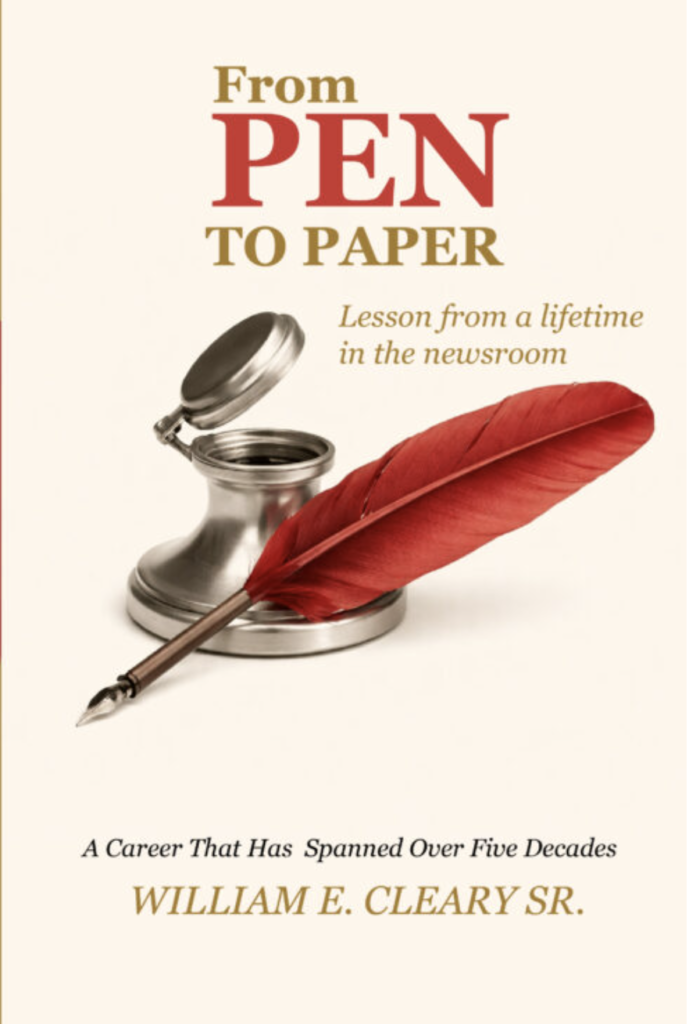
Gloucester City, NJ — January 2026 — After more than 50 years shaping public discourse across South Jersey and Philadelphia, journalist and editor William E. Cleary Sr. announces the release of his memoir, From Pen to Paper: Lessons From a Lifetime in the Newsroom. The book offers a candid, insightful look into the triumphs, trials, and truths of a career devoted to public service journalism—and a life shaped by service long before he ever picked up a pen.
Part memoir and part guidebook, From Pen to Paper traces Cleary’s journey from on-the-scene reporting to editorial leadership, revealing the tools of the trade and the unwritten rules that define the profession. With wit and wisdom, Cleary shares stories from inside the newsroom—where deadlines loom, facts matter, and integrity is non-negotiable. But the book also ventures beyond the newsroom, into the streets of a burning city and the shadowy world of organized crime.
Camden, NJ – Welcome to the team! The Camden County Prosecutor’s Office has hired a new assistant prosecutor, announced Camden County Prosecutor Grace C. MacAulay.
On Friday, January 30, 2026, Assistant Prosecutor Raiza Rosa was sworn in by the Honorable Kathleen Delaney, J.S.C., before Prosecutor MacAulay, First Assistant Prosecutor Timothy Chatten, Deputy First Assistant Prosecutor Tracy Cogan, Deputy First Assistant Prosecutor Kelly Testa, and Deputy Chief of Detectives Randall MacNair.
Assistant Prosecutor Rosa previously clerked for the Honorable Donna Stroud of the North Carolina Court of Appeals in 2023. After her clerkship, she worked for the Hutchens Law Firm in Fayetteville, North Carolina, and later for the Juvenile Criminal Law Clinic in Durham, North Carolina. Assistant Prosecutor Rosa is a graduate of the North Carolina Central University School of Law.
Several roadway projects will be underway across Camden County during the week of February 2 to February 6.
“Motorists should plan ahead to take alternate routes and give themselves plenty of time to get to their destinations,” said Commissioner Al Dyer, liaison to the Department of Public Works. “Also, remember that when you’re traveling through a construction area, please slow down and stay alert for crew members and debris.”
This week was National School Choice Week — highlighting the civil rights issue of the 21st century.
There is no legislative victory I’m more proud of than authoring the most significant federal school choice legislation, which was signed into law by President Trump. Now, every taxpayer in America can contribute up to $1,700 a year to a scholarship-granting organization in the States, and people get a dollar-for-dollar credit on their federal taxes.
This bill will unlock tens of billions of dollars for scholarships, allowing millions of students across America to attend the school of their choice. Across America, far too many kids are trapped in failing schools, and this school choice victory will enable them to get an excellent education. READ: Ted Cruz Has a Brutal Plan to Corner Senate Democrats