
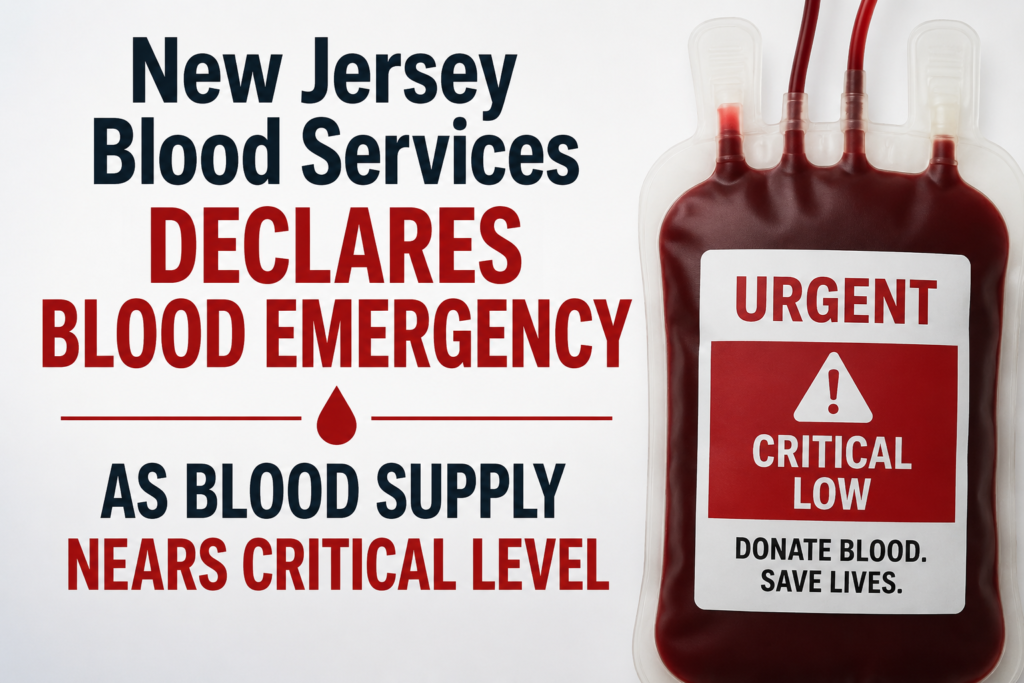
New Jersey Blood Services (NJBS) has declared a blood emergency as supplies have hit a critical low, dropping to less than a two-day supply overall and below a one-day supply for type O blood, the most critical type used in emergency care. These levels are particularly concerning given the challenges presented by upcoming special events and the summer “trauma season” that typically increases the need for blood. We are calling on our dedicated New Jersey communities to roll up their sleeves and support us in rebuilding our inventory to ensure we can meet the needs of our hospitals and support emergency mass-casualty preparedness. All blood types are desperately needed, but Types A-, B-, and O+/O- have hit dangerously low levels in the region.
Dangerously Low Blood Supply Levels
Blood donations are down nearly 15%, representing approximately 4,500 fewer donations than needed to meet hospital demand across the region. The shortfall comes on the heels of Memorial Day weekend, when donations traditionally decline due to travel, vacations, school breaks, and holiday activities. Spring donations have failed to rebound as expected following a difficult winter season. Without consistent blood donors, the blood supply remains in crisis.
“Memorial Day is the unofficial start to summer and ‘trauma season,’ and this has been one of the most challenging periods we’ve faced in years,” said Jeannie Mascolino, Vice President of Operations at New Jersey Blood Services. “We are already thousands of donations behind where we would like to be heading into one of our most difficult periods, and hospital demand is increasing across the country. Donor support in the coming weeks will be critical to helping hospitals maintain a stable blood supply for patients who depend on transfusions every day.”
Summer Trauma Season
Summer is notoriously known as “trauma season,” when hospitals typically see a rise in serious injuries, including car crashes and other emergencies requiring large volumes of blood. Trauma patients can require dozens, sometimes hundreds, of blood transfusions in a matter of hours. In New Jersey alone, approximately 10,000 trauma patients are treated by level 1 trauma centers each year, with many of the injuries occurring on weekends and throughout the summer months.
This year, that time of increased need will coincide with logistical challenges as New York and New Jersey welcome tourists for the FIFA World Cup and other major events.
Blood cannot be manufactured and has a limited shelf life, meaning hospitals rely on a steady stream of donors to meet daily demand. A blood emergency means the available supply has dropped below safe levels to meet routine and urgent patient needs. For trauma centers, where patients may require large volumes of blood within minutes, maintaining an adequate supply is critical for patient care.
Clinicians at Level I Trauma Centers and local blood recipients are echoing the call for donors.
“Blood is essential to emergency medical care and plays a critical role in helping first responders and hospital teams save lives every day,” said Dr. Adam D Fox, Trauma Medical Director at the Eric Munoz Trauma Center at University Hospital, the only state-designated Level I Trauma Center in North Jersey. “During emergencies, accidents, and other critical situations, access to a stable blood supply can make an immediate difference in patient outcomes. Summer shortages place added pressure on healthcare systems, which is why blood donors are so important to the communities we serve.”
Stories like Emily Miethner’s underscore how quickly blood is needed in medical emergencies.
“Donated blood saved my life. In an emergency, there’s no substitute. It’s there because someone chose to give selflessly,” said Emily Miethner, a blood recipient who required 19 emergency transfusions following traumatic childbirth complications. “That’s why I donate today and encourage others to make it part of their routine. You never know when someone’s life will depend on it.” Watch Emily share her remarkable story.
New Jersey Blood Services is asking all eligible donors, especially those with type O blood, to schedule an immediate appointment to donate. In light of recent updates to FDA guidance, more people than ever may now be eligible to give. Blood donors can donate every 56 days, and platelet donors can give up to twice per month.
To view current eligibility guidelines or make an appointment, donors can call 1-800-933-2566 or visit nybc.org.
Can’t donate blood? You can still make a lifesaving impact by supporting NYBC’s mission through financial contributions or volunteering your time. Click here to learn more.