
The DEP Forest Fire Service released a report on the 2025 wildfire season that saw substantial increases in the number of wildfires and acreage burned statewide, and reminds residents and visitors to New Jersey of the important role they have in protecting their communities and reducing wildfire risk.

The report is the first of what will become an annual analysis by the Forest Fire Service looking back at the previous year’s wildfire metrics in the context of wildfire trends, causes and response efforts, while helping New Jerseyans better understand the need for wildfire vigilance to help protect lives and property. Of the 1,322 wildfires that burned 27,229 acres statewide last year, nearly all were caused by humans, according to the report. The figures represent a 22% increase in the number of wildfires and a 116% increase in acreage burned compared with the 20-year average.
“Public education and awareness are part of our comprehensive strategy to understand wildfire risk in New Jersey,” said Acting Commissioner Potosnak. “This report is a key component of that approach, helping to explain the many factors influencing wildfires and how communities can partner with the Forest Fire Service to prevent them.”
The 2025 report is available on the Forest Fire Service’s website at wildfire.nj.gov, and on the agency’s social media profiles on Instagram, X and Facebook.
“The Forest Fire Service’s first annual report provides a detailed look at wildfire activity in New Jersey and the factors driving it,” said John Cecil, Assistant Commissioner for State Parks, Forests & Historic Sites. “Understanding the scope and causes of wildfire activity helps us better protect New Jersey’s forests and communities and is an important step in improving transparency and guiding future prevention efforts.”
2025 By the Numbers
Human activity accounted for 99.6% of New Jersey’s wildfires last year, whether through accidental or intentional ignition. Only six wildfires, burning a combined 1.75 acres, were attributed to lightning.
Equipment use, which includes vehicle fires, equipment malfunctions and utility infrastructure, was the leading cause of wildfires, accounting for 486 incidents burning 527.25 acres.
Campfires caused 137 wildfires statewide and were responsible for the greatest amount of acreage burned, at 15,263.75 acres statewide. Two of the state’s nine major wildfires in 2025, defined as fires that burn 100 acres or more, were caused by illegal campfires.
The Jones Road Wildfire, the second-largest wildfire in New Jersey in the past 20 years, burned 14,949 acres after being sparked by an illegal campfire in the Ocean County Natural Lands Trust’s Forked River Mountains Wilderness Area on April 22, 2025. The fire threatened 1,320 structures and prompted the evacuation of approximately 7,000 residents in Ocean and Lacey townships. It destroyed one commercial building, several outbuildings and multiple vehicles. The wildfire also forced the closure of major transportation corridors, including the Garden State Parkway and Route 9, while power outages affected approximately 30,000 residents.
On Sept. 2, 2025, an illegal campfire also caused the Buckabear Wildfire in West Milford Township, Passaic County, which burned 200 acres on property managed by the Newark Watershed.
Each of nine major wildfires that occurred in 2025 are detailed in the report.
In addition to 2025 metrics, the report highlights the Forest Fire Service’s use of prescribed fire as a tool to reduce wildfire risk and improve forest health. Prescribed fire helps reduce hazardous fuel loads, enhances habitat for native plants and wildlife, suppresses damaging insects and ticks, and recycles nutrients back into the soil. Lingering impacts from a prolonged drought that began in 2024 limited the agency’s ability to conduct prescribed fire operations in 2025. The Forest Fire Service treated just 3,962 acres with prescribed fire, the lowest total in 25 years and only 16% of its annual goal of treating 25,000 acres. The Forest Fire Service has so far in 2026 – as of June 9 – treated 8,815 acres with prescribed fire.
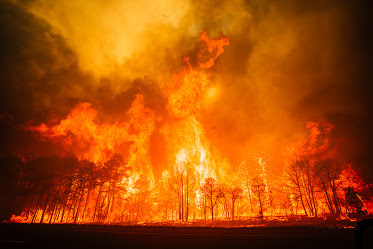
“Coming off an extremely busy fall season in 2024, 2025 was a significant fire year in which our crews worked for weeks without a break,” said Bill Donnelly, Chief of the New Jersey Forest Fire Service. “Our crews across the state remain ready to protect lives and property as New Jersey increasingly sees longer wildfire seasons. The data in this report is an important tool for educating New Jerseyans and helping them understand that human behavior drives the vast majority of wildfires in the state, underscoring Smokey Bear’s message that ‘only you can prevent wildfires.’”
The Forest Fire Services uses a variety of resources and tools to detect wildfires, rapidly respond to them and generate public awareness about safety. In April, the Forest Fire Service unveiled the new Veterans Fire Tower as one of 21 fire towers statewide. Last year, in recognition of New Jersey’s growing wildfire threats, the Forest Fire Service launched the NJ Wildfire SMART (Safety, Mitigation, Awareness, Response, Training) initiative, a series of actions that emphasize steps and information resources for reducing wildfire risk and spread.
Prolonged Dry Conditions and Extended Fire Seasons
The report explains in detail the growing trend of wildfires taking longer to fully contain as prolonged dry conditions continue to affect the state. Key highlights:
- Between 2019 and 2024, New Jersey experienced 38 major wildfires, nine of which required more than five days to reach full containment.
- Eight multi-day incidents occurred in 2024 alone.
- In 2025, 44% of the nine major wildfires took more than five days to contain.
- Among the longest-duration fires in 2025 was the Buckabear Wildfire in West Milford Township, Passaic County, which ignited on Sept. 2 and burned for 60 days before being fully contained.
- The Danny’s Wildfire in Vineland, Cumberland County, burned for 26 days before reaching full containment after igniting on April 18.
- The Jones Road Wildfire in Ocean and Lacey townships, Ocean County, took 20 days to contain after sparking on April 22.
- The Mines Spung Wildfire in Shamong and Washington townships, Burlington County, reached full containment after 18 days, following its June 13 start.
While the Forest Fire Service has historically responded to the largest number of wildfires in March and April, New Jersey’s typical spring wildfire season, the report states that the risk of major wildfires extends beyond this peak period.
“New Jersey is seeing a shift in wildfire risk beyond the traditional spring season,” said Greg McLaughlin, Administrator for Forests & Natural Lands. “Increasing fire weather conditions throughout the year, aligned with long-term climate trends, are placing greater demands on our crews and reinforcing the need for year-round vigilance and fire safety among New Jersey’s residents and visitors.”
A nationwide analysis by the research nonprofit Climate Central found that the number of annual fire weather days in New Jersey has increased since 1973, rising by 13 days in the northern part of the state and eight days in the southern region. Fire weather days are those that have a combination of warm temperatures, low relative humidity, wind, and dry conditions that could lead to the formation and rapid spread of wildfire.
This data mirrors the DEP’s own 2020 Scientific Report on Climate Change which states, “wildfire seasons could be lengthened, and the frequency of large fires increased due to the hot, dry periods that will result from increased temperatures.”
Wildfire Prevention Tips
Most wildfires can be avoided by adhering to these common-sense safety tips:
- Don’t leave fires unattended. Douse them completely, until cold to the touch.
- Don’t discard cigarettes, matches or smoking materials on the ground.
- Keep matches and lighters away from children.
- Teach youth about fire safety.
- Protect homes and other structures from wildfire by creating defensible space. Visit nj.gov for more information.
- Ensure fire trucks can access driveways.
- Use wood stoves and fireplaces carefully, since both can emit embers that spark fires. Fully douse ashes with water before disposal.
- Contact your nearest Forest Fire Service office about how to obtain a Campfire Permit.
To learn more about wildfires in New Jersey, steps to protect property and other resources, visit wildfire.nj.gov
Like the Forest Fire Service’s Facebook page at facebook.com/NJForestFireService/
Follow the Forest Fire Service on X @njdepforestfire and Instagram @newjerseyforestfire.