
A local-news correction should not require rebuilding an entire video. Yet when a name, count, quote, and location are baked into generated scenes, one factual change can invalidate every frame. The asset becomes slow to fix precisely when the newsroom needs speed and traceability.
A correction-ready template separates replaceable claim cards from reusable atmosphere. The correction radius—the smallest set of assets affected by one changed fact—becomes an editorial design constraint. Smaller radii make errors easier to locate, repair, and read back.
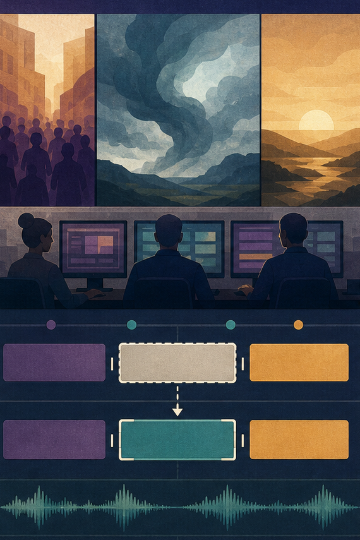
Measure the Correction Radius of Each Claim
List every name, quote, number, date, place, status, and attribution in the planned video. Mark every frame, narration line, caption, thumbnail, and description where it appears. This dependency map shows whether one correction touches a single card or the whole package.
Include implied claims, not only written ones. A courthouse exterior can imply the legal venue, a hospital corridor can imply treatment, and a crowd can imply turnout. Give these visuals claim IDs when their meaning depends on the story being correct.
Rank corrections by harm and reach. A spelling change, wrong identity, false allegation, safety instruction, and outdated schedule do not share the same response. The manifest should state whether publication must pause while the replacement is prepared.
Keep Facts in Replaceable Claim Cards
Build names, figures, timelines, maps, and quotes as live cards from the newsroom source record. Give each card a claim ID and owner. Do not ask generated video to render claim text or depict the claim as observed reality.
Use neutral transitions around the cards. A card can change without forcing atmosphere, music, or channel framing to change, provided those layers do not imply the old fact.
Keep source links, verification time, and editor notes in the internal card record even when the public card shows less. A visible claim without its provenance can be corrected, but the newsroom will not know which authority should approve the replacement.
Design for longer corrections. A full surname, revised quotation, or clarified status may need more space than the original. Flexible cards prevent the team from abbreviating accurate information merely to preserve a template.
Classify Every Atmosphere Plate by Reuse Risk
Abstract location textures, generic clocks, or non-identifiable weather can sometimes be reused. Recognizable people, buildings, vehicles, uniforms, damage, or event action are claim-bearing and need their own provenance. “No text” does not mean “no factual implication.”
Review music and sound effects in the same way. Sirens, alarms, cheering, or breaking glass can imply events that the plate does not show. A reusable layer must remain neutral in sound as well as image.
Set an expiration for time-sensitive atmosphere. Seasonal conditions, construction, public signage, and venue appearance can become misleading even when they were initially generic. Reuse always begins with a fresh implication check.
| Asset | Claim dependence | Correction action |
| Name card | Direct | Replace and read back |
| Generic atmosphere | Low after review | Retain if implication still fits |
| Named-place scene | High | Reverify or withdraw |
| Thumbnail and caption | Direct or contextual | Update with the same claim ID |
Storyboard Modular Plates and Cards Step by Step
Arrange the story as claim card, explanation, neutral plate, next claim card, and source close. The exact sequence can vary, but a reviewer should be able to remove one claim module without leaving a misleading visual bridge.
First place claim cards on a silent timeline. Second add narration keyed to their identifiers. Third add neutral plates only where the transition needs continuity. Fourth run the dependency check before final sound or branding.
Keep the source close as its own module rather than embedding it in a generated scene. It should name the authority, publication time, and correction route when appropriate to the story.
Generate Plates without Names or Event Action
Use a cleared prompt or reference image for atmosphere that does not impersonate the reported event. MakeShot.ai offers text-to-video and image-to-video routes through several available choices. An AI Video Generator can create a non-claim plate after its reuse risk is classified.
Keep prompts free of real names, unverified locations, license plates, house numbers, and allegations. A generic plate should remain generic in output; reject candidates that introduce a recognizable identity or specific damage.
Use a neutral asset identifier rather than the headline as the upload filename. Headlines change, and sensitive names in filenames can travel into caches or production logs. Keep the story mapping in the internal manifest.
Inspect the candidate without its cards. If it still appears to depict the named event, it is not reusable. Replace recognizable context with abstract objects, space, or motion that supports pacing without claiming observation.
Bind Every Narration Line to Claim Identifiers
Mark each sentence with the claim card it explains. If a correction changes a number, search the identifier across narration, subtitles, descriptions, thumbnails, and translated versions. Do not rely on remembering where the fact appeared.
Record pronunciation separately for names and places. A corrected spelling can still leave an old spoken form in audio. The correction manifest should cover sound as well as pixels.
Keep paraphrases linked to the full source wording. A correction may not change the quote itself but may change the context that made the paraphrase fair. Recheck the whole sentence, not only the replaced number.
For translated narration, use the same claim ID across locales and record who approved each version. A correction is incomplete until every published language has changed or been withdrawn.
Prove One Card Can Change Cleanly
Before release, simulate a correction. Replace one number or status card with a clearly marked test value, update its linked narration, and render again. The atmosphere, unrelated claims, timing, and source close should remain stable.
Compare the Old and New Exports
Use a difference review to confirm that only intended regions changed. Check transition timing near the replacement; a longer name may shorten reading time or push a source note off screen. Verify every channel derivative, not only the master.
Then restore the approved value and repeat the factual readback from the rendered file. A successful template is demonstrated by this replacement test, not by the neatness of its editing timeline.
Review automatic captions separately from the designed card. Speech recognition can reintroduce the old name or number after the visual correction. Compare the caption file with the same claim record used for screen text.
Check thumbnails and social copy after the test. They often sit outside the video project and can retain the old claim. Include them in the dependency map from the start.
Track Withdrawal as Part of Correction
A corrected upload does not remove cached, embedded, downloaded, or syndicated versions. Keep a distribution list and mark each location replaced, removed, or awaiting action. Preserve the original internally when policy requires a correction record.
A second AI Video Generator pass is unnecessary when only a claim card changes. Regenerate a plate only if the corrected fact changes what that plate implies.
Respect the Limits of Modular News Templates
Modularity narrows a correction; it cannot make a generated scene factual or eliminate editorial review. When the correction changes the event’s central meaning, withdraw the full package and rebuild the story rather than swapping one card into a misleading structure.
Archive the source record, claim map, MakeShot.ai plate provenance, correction test, final readback, and distribution manifest. MakeShot.ai helps only with the reusable visual layer; the newsroom keeps every factual dependency replaceable and accountable.