Congratulations to our 2026 Atlantic highly migratory species art contest winners! The winning 13 pieces of artwork are featured in the 2027 calendar highlighting the importance of Atlantic HMS to healthy ecosystems and to celebrate NOAA Fisheries’ successes in conservation through sustainable fisheries management. Thank you to all the students who participated in this year’s contest!
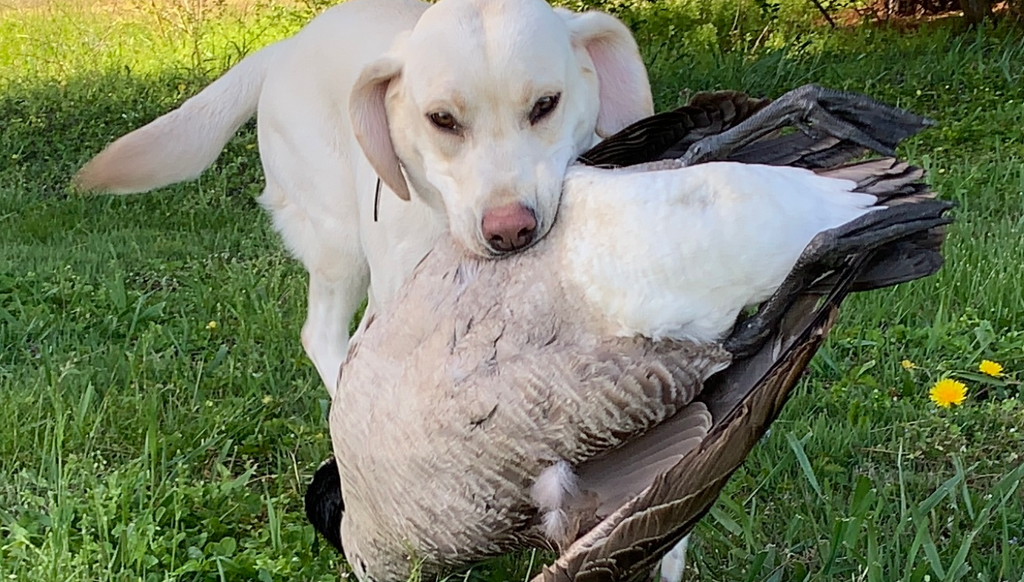
Delaware hunters can take advantage of a larger daily bag limit during resident Canada goose season starting Sept. 1 /Delaware DNREC photo
The Department of Natural Resources and Environmental Control announced today that several Delaware hunting seasons will open on Tuesday, Sept. 1, marking the start of the overall 2026-27 hunting season. These early seasons are a longstanding tradition for the state’s hunters, who through such early opportunities afield play a vital role in conserving Delaware’s wildlife resources.
Delaware deer hunters will open the season on Tuesday, Sept. 1 with the archery and crossbow seasons. Gamebird hunters can go afield the same day for the start of resident Canada goose and mourning dove seasons. Opening later in the month are the special September teal and gray squirrel seasons. For a complete list of season dates and regulations for all species throughout the rest of the season, refer to the annual Delaware Hunting & Trapping Guide.
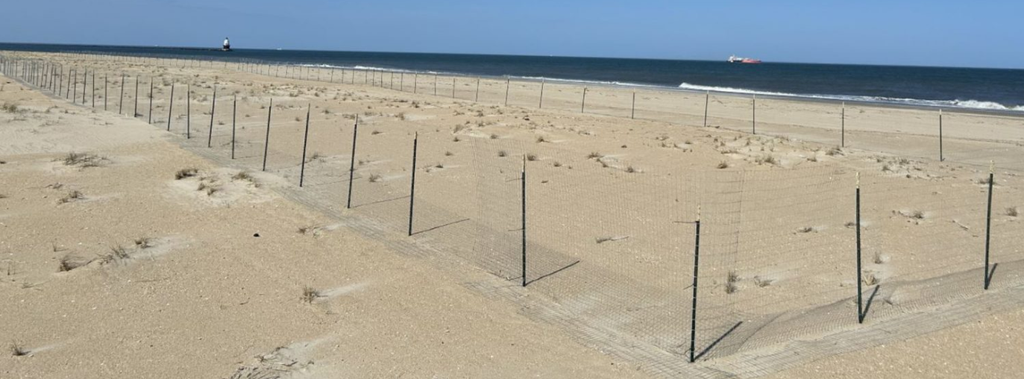
The Delaware Department of Natural Resources and Environmental Control will reopen a stretch of oceanside beach at The Point at Cape Henlopen State Park on Tuesday, Sept. 1. The Point’s bayside beach will remain closed until Thursday, Oct.1 for use by shorebirds migrating south for the winter.
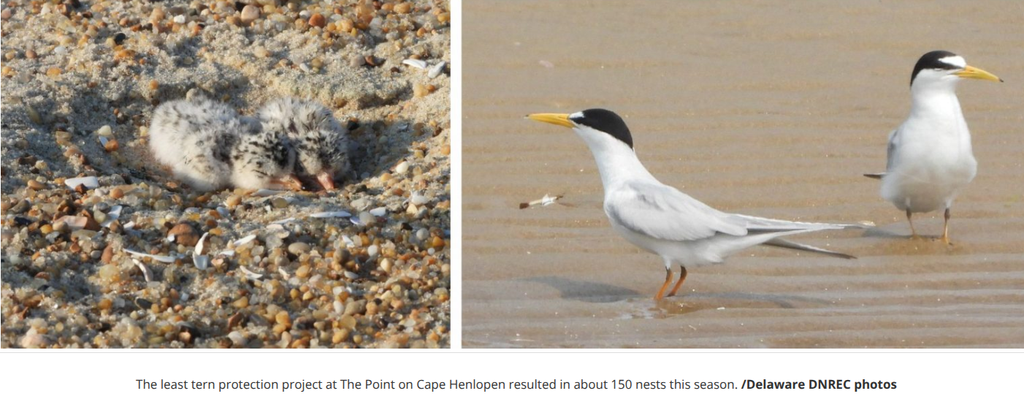
The Point has closed annually since 1993 every March for the benefit of threatened and endangered beach-nesting and migratory shorebirds, including piping plovers, oystercatchers, least terns, red knots and other species before it reopens in the late summer-early fall for beachgoers and anglers.
The DNREC Divisions of Parks and Recreation, Fish and Wildlife and Watershed Stewardship have worked together since 1990 to implement a management plan to increase beach-nester and migratory shorebird populations. Closing The Point to park visitors provides an area of undisturbed beach and intertidal habitat for a host of shorebirds, gulls, terns and other waterbirds to rest and feed after the breeding season, one of only three in the state.
The requirements for hunter orange while bowhunting have been clarified in the online version* of the 2026-27 Hunting & Trapping Digest.
Whenever archery and firearms seasons occur at the same time, bowhunters in tree stands are encouraged to wear hunter orange, EXCEPT WHEN IT IS REQUIRED DURING THE SIX-DAY FIREARM SEASON.
Hunting season kicks off in Pennsylvania on Tuesday, September 1, with the early Canada goose and dove seasons!
In addition to a general hunting license, goose and dove hunters must posses a migratory game bird license. Goose hunters must also have a Federal Duck Stamp.
Sunday hunting is closed for migratory game birds, including geese and doves, for the 2026-27 seasons.
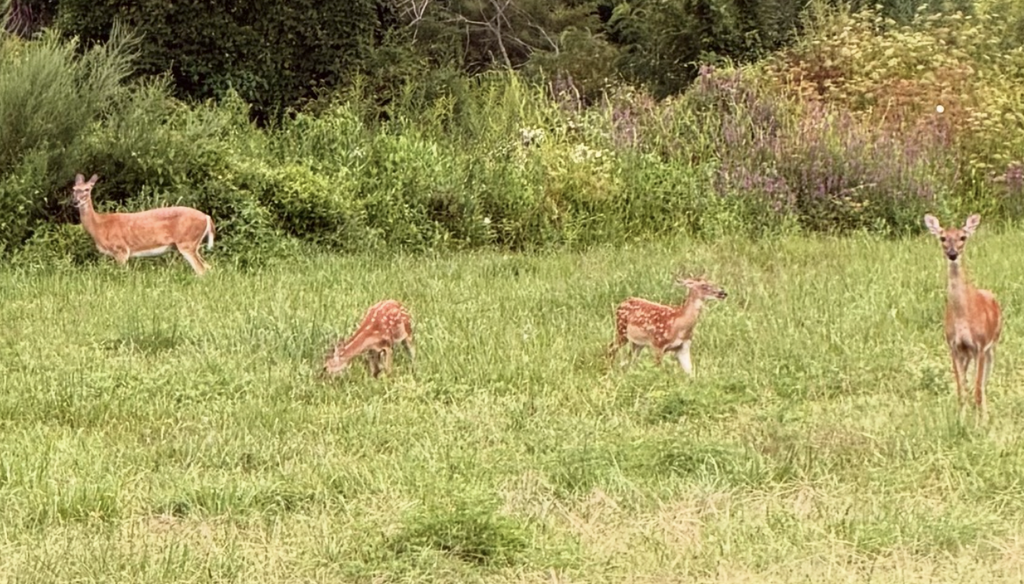
GLOUCESTER CITY NJ (August 20, 2026)–Today, around 1 PM, Connie and I were driving on Klemn Avenue heading towards U.S. Route 130. She yelled, “Look at the deer!”
“Where! Where!” I replied.
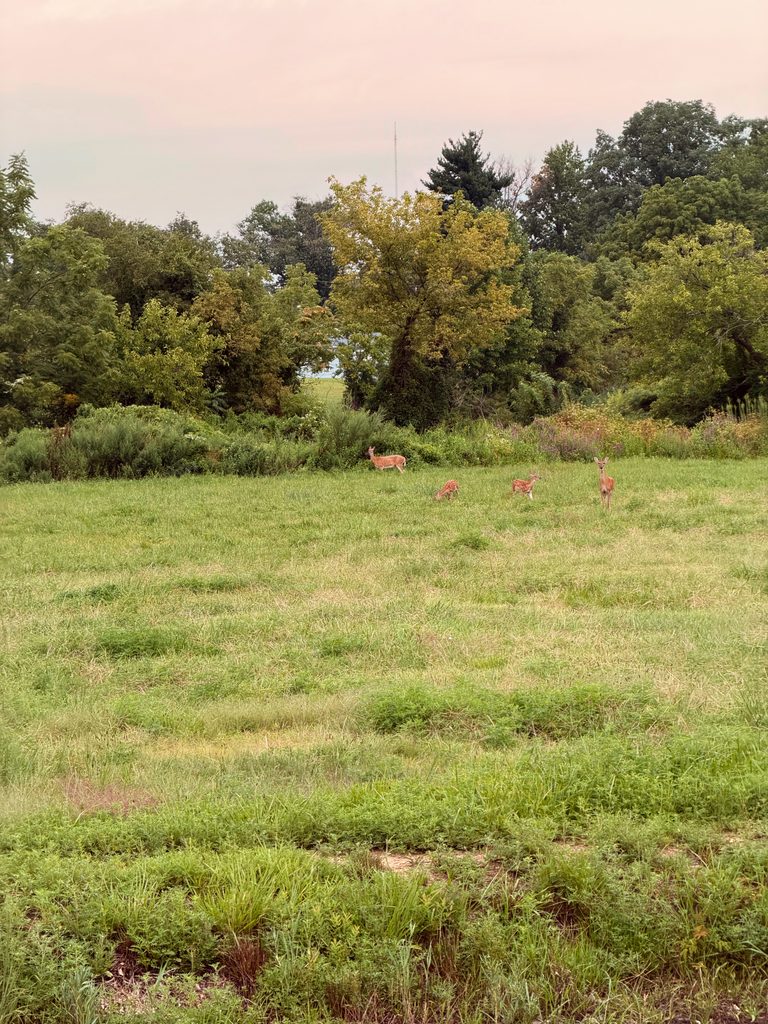
I had to back up a couple of feet before I saw them. Two fully grown doe’s and two spotted fawns were walking lazily about like they didn’t have a care in the world.
In recent years it is not that unusual to see deer in the Gloucester City.
Some of those sightings we have reported on include a large buck seen at the Lane Avenue playground. A Hunter Street resident reported that a deer was walking in the street past his house. A buck was hit at the railroad crossing on South Broadway near the Brooklawn border. A fawn that tried to jump the spike cemetery fence on Market Street didn’t make it and died. When walking near the back of GHS there are always deer tracks. Some of those tracks are big. To see these four deer out in the open at 1 PM in the afternoon was a pleasant surprise.
How did they get there?
We suggest they came from Newton Creek, which is on the other side of the trees in the photo. Deer can swim.
NOAA Fisheries announces a final rule for North Atlantic swordfish, South Atlantic swordfish, northern albacore tuna, and bluefin tuna annual quotas.
The final rule:
Maintains existing baseline quotas for North Atlantic swordfish, South Atlantic swordfish, and northern albacore tunas
Implements the management procedure for North Atlantic swordfish consistent with recent recommendations adopted by the International Commission for the Conservation of Atlantic Tunas (ICCAT)
Increases the baseline annual U.S. bluefin tuna quota from 1,316.14 metric tons (mt) whole weight (ww) to 1,509.98 mt ww, the level adopted by ICCAT for 2026-2028
Increases the bluefin tuna domestic fishing category quotas according to the established regulatory percentages
Increases the pelagic longline bycatch set-aside quota from 25 mt ww to 62.5 mt ww
Allocates the pelagic longline bycatch set-aside quota to Individual Bluefin Quota (IBQ) shareholders with IBQ shares designated for the Atlantic region
Updates the analyses of all swordfish and tuna quotas and consider changes to quotas that could occur in future years consistent with the management procedures
Reiterates the existing process for annual quota adjustments based on international quota transfers, underharvests, and/or overharvests.
A full description of the quotas for these stocks can be found in the Implementation Plan.
The initial identification triggered activation of the state’s CWD plan, with one of the first steps to conduct widespread sampling in the area where the initial cases were found. In July, DNREC worked with the U.S. Department of Agriculture’s Animal and Plant Health Inspection (APHIS) Wildlife Services and local landowners to collect and test additional deer to better understand the distribution and prevalence of CWD in the area. APHIS focused cluster sampling of 100 deer adjacent to the two initial CWD findings did not turn up any more cases of the disease.
NOAA Fisheries requests comments on a proposed rule to revise fishing gear regulations in Atlantic highly migratory species fisheries.
Proposed Gear Revisions:
Buoy gear: Authorize power assistance for gear deployment and retrieval, the use of this gear under additional permits (Swordfish General Commercial permit; some tunas and shark permits), and the retention of additional species (some tunas and sharks).
Speargun fishing gear: Authorize this gear to retain and sell bigeye, albacore, yellowfin, and skipjack tunas under some commercial permits.