Waterfront Wealth vs. Public Health: The Heavy Cost of Holt’s Gloucester City Shipping Hub
Cleary’s Notebook News
GLOUCESTER CITY, NJ (September 27, 2026)— As industrial logistics hubs expand along the Delaware River waterfront, the critical trade operations of marine container terminals come at a severe cost to adjacent residential neighborhoods. For frontline communities living under the shadow of heavy port infrastructure in South Jersey, the environmental footprint is defined by a continuous influx of air, water, noise, and land pollution.
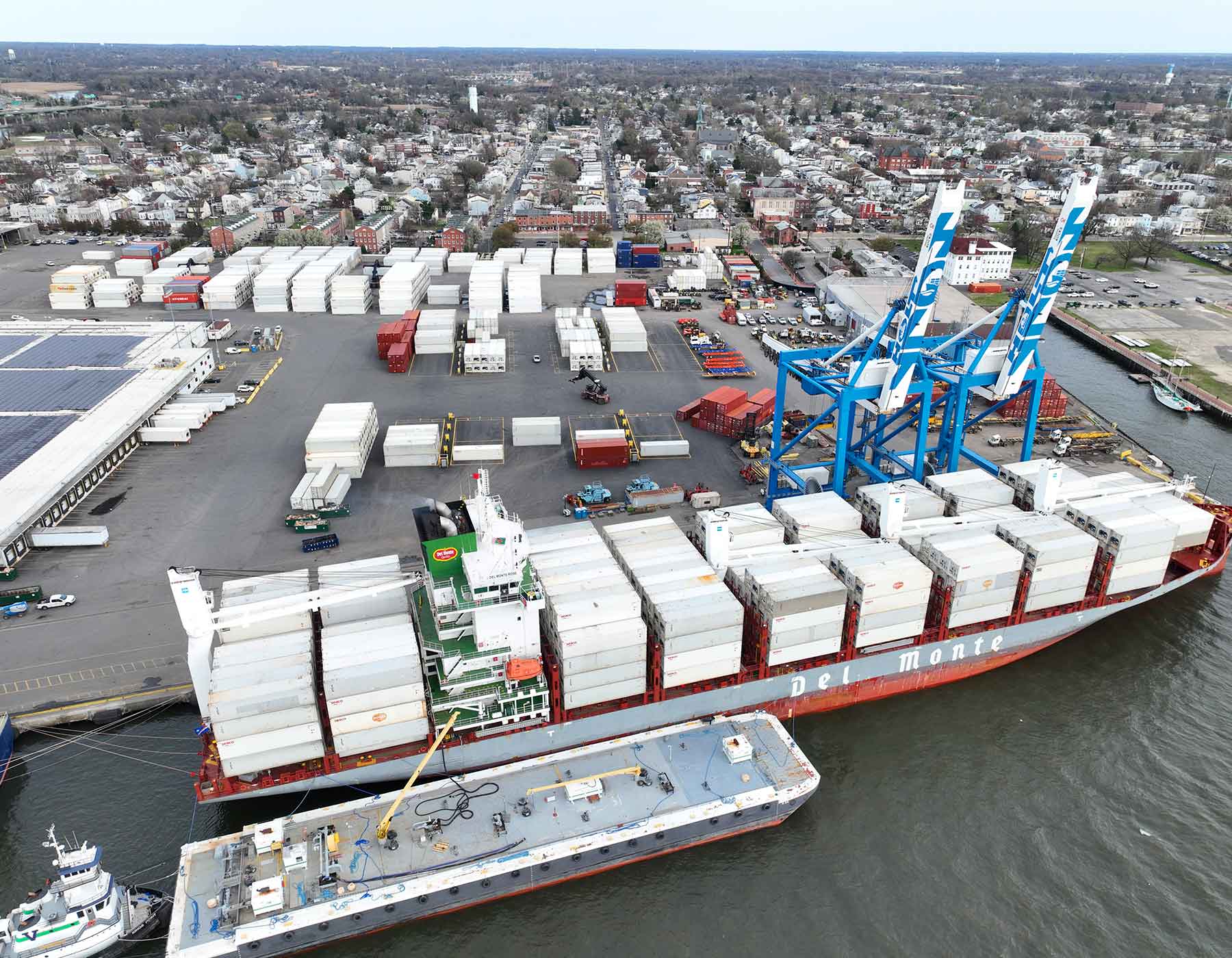
The Gloucester Marine Terminal (photo courtesy of Holt Logistics)
The intersection of private shipping infrastructure and state operations forms the backbone of this regional economic engine. Headquartered right here at the Gloucester Marine Terminal on King Street, the family-owned Holt Logisticshas been a dominant maritime force since 1926. Today, the company also acts as a primary private operator for major assets owned by the state-run South Jersey Port Corporation (SJPC), including Pier 5 at the Broadway Marine Terminal in Camden and the newer Paulsboro Marine Terminal. While these public-private partnerships handle millions of tons of cargo annually and drive regional logistics growth, their round-the-clock operations concentrate localized environmental hazards directly in residential backyards.
The 1996 Waterfront Lease Controversy
Nowhere is the complex and highly transactional relationship between Gloucester City and its largest corporate tenant clearer than in the history of the 1996 ninety-nine-year lease agreement.
In 1991, Gloucester City acquired the former U.S. Coast Guard base on the waterfront and designated the area as in need of redevelopment. The city council subsequently entered into a highly controversial long-term lease with Holt Logistics to establish their corporate headquarters in the historic white building at Freedom Pier.
Under the terms of that 1996 agreement, Holt agreed to an initial annual rent of $140,000, paired with a clause for yearly increases tied directly to the Consumer Price Index (CPI), alongside a commitment to execute at least $5 million in localized property improvements. The initial deal was pitched as a win-win redevelopment trade-off: Holt would renovate the Coast Guard building into modern corporate offices and, in return, construct a major waterfront restaurant to anchor public access to the pier. However, the restaurant portion never materialized. Holt later backed out of that obligation after citing exorbitant projected costs associated with dredging and rebuilding the underlying pier infrastructure.
The resulting contract has drawn sharp criticism from local officials over the decades. Former Gloucester City Mayor William James famously lamented the terms, stating, “That lease sickens me. I don’t know how they got away with it, because we would like to use that land for other things.” The legacy of the 1996 agreement continues to fuel local tensions. This long-term leasehold remains the core weapon in active legal battles; Holt Logistics filed its third civil action against Gloucester City to invalidate the planning board’s unanimous approval of the proposed “Meridia on the Pier” mixed-use residential complex at 101 South King Street. Local rumors even suggest the opposition stems from fears that the new buildings will obstruct Holt’s corporate office view of the river.
The Financial Ledger: Property Taxes vs. PILOT Agreements
The friction between city hall and the marine terminal isn’t just about land use—it is heavily driven by how much the massive operation pays into the local municipal tax base. Because Holt Logistics handles a mix of privately owned land, leased city property, and state-owned maritime infrastructure, its financial layout is divided into three distinct buckets:
Standard Property Taxes: Holt pays traditional commercial property taxes to Gloucester City on its privately held parcels, warehouses, and administrative infrastructure located at the main 109-acre Gloucester Marine Terminal footprint. While the exact total fluctuated over decades of property reassessments and corporate re-structuring, critics note that standard tax receipts fail to fully capture the true societal costs of infrastructure wear and tear inflicted on municipal roads by the facility’s immense, heavy trucking volume.
The PILOT Structure (Payments in Lieu of Taxes): For specific portions of their operational footprint—including Block 2.01, Lot 3 (categorized under the Holt N. Broadway listings)—the financial relationship shifts to an urban renewal PILOT program. Rather than fluctuating with standard municipal reassessments, Holt pays a stabilized, pre-negotiated annual service charge directly to the city. While PILOT structures are intended to guarantee predictable revenue for the city while incentivizing industrial upkeep, local critics argue these long-term freezes shield the terminal from paying its true, modern assessment value as logistics operations expand. Public frustration has boiled over at local council meetings due to officials refusing to disclose exact long-term expiration dates or modern terms of these PILOT agreements.
The State-Level Exemptions & $1 Leases: A major source of local frustration stems from the parcels that escape local property taxes entirely. Major chunks of regional shipping infrastructure are owned by the state-run South Jersey Port Corporation (SJPC), which is legally tax-exempt. Instead, the SJPC pays a lump-sum PILOT directly to Camden County and local municipalities to offset the burden of their private operators. Furthermore, past audits exposed that Holt holds a long-standing, heavily scrutinized lease for 5.8 acres of land underneath the Walt Whitman Bridge in Gloucester City, for which it has paid the Delaware River Port Authority (DRPA) a mere $1 a year for three decades—despite the property’s actual market rental value sitting at an estimated $330,000 annually.
The Toxic Burden: Air Pollution and Public Health
The most severe threat to local residential neighborhoods is the dense, daily concentration of diesel exhaust.
Diesel Exhaust: Ocean-going container ships idling at berth, heavy drayage trucks navigating neighborhood streets, and yard tractors burn heavy fuel oil and diesel. This activity releases massive amounts of fine particulate matter (𝑃𝑀2.5), nitrogen oxides (𝑁𝑂𝑥), and sulfur oxides (𝑆𝑂𝑥).
Secondary Pollutants: These gaseous emissions react in the atmosphere to generate regional ground-level ozone. This degradation of local air quality is tied directly to elevated rates of respiratory illness, cardiovascular disease, and pediatric asthma in near-port communities.
Greenhouse Gases: On a global scale, the combustion processes of shipping fleets and cargo-handling equipment emit high levels of carbon dioxide (CO₂), methane (CH₄), and black carbon.
Localized Water and Marine Degradation
The environmental impact extends below the surface, directly affecting local waterways and marine habitats.
Stormwater Runoff: Paved terminal yards accumulate massive amounts of rubber dust from tires, leaked motor oil, heavy metals, and industrial chemicals. During storms, this untreated toxic mix washes directly into adjacent harbors and rivers.
Vessel Discharges: Commercial ships generate substantial sewage, greywater, and oily bilge water, risking accidental localized contamination or illegal discharges during extended berthing operations.
Invasive Species: Ships releasing ballast water introduce non-native aquatic organisms, which can permanently disrupt native marine food webs and local ecosystems.
The Invisible Intruders: Physical and Noise Pollution
A constant humming noise is emitted from the terminal seven days a week, 24 hours a day. (CNBNews video)
The daily operations of moving multi-ton steel containers create an unrelenting physical impact on nearby homes and the environment.
Terminal Noise and Rumbling: Auxiliary ship engines, massive gantry cranes, and heavy yard equipment produce high-decibel noise and low-frequency vibration. For residents living just hundreds of feet from the gates, this noise degrades quality of life and causes chronic stress and severe sleep disruption.
Debris and Lost Cargo: Damaged cargo handling on docks and accidental container losses introduce synthetic plastics, toxic paint additives, and rust directly into the local environment.
Case in Point: The May 2024 Crane Fire
photo credit Dave Woods
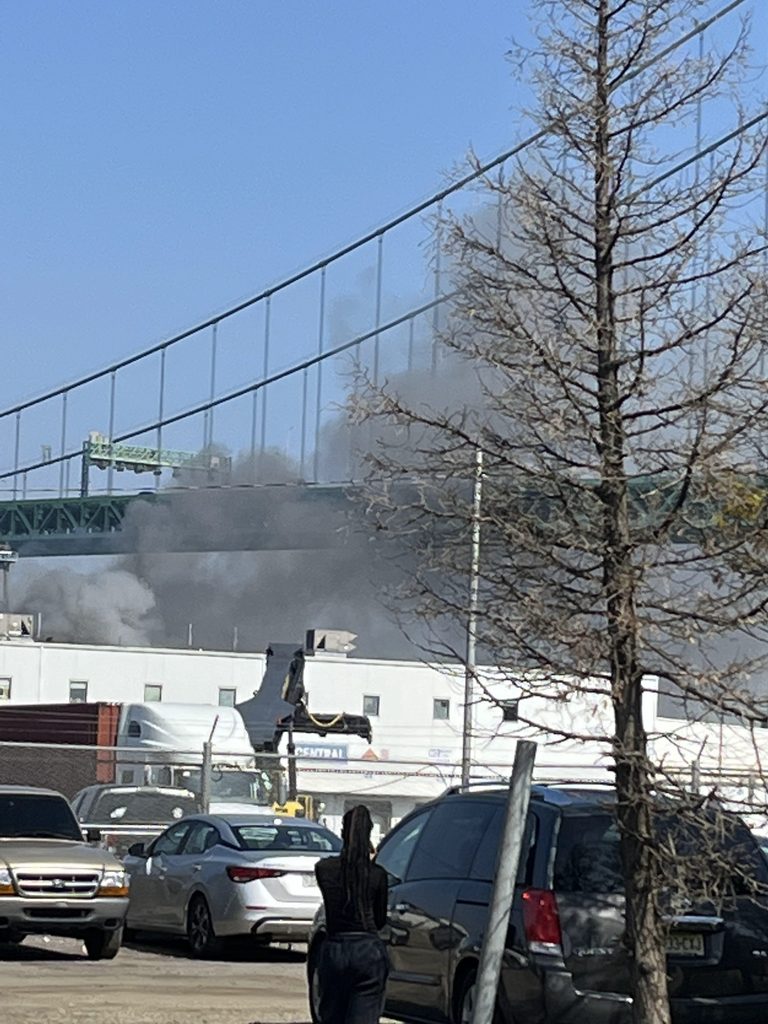
On May 21, 2024 a large shore crane at the Holt Marine Terminal, King and Essex Streets, Gloucester City, NJ caught fire. The smoke from that fire was so dense traffic on the nearby Walt Whitman bridge was shutdown for over an hour.
The inherent risks that industrial port infrastructure brings into local residential areas were made starkly clear on May 21, 2024. At around 9:30 a.m., a large shore crane caught fire at the Holt Gloucester City Terminal near the Walt Whitman Bridge.
The blaze, believed to have started from an electrical fault while the crane was unloading steel from a bulk carrier, quickly escalated to a second alarm. Emergency crews from neighboring towns rushed to the scene, facing active concerns over the crane’s massive diesel fuel reserves.
While firefighters successfully brought the flames under control without any injuries, the incident sent a massive plume of thick black smoke billowing across the riverfront and onto the Walt Whitman Bridge. The intense smoke forced a brief shutdown of all lanes on the bridge due to low visibility and prompted emergency officials to warn nearby residents to close all windows, doors, and stay inside to avoid toxic air exposure. The emergency highlighted the sudden, unpredictable public health disruptions that frontline port communities face.
Fighting for Environmental Justice
Across New Jersey, overburdened port communities are increasingly leveraging state environmental justice regulations, public records requests, and community-led buffer zone strategies to hold terminal operators and public agencies accountable. Safely balancing vital industrial commerce with the fundamental human right to clean air, clean water, and quiet nights remains one of the most critical challenges facing South Jersey’s waterfront neighborhoods today.

𝑃𝑀2.5), nitrogen oxides (
𝑁𝑂𝑥), and sulfur oxides (
𝑆𝑂𝑥).