Cleary’s Notebook News

ILA, TEAMSTERS & AND HOLT BATTLE FOR THE GLOUCESTER TERMINAL
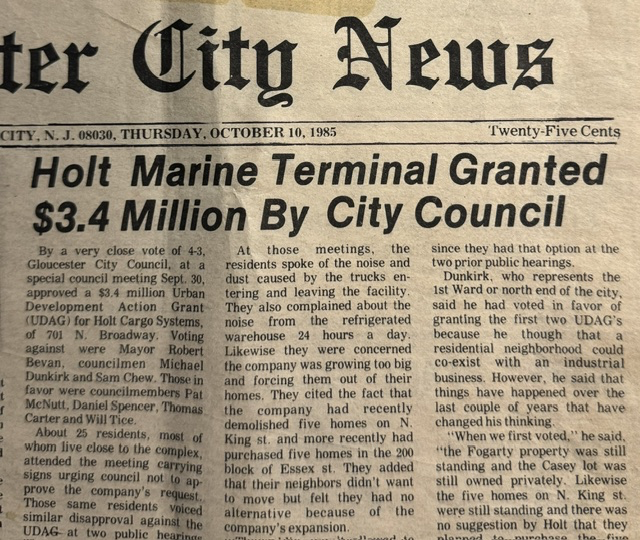
Gloucester City, NJ (October 11, 2026) – In 1994, the Holt family tried to dramatically lower operating costs at their newly expanded Gloucester Marine Terminal in South Jersey. At the time, Master Contract wages for ILA dockworkers were significantly higher, and the union imposed strict work rules. According to the SocialistWorker.org newspaper, Holt bypassed the ILA entirely and signed a collective bargaining agreement with Teamsters Local 676, a New Jersey-based union that primarily represents truck drivers and warehouse workers, not deep-sea dockworkers. Under this new setup, Holt paid Teamster workers roughly $15 per hour to unload cargo and fruit ships. This wage was roughly half of the total compensation and benefits package the ILA required at the time.
When Thomas Holt Sr. quietly signed a deal with Teamsters Local 676 to unload the Scandinavian Reefer at the Gloucester Marine Terminal, word instantly leaked across the river. To the International Longshoremen’s Association (ILA), this wasn’t just a lost contract; it was an act of war that threatened to break their decades-long monopoly on the Delaware River ports.
Continue reading “CNB Archives: The 1994 Gloucester Marine Terminal War”