
William E. Cleary Sr. | Cleary’s Notebook News
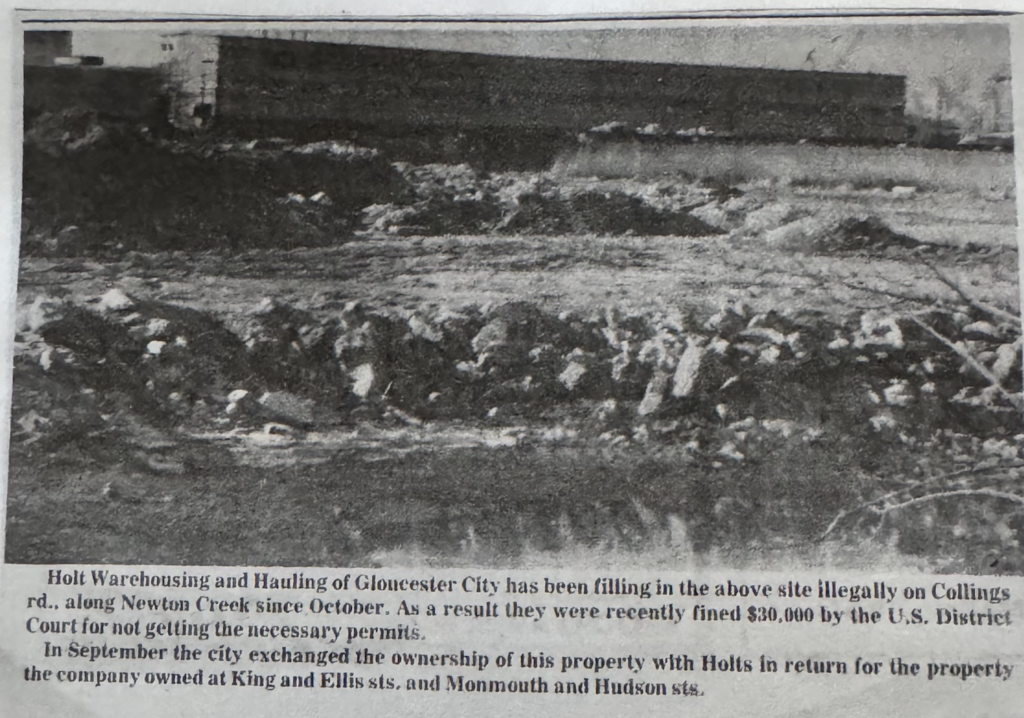
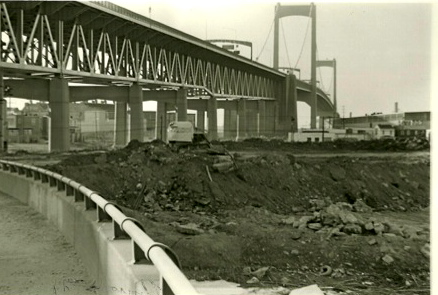
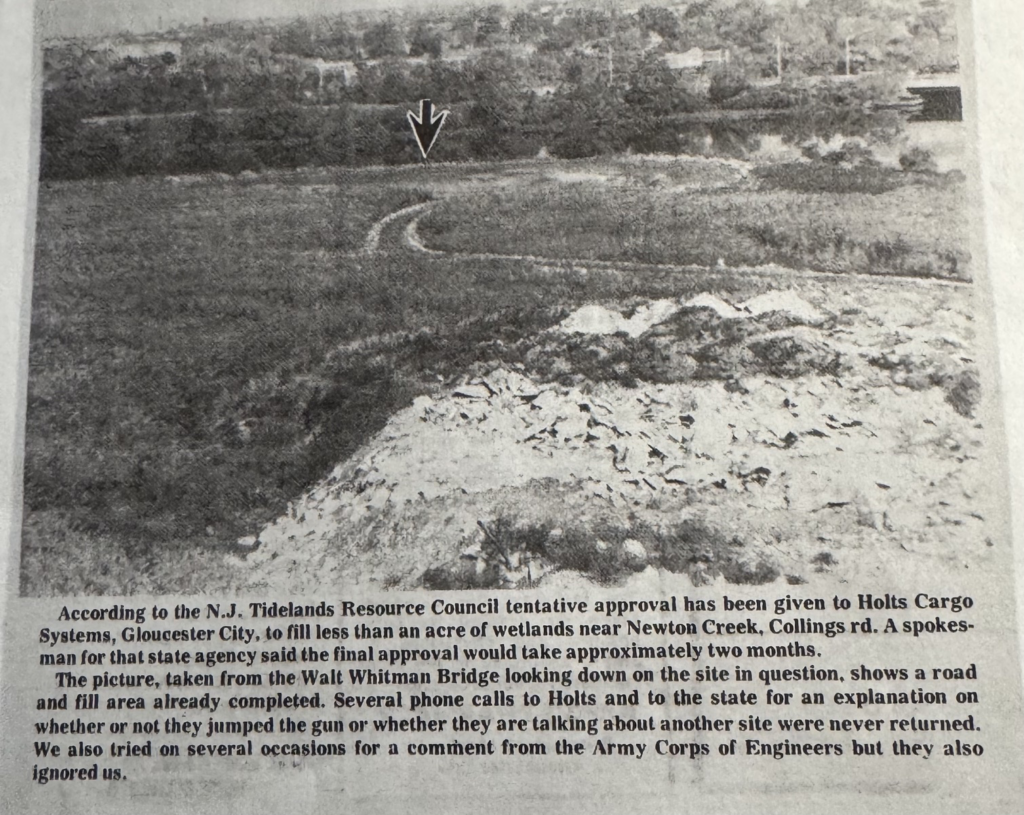
Since 1993, Holt has been leasing this land under the Walt Whitman Bridge for a $1 a year. The marine terminal was fined $30,000 for illegally dumping the fill into the Newton Creek, which flows into the Delaware River.
(Gloucester City News archives; photographer Tom Casey, February 5, 1981)
The Gloucester City News 1981 archive photos revealed the fill dirt and concrete used by Tom Holt Sr.,to fill in the Newton Creek swampland under the Walt Whitman Bridge near Collings Road. He was asked by this reporter why he didn’t wait for approval. “Paying the fines was cheaper than waiting for permits that may take months to obtain legally.
Holt was fined $30,000 by federal and state agencies for violating the law. Besides the fines, the court stipulated that he would have to build a park at his marine terminal for the public to view the Delaware River. Within the last couple of months, that park across from Freedom Pier was demolished and replaced with a stack of containers. It is not known if the Holt Family was permitted to remove that park.
The 1981 Case: Holt Fills Protected Wetlands Without a Permit
GLOUCESTER CITY NJ (AUGUST 6, 2026)–In early 1981, federal regulators charged Holt Hauling and Warehousing Systems with illegally filling in federally protected wetlands along Newton Creek, a tributary of the Delaware River. The company had expanded its storage yard by dumping dirt and construction material into tidal wetlands without obtaining the required permits from the U.S. Army Corps of Engineers.
The federal complaint made clear that Holt’s actions violated both the Clean Water Act and the Rivers and Harbors Act. A consent order filed in U.S. District Court required Holt to pay a civil penalty and restore portions of the damaged wetlands. The case was one of the earliest examples of federal environmental enforcement on Gloucester City’s industrial waterfront.
The reporting by the Gloucester City News editor and publisher at the time captured the scale of Holt’s ambitions. At the same time portions of Newton Creek were being filled in two massive container cranes—purchased in Germany—were floated across the Atlantic on barges and escorted up the Delaware River by the U.S. Coast Guard. As those barges passed under the Delaware Memorial Bridge, we were aboard a Coast Guard vessel documenting the arrival. It was a dramatic moment that symbolized Holt’s rapid expansion, much of it built on land created by backfilling marsh and riverbank.
The Same Land, Four Decades Later: A New Legal Fight
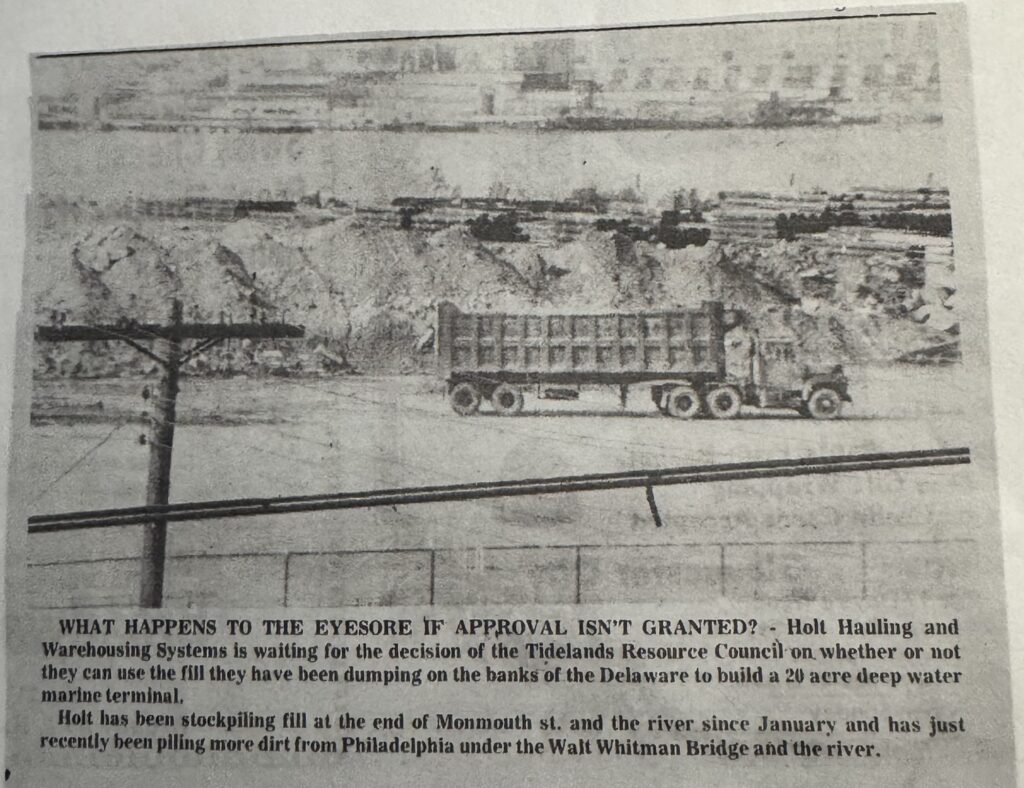
(Gloucester City News archives; photographer Tom Casey, December 17, 1981)
The wetlands Holt filled in 1981 are not just a historical footnote. They are the same tract of land at the center of a major dispute today between Holt Logistics and the Delaware River Port Authority (DRPA).
—
WHAT HAPPENED TO THE PUBLIC PARK THAT HOLT WAS MANDATED TO BUILD?
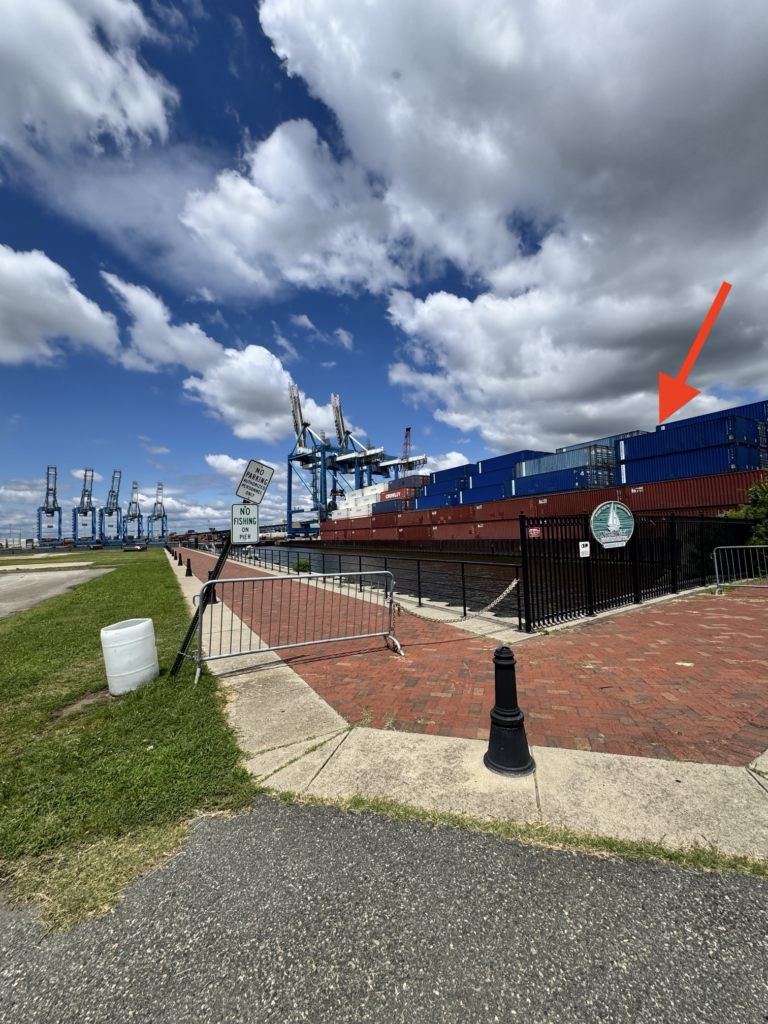
CNBNews photo–The arrow points to the location of a small public park that Thomas Holt was ordered to build as part of a court order levy against the shipping tycoon in 1982 for illegally filling in the Newton Creek swampland under the Walt Whitman Bridge near Collings Road. It is not known if the Holt family violated that1982 court order by removing it to make room to store more containers. byoder Holt.The cothe
Since 1993, Holt has leased the land beneath the Walt Whitman Bridge for $1 per year—a symbolic arrangement created during a different era of port operations. But the New Jersey Office of the State Comptroller (OSC) recently forced a settlement with DRPA after determining that the lease was not in the public’s financial interest.
OSC’s involvement triggered a renegotiation of the lease, and Holt is now fighting efforts to raise the rent to market value.
Holt argues that:
- The land was created by their own backfilling, not by the DRPA.
- The property is inaccessible without crossing Holt’s surrounding private land.
- Therefore, the DRPA should not charge market‑rate rent for land Holt claims it effectively built and maintained.
The DRPA and OSC counter that:
- The land is public property.
- The $1 lease has deprived taxpayers of fair revenue for decades.
- Any future agreement must reflect the true value of the waterfront acreage.
This dispute has become one of the most consequential port‑related negotiations in South Jersey in years.
(Gloucester City News archives; photographer Tom Casey, November 4, 1982)
—
Why the 1981 Case Matters Today
The connection between the 1981 wetlands violation and the current lease battle is direct and undeniable:
- The land Holt filled illegally in 1981 is the same land they now claim to have “created” and therefore deserve to lease cheaply.
- Holt’s long history of aggressive expansion—sometimes pushing past regulatory boundaries—helps explain why state oversight agencies are now scrutinizing the $1 lease.
- The OSC’s intervention signals a shift: public agencies are no longer willing to accept decades‑old arrangements that favor private operators over taxpayers.
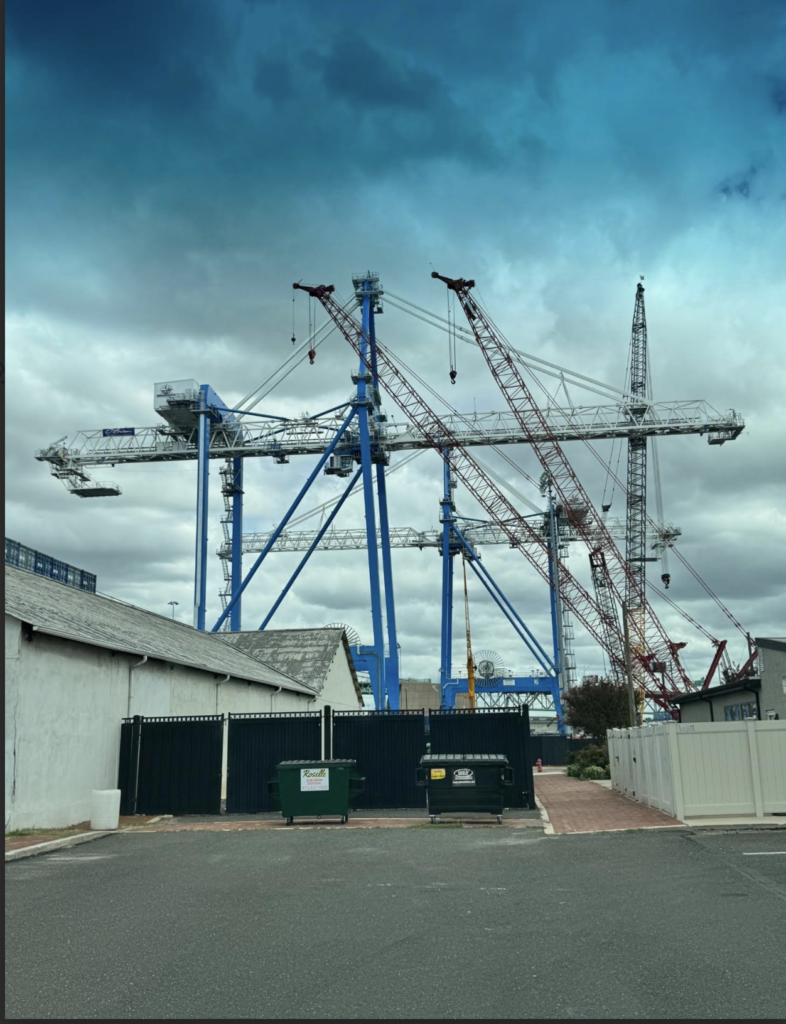
This recent photo taken at the foot of Monmouth Street shows cranes that are standing on land that was once covered by the Delaware River. Holt filled in the river in 1981.
The reporting by the Gloucester City News in the 1980s provides essential historical context. It shows that Holt’s relationship with the Gloucester City waterfront has always been complicated—marked by ambition, conflict, and a willingness to reshape the landscape to suit its operations. It also revealed that Holt wasn’t afraid of violating environmental rules if, in the end, he would benefit financially by doing so. When he ordered his employees to start filling in the swampland under the Walt Whitman Bridge before receiving the necessary permits, he said it was cheaper for him to pay the fines than sit around waiting for the approval of the permits needed to proceed with filling in the Delaware River.
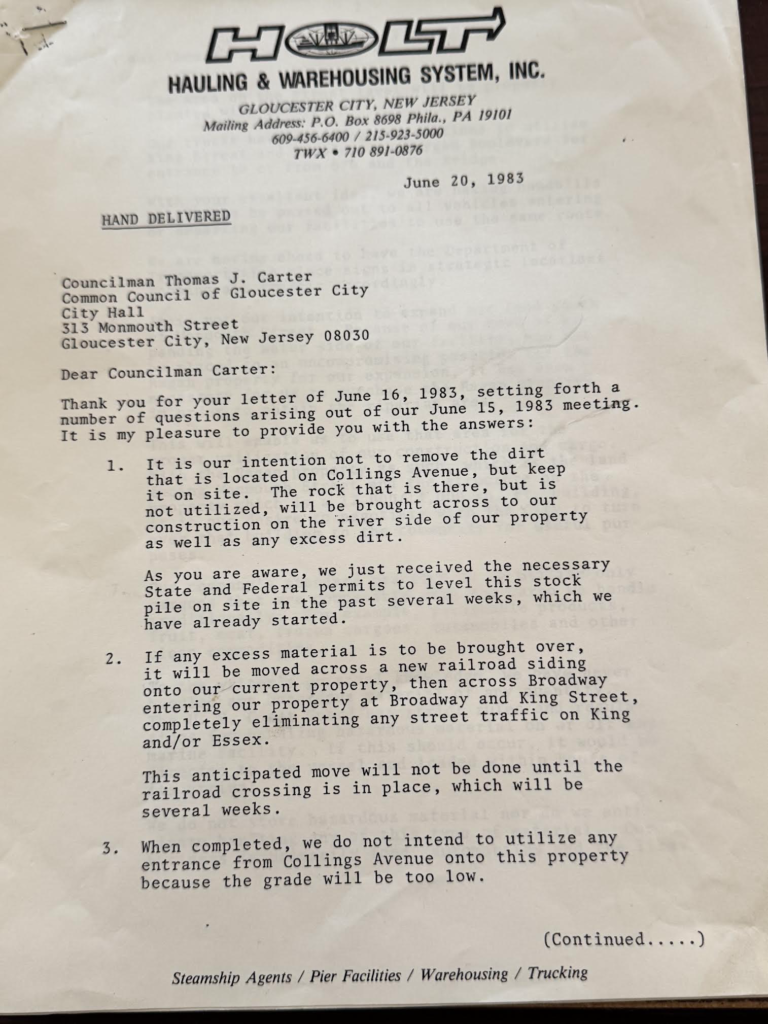
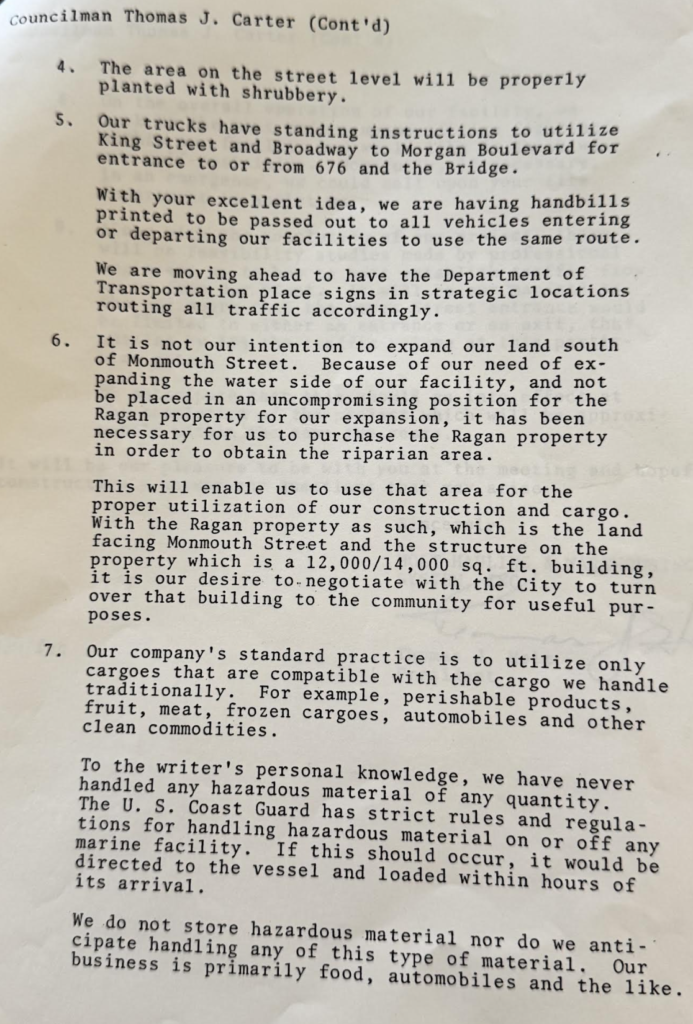
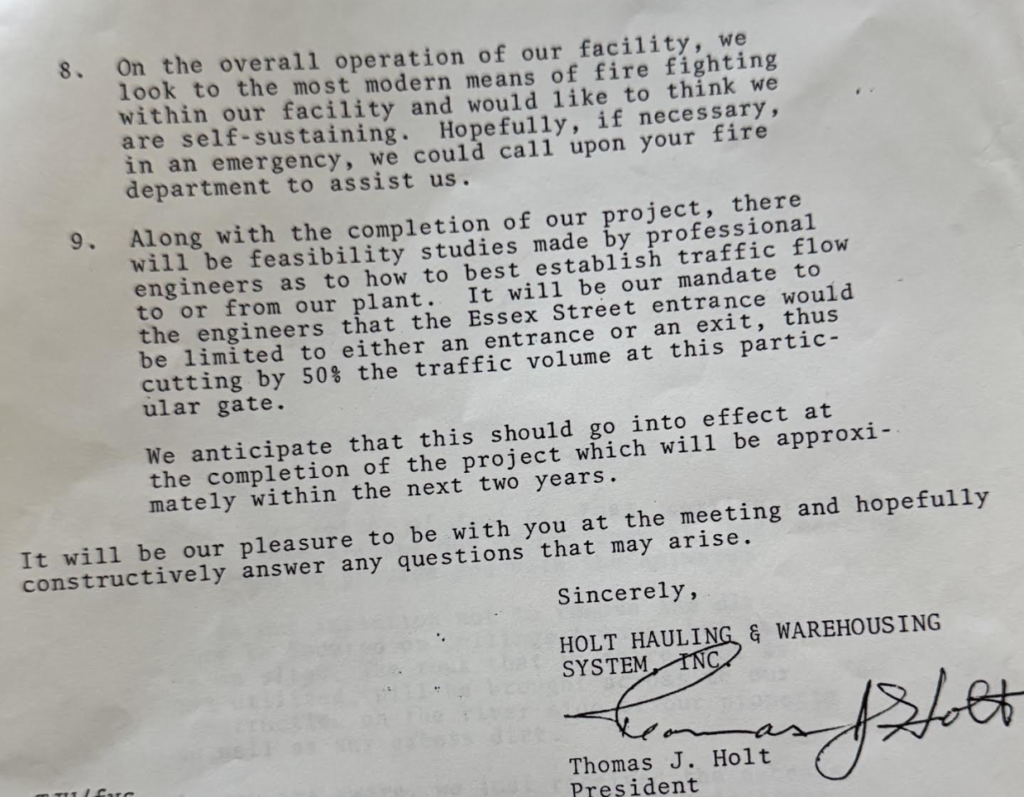
On June 20, 1983 Thomas J. Holt, the president of the Holt Hauling and Warehousing System, promised Gloucester City Councilman Thomas Carter that his company would not expand its marine terminal any further than the foot of Monmouth Street. According to a AI search Holt Logistics began leasing the former U.S. Coast Guard station at Freedom Pier in 1988 following the base’s closure. The building was was located a block from Monmouth Street. Subsequently, the building was restored and renovated to serve as their corporate headquarters in the early 2000s.
THE POWER OF THE HOLT FAMILY
AUGUST 2026-The Holt family’s influence over regional port operations surfaced again this week. According to reporting in The Philadelphia Inquirer, Holt Logistics successfully blocked Hanwha — the Korean shipbuilder currently operating on a 110‑acre site in South Philadelphia — from expanding into the Paulsboro Marine Terminal. Hanwha officials said the Paulsboro site would have solved their space constraints and positioned the company to compete for major U.S. Navy contracts. With the deal halted, Hanwha is now shifting its search to southern states along the Atlantic Coast.
HANWHA PLANNED A $5 BILLION SOUTH JERSEY INVESTMENT
Hanwha has pledged to invest $5 billion in U.S. shipbuilding once it secures a suitable location. The Paulsboro facility, previously used for offshore wind‑mill construction, became available after President Trump canceled the federal wind program, prompting the tenant to vacate last December. Hanwha agreed to assume the lease — until Holt Logistics intervened.
Holt refused to approve the arrangement and filed suit to block it. After months of lobbying and legal maneuvering, Hanwha abandoned its Paulsboro plans and is now entertaining offers from southern states eager to attract a portion of the company’s multibillion‑dollar investment.
Paulsboro Mayor John Giovannitti estimates that fewer than 50 workers are present at the port on a typical day. The borough sublets the terminal to Holt, which paid $1.6 million last year to operate the facility. Leo Holt, whose century‑old company manages terminals in Gloucester City and South Philadelphia, said he is not entirely opposed to manufacturing at Paulsboro — but only under conditions acceptable to Holt Logistics.
New Jersey taxpayers have already invested heavily in the Paulsboro port, borrowing and spending more than $500 million to build the wharf, highway ramps, and supporting infrastructure intended to attract large employers. Hanwha’s departure underscores how much control Holt continues to wield over the future of that publicly financed facility.
Some parts of this article were writted with the help of AI, which can produce inaccuracies.
https://law.justia.com/cases/federal/district-courts/FSupp/513/435/1613155