
The Holt Family Arrives in Gloucester City
William E. Cleary Sr. | CNBNews
CLEARY’S NOTEBOOK NEWS PHOTO
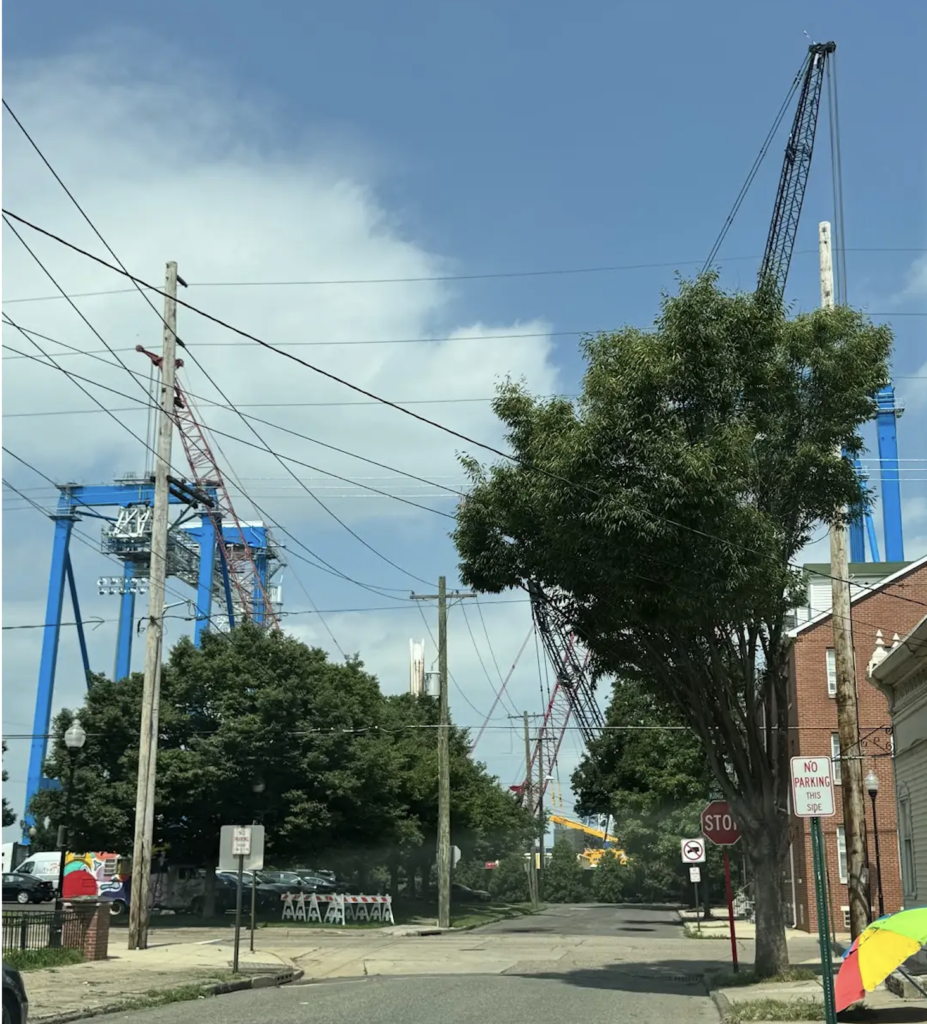
According to the Philadelphia Inquirer, the Holt Marine Terminal encompasses 125 acres of Gloucester City waterfront property.
GLOUCESTER CITY, NJ (CNBNews)(August 3, 2026)--Driving from North Broadway onto Hudson Street recently, it was hard not to see the giant cranes blocking the skylight as you got closer to the Holt Marine Terminal in Gloucester City. Some of those cranes that towered over the Mill Block properties, located between King Street and Ellis Street, were 20 stories high. There was a constant humming noise emitted from the terminal as we drove on Ellis Street towards Mercer Street.
You have to wonder how the people who reside so close to this terminal deal with the seven-day-a-week operation. When a container ship carrying fruit, meat, or some other commodity arrives, residents in the area are given no consideration. Their only choices are to move or sleep with a pillow over their heads.
Presently, the City has signed an agreement with a real estate developer who plans to build 350 apartments at the former Coast Guard Base, about 100 yards from the marine terminal. The Holt family is fighting the proposal. Their lawsuit claims that the development plan, which would be built just feet from Holt’s office building, would interfere with their operation.
59 YEARS AGO HOLT ARRIVED IN GLOUCESTER CITY
In 1967, Leo A. Holt Sr., the father of Thomas Holt, purchased 37 acres of the former New York Ship property. Interested in the same property at the time was the Camden County Municipal Utlities Authority (CCMUA). Gloucester City Mayor Vince Daily fought against the CCMUA moving into his community. Thank God for Mayor Daily. That agency processes roughly 58 million gallons of sewage every day at its main plant in South Camden. People living near it claim the smell coming from their property is sickening some days.
RELATED:
HOLT FAMILY NOT LIKED BY LONGSHOREMEN
Holt was an independent truck driver serving Mom and Pop stores. Holt Motor Express had 10 trucks. And they owned 11 warehouses around the Philadelphia and Camden City area. Leo Holt Sr., died in 1968. After his death, his sons took over Holt Motor Express and expanded into the stevedoring business.
THE HOLT FAMILY’S RECENT IMPROVEMENTS AT THE GLOUCESTER MARINE TERMINAL
In July 2025, Christian Holt was interviewed by PRODUCE NEWS. During that discussion Holt said that several projects were either underway or in the planning stages, which will help keep its facilities state-of-the-art.
“Gloucester Terminals will make over $20 million of infrastructure and renewal investment in 2025,” Holt told The Produce News. “We have onboarded and implemented new operating systems, along with hiring more than 15 managers/supervisors. In addition, in 20 months there will be two to four new cranes showing up on the shores of New Jersey.”
Some of those improvements included:
470,000 square feet of buildings were removed from the dock on Gloucester Marine Terminal to provide more space for containers and reefer plugs.
15,000-square-foot inspection dock will be created for fast-moving cargo that needs to be inspected and to market as expeditiously as possible.
New efficient inbound and outbound gates will help cargo flow seamlessly through Gloucester.
New surface road intersection is being constructed to help facilitate the vehicle inbound process, enabling all truck processing to be handled off terminal.
Adding RPM lanes, and going from one outbound kiosk to three, and new secondary check lanes will be established. Two separate bypass lanes for the outbound 53-foot trucks.
Addition of reefer plugs and container laydown space, which will increase the capacity of refrigerated containers to more than 2,500, and empty container capacity to over 1,400.
Improvements at Packer Avenue Marine Terminal
Four electric rubber tire gantry cranes (ERTGs) came online, marking a more than $30 million investment in densifying the terminal.
The Philadelphia Port Distribution Center is located five minutes from PAMT, which encompasses 200,000 SF of dry space and will add 165,500 SF of refrigerated and frozen space that will support container growth at the terminal.
“Over 27,000 pallets of fruits, veggies, seafood, petfood and other perishable products will call this brand-new Class A building ‘home,’” said Holt. “The first piece of steel was set on Nov. 5, 2024, and on April 10, 2025, the final piece of steel was set. As of June 13, the building and outside walls were complete, and by the end of the summer the building will be prepared for new refrigerated and frozen customers.”
Christian Holt said the groundbreaking was significant for the port community and customers looking for a near-dock solution that will focus on quality and food safety as well as speed to market. He further said the Port of Philadelphia is ready and able to handle new business. “The investments that have been made by the Holt family and the commonwealths (PA/NJ) have led to an explosion in new business, which creates new jobs and additional economic activity in the region,” he said.
Tom Holt fights like a street fighter for every penny. He takes advanatage of every possible thing he can. And if you cross him, Hell hath no fury.
~ (Philadelphia Magazine, February 1999)
THE 1983 EXPANSION OF THE GLOUCESTER MARINE TERMINAL
According to the Philadelphia Magazine in 1983 Holt began to expand Gloucester with a $70 million loan from New Jersey and had gotten some key concessions from the ILA thanks to Lucien Blackwell. Mr. Blackwell represented the ILA in Gloucester City.
Holt had promised new business for the Gloucester Terminal but the containers that came to that port were actually containers that would normally go to the Packer Terminal and the Tioga Terminal. Thanks to the government loans and the ILA concessions to accept lower wages Holt was able to offer four major container lines to come to his terminal in Gloucester City. His wheeling and dealing forced his competitors to merge and they entered into a deal with the Philadelphia Port Corporation.
UDAG MONEY, & FLOATING CRANES TRANSFORM GLOUCESTER CITY’S WATERFRONT
By the early 1980s, Gloucester City was still wrestling with the economic fallout of industrial decline. The GAF factory had closed, AMSPEC, Atlantic Richfield, Gulf and Western, and Hinde and Daugh jobs had evaporated, and the city’s tax base was shrinking. Yet on the riverfront, the Holt family—already operating a growing trucking and cargo enterprise—saw opportunity where others saw abandonment. They approached city officials with a bold proposal: apply for federal Urban Development Action Grants (UDAGs) to modernize the waterfront and build a world‑class marine terminal.
UDAGs were designed for exactly this kind of situation. The federal government offered substantial grants to distressed communities willing to partner with private industry to spark economic revival. Gloucester City qualified, and Holt had the ambition—and the political skill—to capitalize on it. Working with the city, Holt secured three federal UDAG grants, each aimed at transforming the aging industrial waterfront into a modern cargo‑handling complex capable of competing with larger ports along the Delaware River.
The infusion of federal money triggered a period of rapid expansion. Holt used the grants to overhaul the Gloucester Marine Terminal, upgrading berths, improving dockside infrastructure, and expanding the terminal’s cargo‑handling capacity. But the most dramatic investment came in the form of massive container cranes purchased from Germany—towering steel structures that symbolized Holt’s intention to elevate Gloucester City into the era of global maritime commerce.
The cranes didn’t arrive quietly. Loaded onto barges in Europe, they were floated across the Atlantic Ocean and guided up the Delaware River toward Gloucester City. As they approached the Holt Terminal, the barges passed beneath the Delaware Memorial Bridge, where a U.S. Coast Guard vessel carrying the Gloucester City News editor was waiting. The editor had been invited aboard to witness the historic moment firsthand. From the deck of the Coast Guard boat, he watched the cranes—still bearing the markings of their German manufacturer—glide under the bridge and continue upriver toward their new home.
For Gloucester City, the arrival of those cranes was more than a spectacle. It marked a turning point. The UDAG‑funded improvements transformed Holt’s operation from a regional trucking business into a major East Coast port facility. The waterfront, once dominated by shuttered factories and vacant industrial land, became a hub of international cargo movement. Jobs returned, tax revenues increased, and Gloucester City’s identity shifted toward maritime commerce.
The UDAG era also laid the groundwork for decades of tension between Holt and city redevelopment plans. As the terminal grew, so did Holt’s influence—and its determination to protect its operational footprint. But in the 1980s, the story was simpler: federal money, local ambition, and a set of German cranes floating up the Delaware River helped reshape Gloucester City’s waterfront.
ILA, TEAMSTERS & HOLT BATTLE FOR THE GLOUCESTER TERMINAL
In 1994, the Holt family attempted to dramatically lower operating costs at their newly expanded Gloucester Marine Terminal in South Jersey. At the time, Master Contract wages for ILA dockworkers were significantly higher, and the union imposed strict work rules. According to the SocialistWorker.org newspaper, Holt bypassed the ILA entirely and signed a collective bargaining agreement with Teamsters Local 676, a New Jersey-based union primarily representing truck drivers and warehouse workers rather than deep-sea dockworkers. Under this new setup, Holt paid the Teamster workers an hourly rate of roughly $15 per hour to unload cargo and fruit ships. This wage was roughly half of the total compensation and benefit package required by the ILA at the time.
When Thomas Holt Sr. quietly signed the deal with Teamsters Local 676 to unload the Scandinavian Reefer at the Gloucester Marine Terminal, word leaked across the river instantly. To the International Longshoremen’s Association (ILA), this wasn’t just a lost contract; it was an act of war that threatened to break their decades-long monopoly on the Delaware River ports.
Within hours, hundreds of furious deep-sea longshoremen descended on the Gloucester gates, setting up an aggressive, densely packed picket line.
Holt argued that the Gloucester City facility operated primarily as a “warehouse and distribution center” rather than a traditional marine terminal, which they claimed legally justified using warehouse-oriented Teamster labor over deep-sea longshoremen.
The ILA viewed Holt’s actions as an existential threat—a textbook “union-busting” move designed to depress wages across all North Atlantic ports. The ILA mobilized thousands of workers, launching angry, heavily manned picket lines outside the Gloucester City terminal. Longshoremen from Philadelphia and South Jersey blocked entrances, resulting in tense standoffs with the Teamsters who crossed the lines to unload ships. The dispute created severe friction between the two massive international unions. ILA leadership warned that if Teamsters Local 676 accepted half-wages to do longshore work, employers would eventually find non-union labor to work for even less.
THE GLOUCESTER CITY NEWS WAS THERE
In the fall of 1994, nearly a thousand longshoremen stood at the intersection of North Broadway and Essex Street blocking the gates into Holt’s terminal. They were waiting for the arrival of members of the Teamsters Union, Local 676, that was scheduled to begin work that day. As the editor and owner of the Gloucester City News, I was there to interview the Longshoremen and to document what would happen when the Teamsters entered the terminal.
Jim E. Ferry Sr., a personal friend, was the owner of Ferry’s Seafood Restaurant located a few blocks away at 300 North Broadway. Longshoremen frequently ate in his restaurant and stopped there after work to have a beer. Ferry was an officer of the Teamster Union Local 676. As I was speaking with a member of the ILA, the crowd of men that gathered around me got larger. Someone said that they blamed Ferry for what was happening. Why! I asked. A couple of weeks later, Ferry said that the Longshoremen no longer frequented his restaurant. Other tavern owners in the City I spoke with said the turmoil at the docks hurt them too.
ILA members all said that Tommy Holt was a scab. That by lowering the wage to $15, he was trying to bust their union.
Moments later, a flurry of activity began. And the crowd of longshoremen rushed towards the entrance gate to the terminal. The scene was total bedlam. And I was caught in the middle, being pushed towards the terminal gates.
Because the terminal sat right on the border of intense local jurisdictions, the Camden County Sheriff’s Department was mobilized to maintain order and keep the port’s gates clear so commerce could move. That specific moment captured the sheer hostility of the 1990s waterfront labor wars, transforming a Holt’s corporate cost-cutting maneuver into a highly volatile, physical standoff.
.
- Sheriff’s officers deployed mounted units on horseback to physically push back the surging crowd of longshoremen. Alongside the mounted police, officers utilized trained German Shepherds on tight leashes. The barking K-9 units were stationed right at the perimeter, serving as a high-intensity deterrent to keep protesters from breaching the gates or rushing the vehicles.
- As Teamster members and independent warehouse workers drove toward the gates to begin the $15-an-hour shifting work, they had to run a terrifying gauntlet.
- The anger boiled over. Members of the ILA picket line began shouting “scabs” and hurling rocks, bricks, and debris at the incoming vehicles. Windows of vehicles were shattered, and cars were dented as the Teamsters pressed on the gas to get past the furious crowd and into the safety of the heavily guarded Holt property.
As soon as the first vehicle drove through the gate, rocks and bottles started flying through the air towards the Teamsters and the Sheriff’s officers who were trying to keep the longshoremen from blocking the gates. Two officers on horseback reared their horses into the air, nearly hitting some longshoremen standing nearby when they came back down. The canine units rushed forward towards the union picket lines, forcing men to flee back from the gate. Several trucks with Teamsters riding in the beds of the pickups passed by me. They looked terrified.
The AFL-CIO Intervention and “Dockworkers Union No. 1”
Because both the ILA and the International Brotherhood of Teamsters belonged to the AFL-CIO, the overarching labor federation was forced to step in to arbitrate the jurisdictional dispute.
- The AFL-CIO ruled decisively in favor of the ILA, stating that the Teamsters were violating anti-raiding rules by taking traditional longshore work. The federation ordered Teamsters Local 676 to withdraw from the pier. Source SocialistWorker.org
- The Holt Counter-Move: Refusing to capitulate to the ILA, Thomas Holt Sr. circumvented the AFL-CIO ruling. He helped the displaced Gloucester City terminal workers break away from the Teamsters entirely to form an independent, unaffiliated company union called Dockworkers Union No 1.
- By operating under this independent union, Holt successfully kept the ILA off the Gloucester City docks for years, continuing to pay wages and benefits well below standard North Atlantic ILA contract rates. As a result of this aggressive labor strategy, the Holt family could offer drastically lower stevedoring rates to international fruit and cargo shippers, helping them build the regional import monopoly they still hold today.
The 1996 Packer Avenue Strike
Just two years after using the independent “Dockworkers Union No. 1” to secure lower-wage labor at the Gloucester City terminal, Holt Sr. decided to bring the same aggressive playbook across the river to Philadelphia. In 1996, Holt abruptly pulled out of the local employers’ bargaining group, the Philadelphia Marine Trade Association (PMTA). His goal was to force massive work-rule and wage concessions on the ILA at the massive Packer Avenue Marine Terminal.
The ILA, remembering the gauntlet at Gloucester City, refused to budge. They launched a fierce three-week strike that completely paralyzed Packer Avenue. The total shutdown of Philadelphia’s primary container terminal cost millions of dollars, eventually forcing Holt to capitulate, rejoin the PMTA, and sign the ILA Master Contract.
THE HOLT FAMILY’S DECADE-LONG UNION FEUD ERUPTS
In 2010, the ultimate climax of the Holt family’s decades-long union feud erupted 16 years later. By this time, Thomas Holt Sr.’s son, Leo Holt, was running the terminal operations.
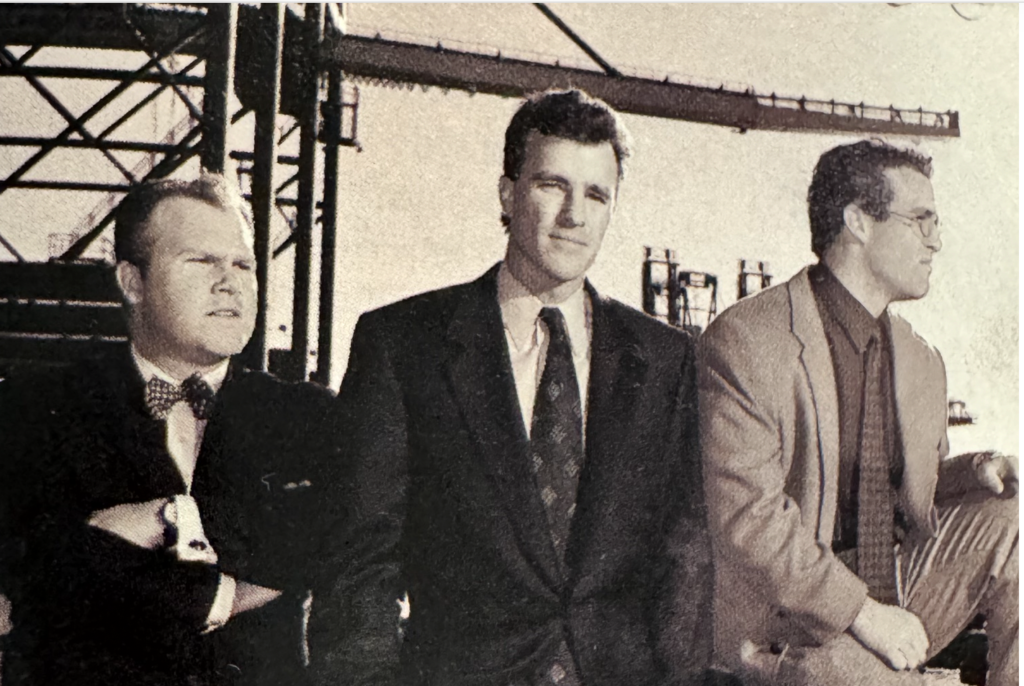
1999 photo courtesy of the Philadelphia Magazine (L. to R.) Leo Holt, 34, Tom Holt Jr., and Michael Holt, 25. At the time, Leo was in charge of Marketing, Tom was the head of operations, and Michael was learning the ropes. Today,
In September of that year the Holts convinced food giant Del Monte Fresh Produce Co. to pull its massive banana and pineapple import business out of the ILA-staffed Port of Wilmington, Delaware. They moved the entire operation up the river to their expanded Gloucester City terminal. By shifting the work to the lower-wage independent union, 200 ILA longshoremen instantly lost their livelihoods.
The ILA’s response was historic. Rather than just picketing locally, ILA Local 1291 organized a massive wildcat job action. The strike spread like wildfire up the East Coast:
- The Shutdown: Dockworkers in Philadelphia and South Jersey walked off the job.
- The Solidarity: Longshoremen at the massive ports in Elizabeth, Newark, and Bayonne, New Jersey, completely refused to cross the lines. Teamsters joined the fray by refusing to pick up cargo from the warehouses.
- The Scale: It became the largest unannounced dockworker job action seen on the Atlantic Coast in over 30 years, threatening global shipping supply chains.
The shipping bosses panicked, securing a federal restraining order and threatening the union with $1 million-a-day fines. While the courts eventually forced the men back to work, the sheer power of the shutdown forced a truce. The Holts eventually had to find a modern equilibrium with the ILA to keep the massive Packer Avenue and Paulsboro operations running smoothly.
According to the article, the $200 million Gloucester City terminal with two more container cranes and two million square feet of warehouse space was worth $200 million. Gloucester City is Holt’s headquarters. In 1998, he moved his offices into an impressive structure that looks like the White House on the Delaware. Actually, it is the former Coast Guard building.
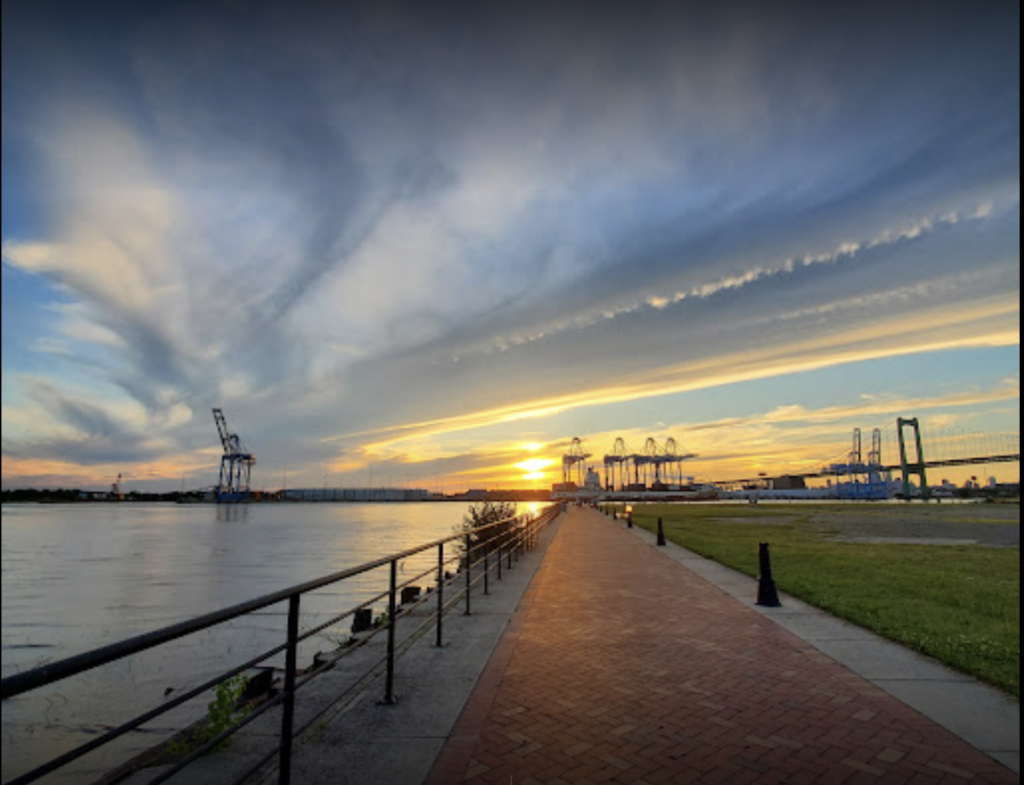
FREEDOM PIER. In the distance is the Packer Avenue Marine Terminal
GLOUCESTER CITY RESIDENTS GET THE SHAFT AGAIN
The federal government gave the building to the City of Gloucester City along with 45 acres of property for $1 in 1991. Included in the deal was Freedom Pier. Once that deed was signed, the City announced that the top floor would be used for a restaurant and the Holt family’s shipping business would occupy the floors below. In return, Holt would develop nearby Freedom Pier. However, when the shipping tycoon learned that the pier would cost more to repair than he was prepared to spend, he backed out of the deal. Somehow, Tommie Holt outsmarted Gloucester City’s mayor and council and ended up with a lease that allowed him to take over the entire building.
VIDEO COURTESY OF GREG LAMBERT
We have been writing about grand development proposals for Gloucester City’s waterfront since 1980. During a 1981 interview with Thomas Holt Sr. he said he would develop the city’s waterfront, and he would do it in record time. In our opinion, the reason these plans have never gotten any further is because the city politicians have tried to micromanage each one of the proposals. For example, Pat O’Donnell, who managed O’Donnell’s Restaurant and Bar, said he was asked to submit a proposal. But he walked away from the deal because the mayor and council told him he had to use a certain color tablecloths and curtains.
AI, which can make mistakes, contributed to this article