
William E. Cleary Sr. | CNBNews
CNBNews photo…
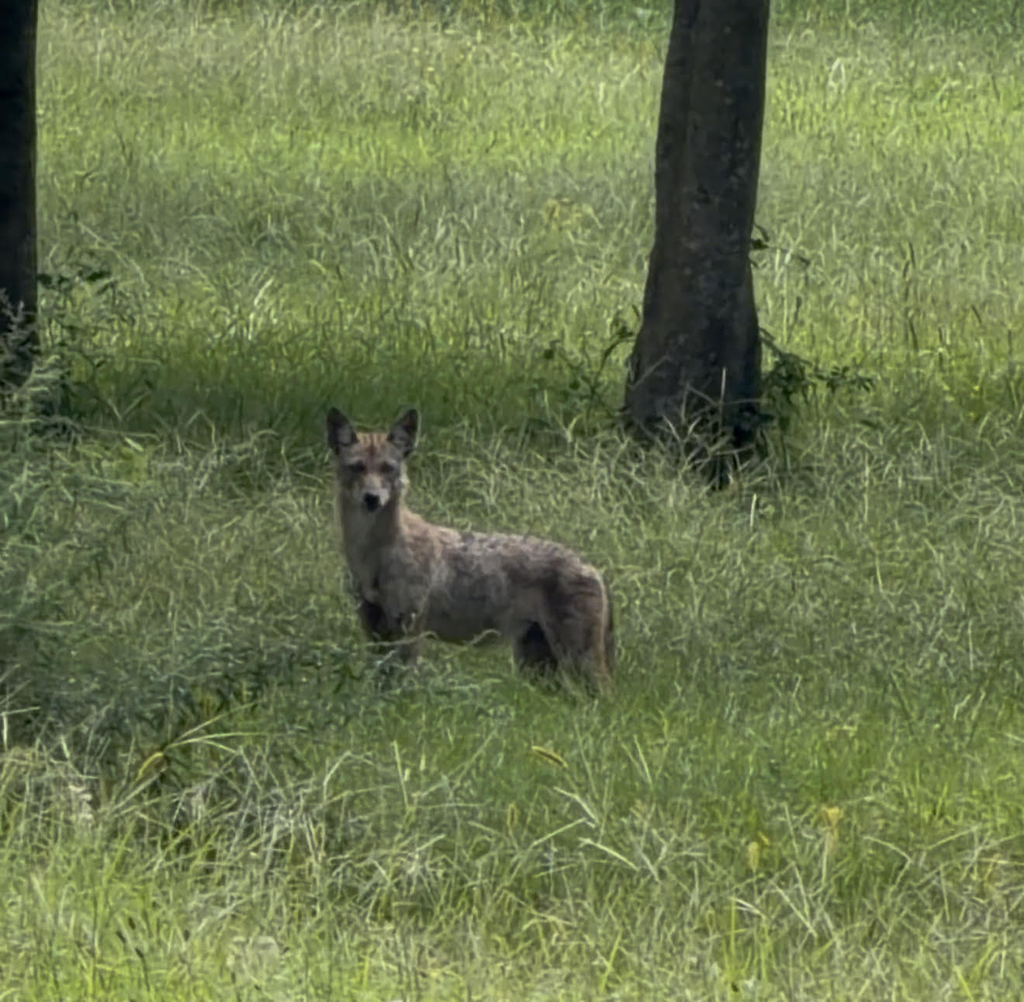
Looking at the photo of the animal I took as well as the video that is shown below I wasn’t sure that the animal I saw was a coyote.
What do you think? Is it a coyote or is it a dog? If you have a photo you like to share with our readers submit it to wecleary@gmail.com ?
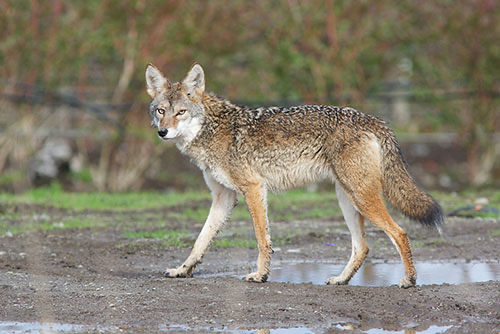
New Jersey Fish and Game photo of a eastern coyote…
*****
On Friday, August 28 we were in Deptford Township at the NJ Motor Vehicle Inspection station. We left there at 1 PM and headed to the nearby Walmart Super Center. A mile away we spotted what we thought at first was a dog standing in the underbrush about 10 yards from the busy highway. Curious, we turned around and stopped on the other side of the street and began filming. All those years I hunted it became a habit of mind to glance at the fields and the woodline that I passed in my travels.
Every few seconds this animal lifted its head up and took a gander around the field it was standing in. With its black and tan coat it blended perfectly into the vegetation.
According to the New Jersey Fish and Game website, Eastern coyotes differ from their western counterparts with a larger average size and various color phases, including blonde, red and black. Past interbreeding between wolves and coyotes may be responsible for the larger size and color variations in our eastern coyote. In New Jersey, adult coyotes range in weight from 20-50 lbs. and exceptionally large ones may be up to 55 lbs. Coyotes adjust well to their surroundings and can survive on whatever food is available. They prey on rabbits, mice, birds and other small animals, as well as young and weakened deer. They also consume carrion (decaying tissue). They are tolerant of human activities and rapidly adapt to changes in their environment.
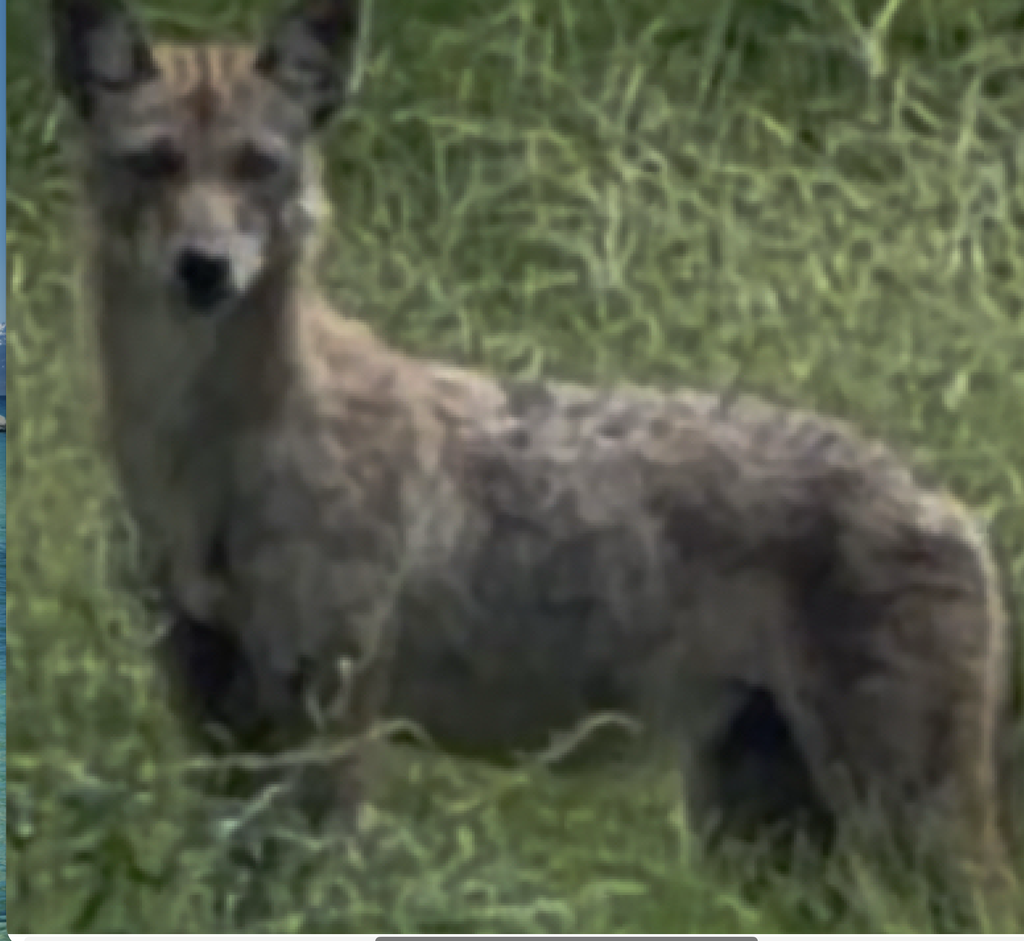
We increased the size of our photo by 150 percent. We think it is a coyote and that it has mange. What do you think?
*****
Eastern coyotes differ from their western counterparts with a larger average size and various color phases, including blonde and black. Coyotes bear litters during April and May, with females delivering between three and nine pups. Conflicts between coyotes and humans are most likely to develop as adults forage for food for the pups in the spring and summer.
Coyotes, along with foxes, are sometimes afflicted with mange which can result in significant hair loss. The loss of fur can result in making identification of a coyote difficult, resulting in reports of a “mystery” animal, or even a cougar.
Coyotes primarily hunt rodents and rabbits for food, but will take advantage of whatever is available, including garbage, pet food and domestic animals that are left unattended. Allowing coyotes access to human food and garbage is irresponsible and can lead to problems. In suburban and urban areas, coyotes have occasionally attacked small pets. Although attacks on humans are extremely rare in eastern states, as with any predatory animal they can occur.
Send us your photo for this column to wecleary@gmail.com
 -
- -
- -
- -
- -
-