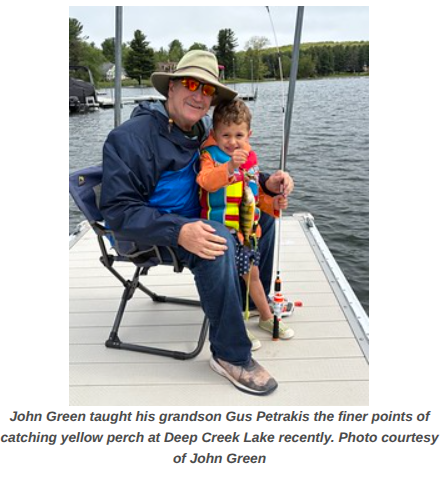
Maryland offers free fishing days on June 6, June 13, and July 4, the perfect time to introduce a friend to freshwater or tidal fishing, with no fishing license or trout stamp needed. In this wonderful time of the year for fishing, it is great to have a mentor who can guide you, and this is the perfect opportunity.
Children under 16 don’t need a license, so anytime is right for someone in their life to introduce them to the joys of fishing.
On June 13, there will be a free Chesapeake Channa (northern snakehead) fishing derby and outreach event, Snakes on the Dundee V, at Gunpowder Falls State Park and Dundee Creek Marina. Information about the derby can be found on the DNR website.
Maryland hunters harvested a total of 5,094 wild turkeys during the 2026 spring season. This year’s harvest was 5% higher than last year but remained below the record harvest of 5,356 set in 2023.
“Favorable weather helped contribute to another productive spring season for Maryland turkey hunters,” Maryland Department of Natural Resources (DNR) Wildlife and Heritage Service Director Karina Stonesifer said. “While populations can fluctuate across regions and from year to year, turkey hunters continue to enjoy quality hunting opportunities across Maryland.”
Garrett County reported the highest harvest with 542 turkeys, followed by Charles County with 452 and Worcester County with 430 turkeys. Allegany and Washington counties also reported over 300 birds each.
Youth hunters started the spring turkey season with the Junior Turkey Hunt, April 11-12. A total of 441 wild turkeys were taken during that weekend, representing 8% of the total. Sunday hunting accounted for 14% of the statewide harvest.
Hunting licenses for the 2026-27 season will be available starting July 1 on the Maryland DNR website. The major fall hunting seasons begin Sept. 1 with mourning dove season, and deer hunting begins with archery season on Sept. 11.
Harvests by county for the past five seasons are below:
The Delaware River Basin Commission (DRBC) is sharing the latest results of extensive field investigation and monitoring of per- and polyfluoroalkyl substances (PFAS) in PFAS Water Quality and Fish Tissue Assessment Study, a report marking more than 20 years of dedicated research into so-called forever chemicals within the Delaware River Basin.
The new research confirms PFAS contamination is both widespread and persistent in the Delaware River and selected tributaries. Surface water concentrations are increasing at a faster rate than water volume as the river moves downstream into Delaware Bay, suggesting there are ongoing inputs from unknown sources like industrial facilities, wastewater discharges and stormwater.
NOAA Fisheries is adjusting the Atlantic bluefin tuna daily retention limits for recreational fishermen. The adjusted limits will take effect June 1, 2026, and extend through December 31, 2026, unless modified by later action. NOAA Fisheries may need to take additional action later in the year to further adjust the retention limits or close the fishery.
As of June 1, 2026, the retention limits will be:
Highly Migratory SpeciesVessel/Permit Type
Retention Limit per Vessel per Day/Trip(lengths in curved fork length)
Private vessels with Highly Migratory Species Angling permits
2 bluefin tuna measuring 27 to <73”, of which only 1 may be a large school/small medium bluefin tuna (47 to <73”)
Charter boats with Highly Migratory Species Charter/Headboat permits, when fishing recreationally
3 bluefin tuna measuring 27 to <73”, of which only 1 may be a large school/small medium bluefin tuna (47 to <73”)
Headboats with Highly Migratory Species Charter/Headboat permits, when fishing recreationally
6 bluefin tuna measuring 27 to <73”, of which only 1 may be a large school/small medium bluefin tuna (47 to <73”)
Note: The retention limits per vessel per day/trip. Regardless of the duration of a fishing trip, no more than a single day’s retention limit may be possessed or retained at the end of the trip upon landing. For example, whether a private vessel (fishing under the Angling category retention limit) takes a 2-day trip or makes 2 trips in one day, the day/trip retention limit of 2 bluefin tuna, of which only 1 may be a large school/small medium, applies and may not be exceeded upon landing.
Who is affected?
The changes apply to Highly Migratory Species Angling and Highly Migratory Species Charter/Headboat permitted vessels when fishing recreationally. The daily retention limits are effective for all areas except for the Gulf of America, where NOAA Fisheries does not allow targeted fishing for bluefin tuna.
Catch reporting
Highly Migratory Species Angling and Highly Migratory Species Charter/Headboat permitted vessel owners are required to report the catch of all bluefin tuna retained or discarded dead within 24 hours of landing or the end of trip by:
NOAA Fisheries reminds Atlantic Tunas General category permit holders and Highly Migratory Species Charter/Headboat permit holders fishing commercially for bluefin tuna that the General category fishery will re-open June 1, 2026.
General Category Retention Limits
Unless modified, the following default retention limits apply:
June 1-June 30: 3 large medium or giant bluefin tuna (measuring 73 inches or greater curved fork length) per vessel per day/trip
July 1-December 31: 1 large medium or giant bluefin tuna (measuring 73 inches or greater curved fork length) per vessel per day/trip
Five of the most popular drive-on beaches for surf fishing in Delaware require reservations on weekends and holidays beginning May 23, but reservations at seven other locations are not required since a change was adopted in 2025.
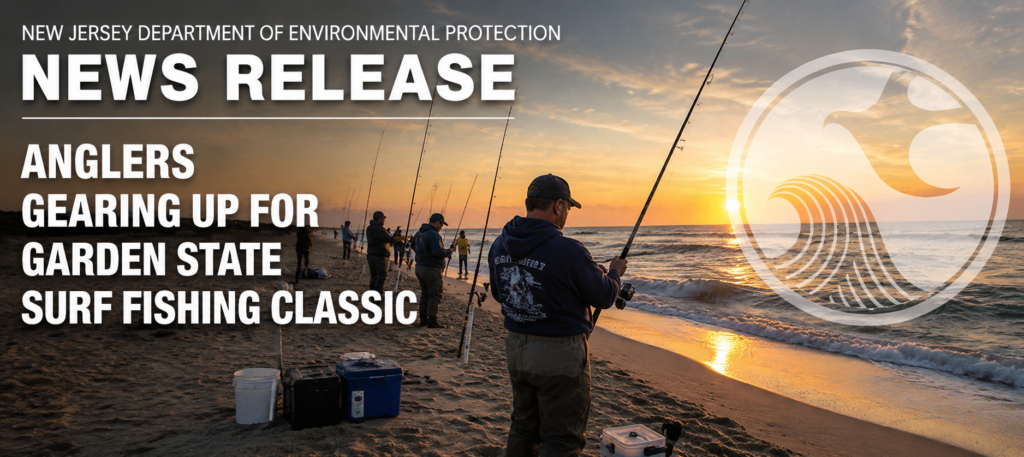
Anglers of all ages and skill levels are invited to participate in the Garden State Surf Fishing Classic, the state’s premier fishing tournament being held this Sunday, May 17, at Island Beach State Park in Ocean County.
Anglers of all ages and skill levels are invited to participate in the Garden State Surf Fishing Classic, the state’s premier fishing tournament being held this Sunday, May 17, at Island Beach State Park in Ocean County.
The annual tournament brings awareness to New Jersey’s rich cultural heritage of recreational saltwater fishing and the importance of protecting the state’s marine resources. The popular family event allows participants to hone their surf fishing skills while competing for the ultimate catch. Registration begins at 5 a.m. for those who are not pre-registered. Fishing will take place from 6:30 a.m. to 1 p.m. New Jersey Department of Environmental Protection Acting Commissioner Potosnak will participate in the tournament awards ceremony at 2 p.m.
DNREC encourages Delawareans and visitors alike to celebrate National Fishing and Boating Week (June 6-14) with two days of free fishing in the state Saturday, June 6 and Sunday, June 7. On these two days anglers may fish, crab and clam in any Delaware waters without possessing a 2026 fishing license.